Recover your data before fixing
If you've tried clicking the Mount button in Disk Utility to manually mount the WD drive but failed, it's important to secure your data before attempting any other solutions.
To recover files from an unmountable external hard drive, consider using a professional data recovery tool.
iBoysoft Data Recovery for Mac can recover data from unmountable, unreadable, corrupted, and inaccessible external hard drives, hard drives, USB flash drives, and other storage devices.
With an intuitive and user-friendly interface, you only need to click to finish quick data recovery from the unmounted WD disk.
Here are the steps:
- Download and install iBoysoft Data Recovery for Mac.
- Launch this program, select the unmountable WD external hard drive, and click "Search for Lost Data."
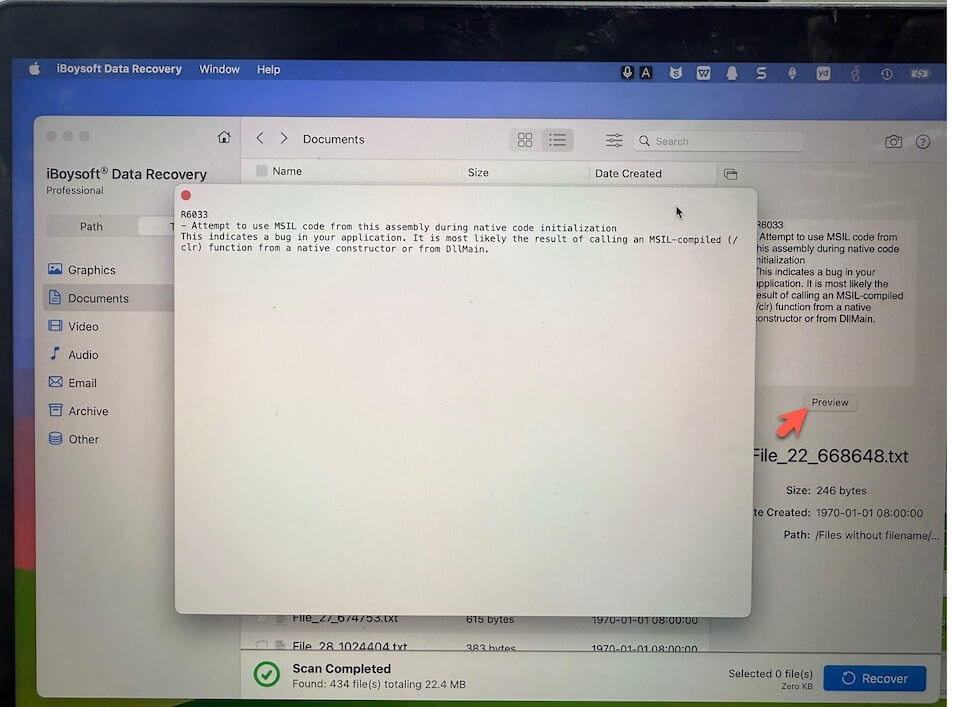
The tool will start scanning this drive for recoverable files. - After the scanning process finishes, you can click Preview to check the found files.
- Choose what you want to get back and click "Recover."
Never save recovered files to the same drive you are scanning, as this may overwrite data.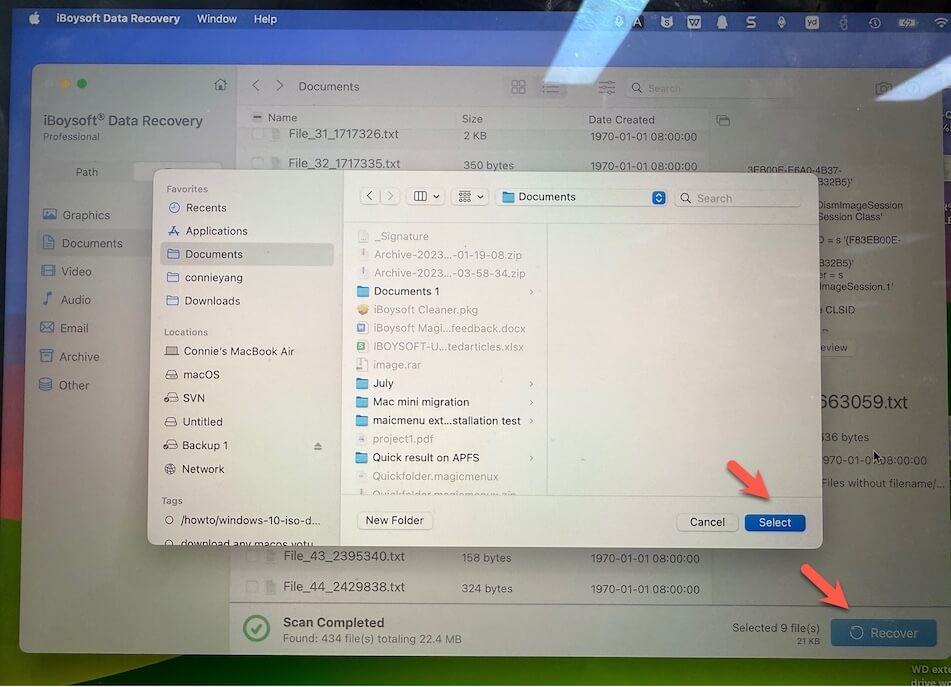
Key tip: Go through the recovered files and make sure all desired files are back.
Related guide: How to recover data from an unmounted external drive on Mac
Solution 1: Force-mount the WD external drive in Disk Utility
Usually, the WD external hard drive is automatically mounted on a Mac after connection. If it failed due to system errors or encryption protection, force-mount it manually.
Steps:
- Launch Disk Utility on your Mac with Spotlight Search.
- Select the volumes on your WD external hard drive one by one in the left sidebar.
- Click the "Mount" button on the Disk Utility top toolbar.
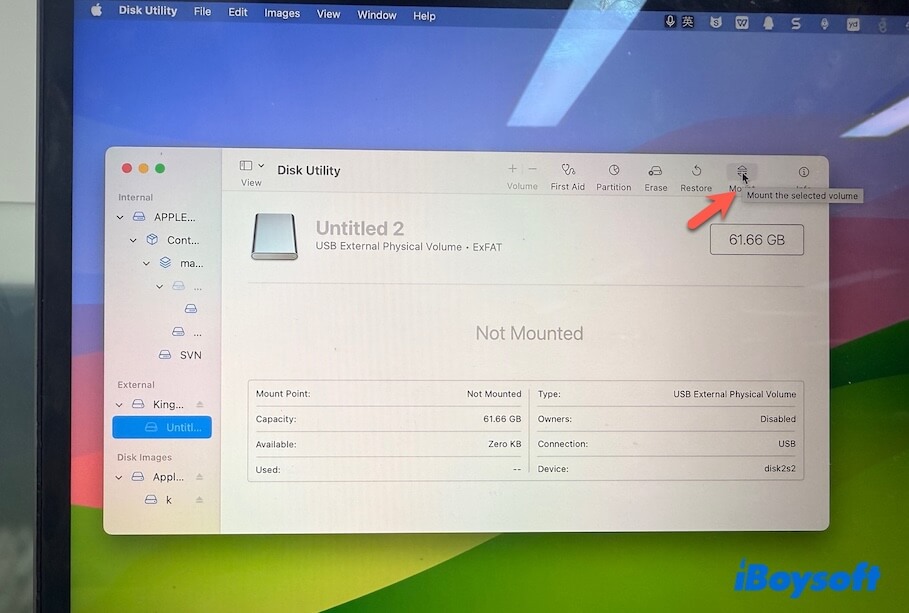
If your drive is APFS-encrypted, enter the password to mount it.
Solution 2: Reconnect the WD drive or try on a different Mac
Sometimes, there are temporary errors in macOS or the file system of the disk, preventing it from recognizing and mounting the connected external drive correctly.
To verify that, you can:
- Unplug the WD drive, wait a moment, and then re-plug it.
- Use a different cable or adapter if available.
- Connect the WD drive to another Mac (if you have one) using the same or an alternative interface (USB, FireWire).
If the drive mounts on another Mac, the issue may be software or driver-related on your original Mac. You can update your Mac. Or, check the software you've installed recently.
As for me, I've installed a USB defender that blocks all USB drives from mounting automatically. So, my WD My Passport drive fails to be mounted every time it is connected to my Mac until I allow it in this tool.
Solution 3: Check if the WD drive is encrypted by a third-party tool
Many third-party encryption solutions are container-based or managed by dedicated software, such as VeraCrypt.
When you plug in the drive, it typically won't prompt you for a password automatically. So the disk may appear as unmounted.
In most cases, you need to:
- Open the corresponding software.
- Manually select the disk.
- Enter the password to mount it.
Solution 4: Run Disk Utility to repair the WD external hard drive
If you still can't mount the WD external hard drive, run Disk Utility First Aid to repair the disk. Disk Utility First Aid can fix tiny corrupted file systems on the WD drive with ease.
Steps:
- Launch Disk Utility on your device.
- Choose the unmountable WD external hard drive in the Disk Utility main window.
- Select "First Aid" in the top center and click "Run".
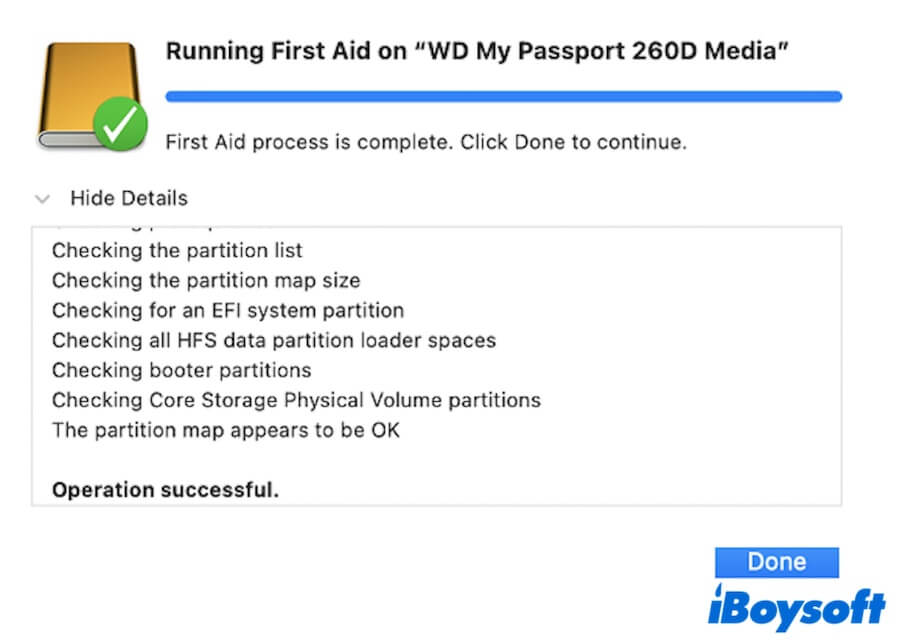
- Wait until Disk Utility notifies you that the operation is successful or the disk has been repaired.
Then you can check if the WD external hard drive is mounted on your Mac.
Solution 5: Reformat the WD drive as a last resort
If even Disk Utility fails to repair the problematic WD hard drive and make it mountable, the final solution you can try is to format the external hard drive on Mac.
But reformatting wipes the hard drive entirely.
To avoid data loss, you're recommended to recover the inaccessible data on the drive first. Utilizing iBoysoft Data Recovery for Mac to recover lost data if you have no backup of the unmounted drive.
After data recovery, follow these steps to reformat the drive:
- Go to Applications > Utilities > Disk Utility.
- Select the unmountable WD external hard drive and click "Erase" at the top.
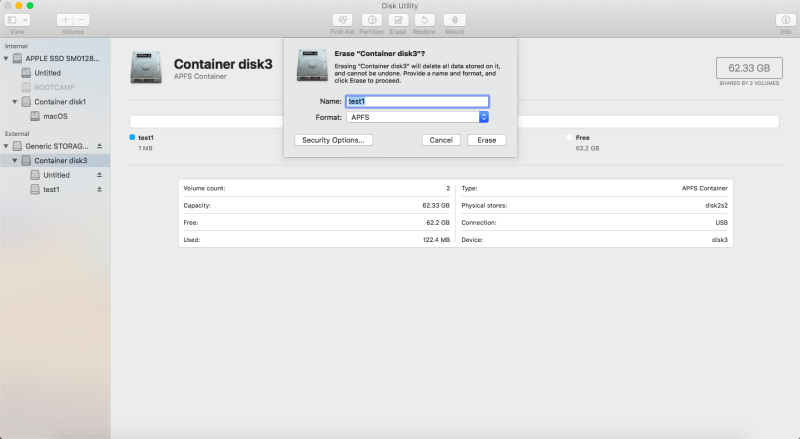
- Provide a name and a format to erase the drive.
- When finished, you can mount your WD external hard drive on a Mac and use it again.
Hope this tutorial can help to fix the WD external hard drive not mounting or being recognized on Mac. If your WD external hard drive is not recognized on Windows, it is also easy to fix.
My final thoughts
By following these four steps - force mount, try another device, run First Aid, and reformat if necessary- you can regain access to your WD external hard drive.
Always back up data before attempting repairs, and document the drive model, macOS version, and connection type when troubleshooting.
Moreover, in your daily work, avoid sudden ejections or disconnects during file operations, use certified cables and adapters, and keep macOS updated.
FAQs
- QWhy won't my WD drive mount on Mac?
-
A
Multiple factors can prevent mounting, including macOS errors, corrupted file systems, connection issues, third-party block, etc.
- QHow do I force my Mac to mount a WD external hard drive?
-
A
Open Disk Utility → Select the volume on your WD drive → Click Mount.
- QWhat does Mac mount a drive mean?
-
A
When you plug in a USB drive or external hard disk, macOS needs to:
Recognize the device
Load its file system (like APFS, exFAT, etc.)
Attach it to the system
This process is called mounting. Once mounted, the drive will show up in Finder or on the desktop. You can access files on it.