USB flash drives or UDisks may show as unreadable, and sometimes USB Accessories Disabled on Mac— you can't open it, or are asked to format it.
This is usually caused by file system errors or incompatible formats. In most cases, the USB can be fixed, and the data is still recoverable.
This guide shows how to fix the issue safely without losing data.
Check If the USB Is Detected
Before trying any fix, first check whether your Mac can detect the USB; maybe the USB port is not working.
Open Disk Utility and look for the drive in the sidebar, or go to System Information → USB.
- If the USB appears, but it can't access files on the USB drive on Mac, the issue is usually related to the file system or compatibility, and software fixes will help
- If the USB flash drive is not showing up on Mac, the problem is more likely hardware-related, and you should move to Fix 5
Most repair methods only work when the USB is recognized by macOS, so this step determines what you can do next.
Quick Decision Table
| Situation | Likely Cause | What You Should Do |
| Not detected at all | Hardware/connection issue | Fix 5 |
| Detected but unreadable | File system corruption | Fix 3 or Fix 4 |
| Works on Windows but not Mac | NTFS / compatibility | Fix 1 |
| USB is not recognized on this Mac, but it works on other macOS | bug/system issue | Fix 2 |
| Data is important. Risk of overwrite | Recover first | Fix 4 |
5 Solutions to Fix USB Not Readable on Mac
After identifying whether the issue is related to hardware, compatibility, or file system errors, you can apply the appropriate fix below.
Follow the methods in order, especially if your data is important — some operations may increase the risk of permanent data loss.
Fix 1 – Check File System Compatibility & Encryption
Use this method if:
- The USB appears in Disk Utility, but won't open in Finder
- You get a message like “The disk you inserted is not readable by this computer
- The drive is accessible on Windows but not on your Mac
- Open Disk Utility and select the USB drive.
- Check the file system format.
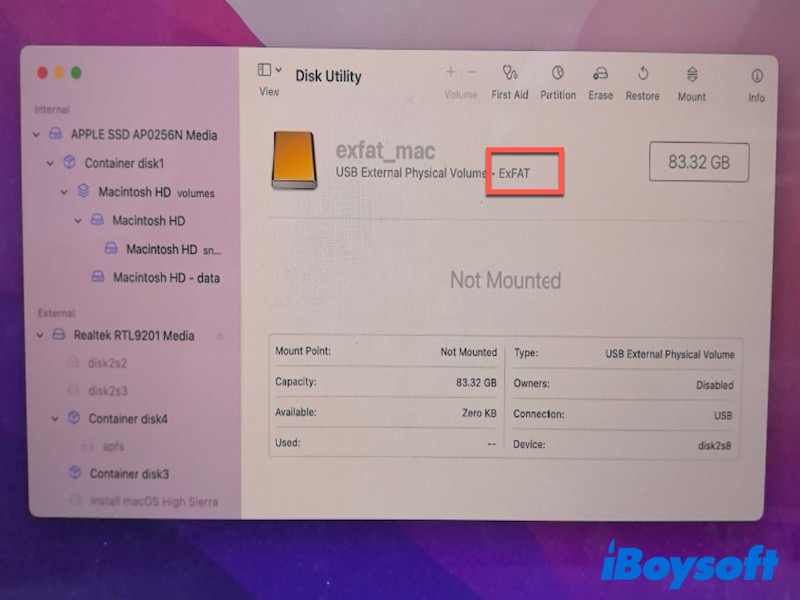
If the drive is detected but cannot be opened, check its format first:
Not supported by macOS:
- If it shows NTFS → use a compatible NTFS driver or open it on Windows
- If it is encrypted → unlock it with the correct password
- If it uses Linux EXT formats (EXT3/EXT4) → access it on a compatible system, copy your files, then reformat
Mac-compatible but still unreadable:
- If it is exFAT or FAT32 but won't open → the file system is likely corrupted, and you should move to repair or recovery steps
Fix 2 – Update macOS to Resolve USB Recognition Issues
This method is for the disk you inserted that was not readable by this computer, while the same devices work normally on other computers.
- Open System Settings (System Preferences).
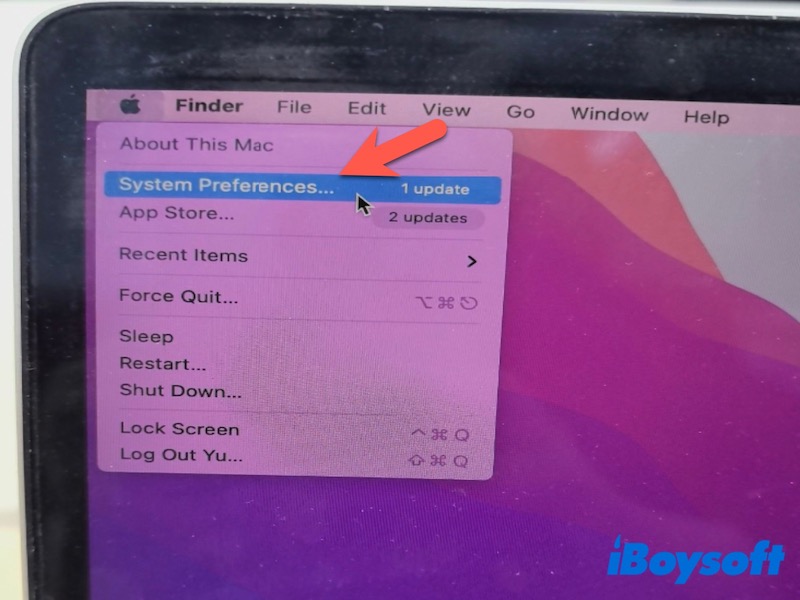
- Go to General → Software Update.
- Install any available macOS updates.
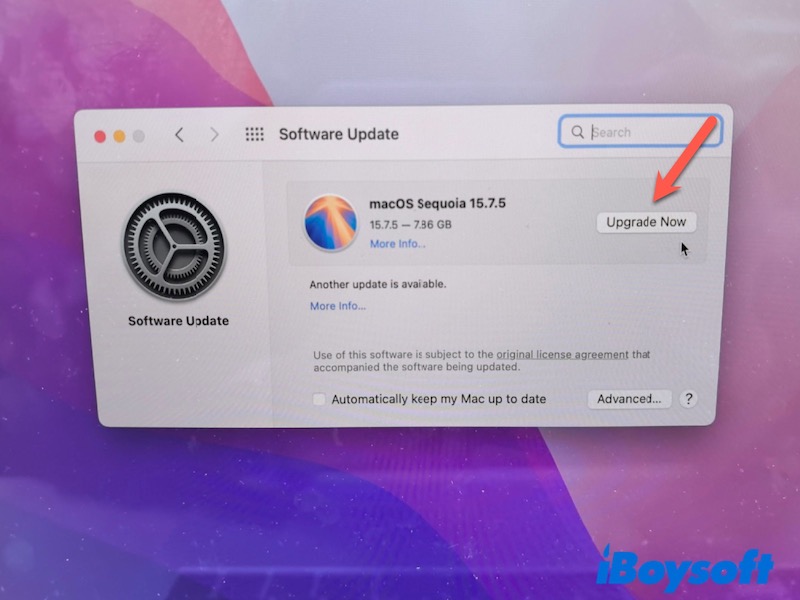
- Restart your Mac and reconnect the USB drive.
macOS updates can fix system-level USB recognition issues caused by software bugs or outdated components.
Fix 3 – Repair the USB Using Disk Utility or Terminal
This applies when multiple USB drives fail to be consistently recognized on the same Mac, while those same devices work normally on other computers, and the issue persists after reconnecting or restarting.
If the USB is visible in Disk Utility → start with Disk Utility (First Aid)
Disk Utility
- Open Disk Utility.
- Select the USB drive from the left panel. (not the volume name if multiple appear)
- Click First Aid.
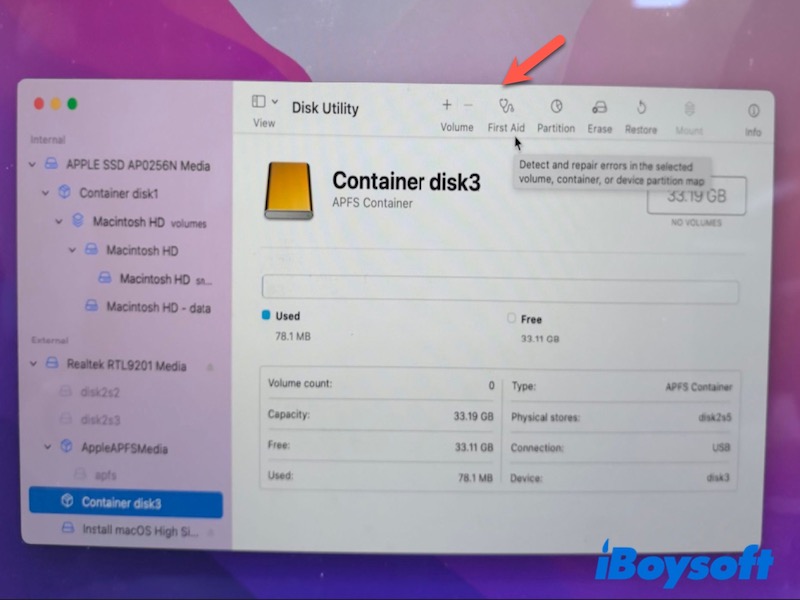
- Wait for the process to complete and check if the drive becomes accessible.
If Disk Utility First Aid fails on the external hard drive, or the USB cannot be repaired → use Terminal (advanced repair)
Terminal
- Open Terminal.
- First run: diskutil list to identify the USB disk number This shows all connected drives. Find your USB by size and name, and note the disk number (e.g.,/dev/disk2).
- Then run: diskutil repairDisk /dev/diskX Replace X with the correct disk number. This attempts to repair file system errors on the selected USB drive.
- If needed, run: fsck for deeper file system checks
This performs a lower-level scan when First Aid or diskutil repair is not sufficient.
Note:
- 1. Repair tools modify the file system structure
2. If the USB contains important data, there is a risk of further corruption in severe cases. If data is critical, recover files first before running repairs (Fix 4)
Fix 4 – Recover Data & Reformat the USB Drive
If the USB is showing as RAW or unreadable, cannot be mounted even after Disk Utility repair, or the system prompts you to initialize or format the USB drive on Mac, and important files are still stored on it, you should first recover the data before doing anything else. You can try some USB recovery tools.
Use iBoysoft Data Recovery for Mac to scan the drive and recover USB data on Mac even when macOS cannot detect or mount it. It supports RAW and corrupted USB drives, allows file preview before recovery, and works without modifying the original data during scanning.
Recover data first
- Download, install, and launch iBoysoft Data Recovery for Mac.
- Select the USB drive in the software.
- Click Scan for Lost Data.
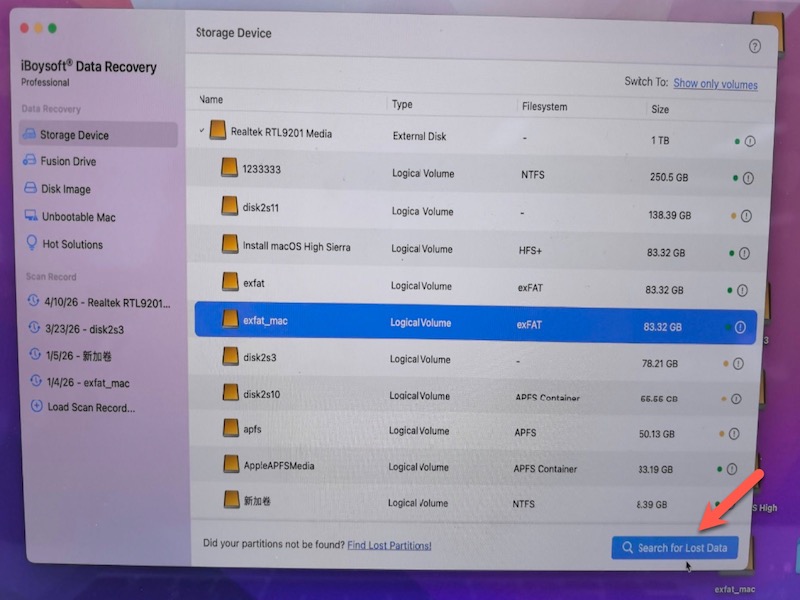
- Preview and select important files.
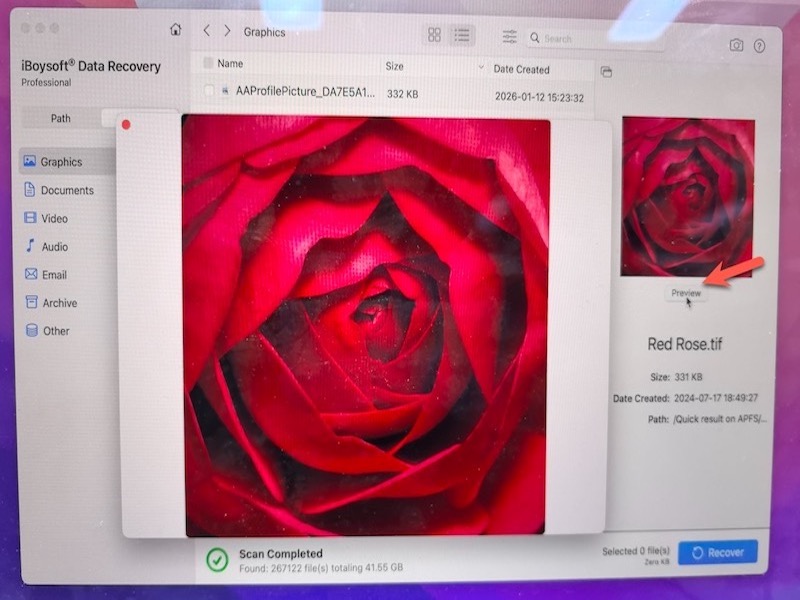
- Recover them to another storage device.
Warning: Data recovery tools can only restore files in their original readable state. Severely damaged or overwritten files cannot be repaired.
Reformat the USB (after recovery)
- Open Disk Utility.
- Select the USB drive.
- Click Erase.
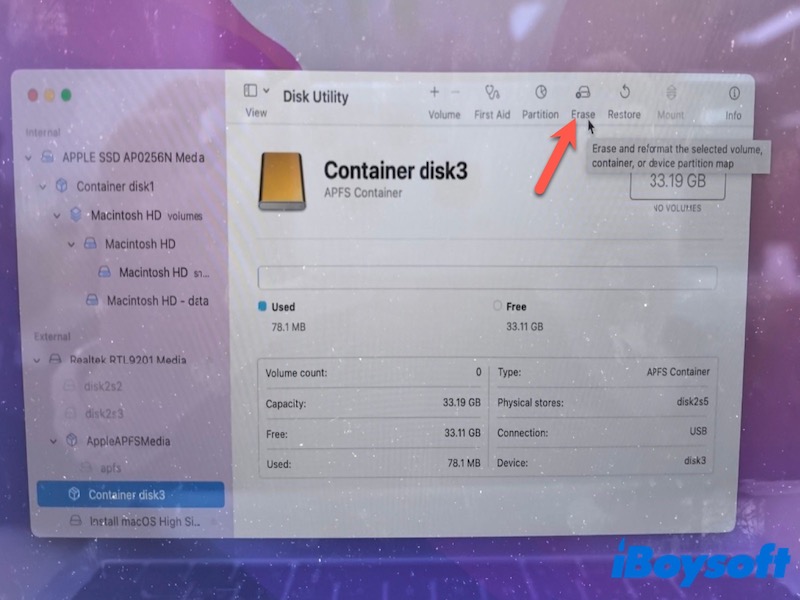
- Choose exFAT and confirm.
- Safely eject the drive and try it again if Disk Utility won't let you erase the USB drive on Mac.
Formatting permanently removes file system data. Always recover files first before formatting.
Fix 5 – Seek Professional Repair
If the USB is not detected on any computer, shows physical damage such as a bent connector or overheating, or keeps disconnecting across different devices, the issue is likely hardware-related rather than software corruption.
In this case, professional data recovery services may be required. They can perform chip-level recovery, repair or replace the controller, and use cleanroom techniques to retrieve data from physically damaged drives.
Why Your USB Is Not Readable on Mac
Common causes include:
- File system corruption (improper ejection, power loss)
- Unsupported format (NTFS, Linux formats)
- macOS compatibility issues
- Encryption not unlocked
- Physical damage to USB hardware
- The USB drive is not mounting on the Mac
Most USB readability issues are logical, not physical, meaning data is often recoverable if not overwritten.
Prevention Tips
To avoid USB readability issues in the future:
- Always eject the USB safely
- Avoid interrupting file transfers
- Use exFAT for cross-platform drives
- Keep backups of important data
- Avoid using unreliable adapters or hubs
Conclusion
A USB not readable on Mac is not necessarily a serious problem — but your actions determine whether the data is recoverable.
The safest approach is:
- Identify the cause first
- Avoid formatting too early
- Recover data before attempting repairs
FAQs
- Q1.How to fix USB flash drive not detected
-
A
First, check whether the issue is caused by a faulty port or cable by plugging the USB into another port or computer. If it is still not detected, try updating macOS, resetting system recognition, or checking Disk Utility/System Information. If the USB does not appear on any device, it is likely a hardware failure and may require professional repair.
- Q2.Why is my USB detected but not readable on Mac?
-
A
This usually happens due to file system incompatibility (such as NTFS or Linux EXT formats), file system corruption, or encryption issues. In some cases, macOS may detect the drive but cannot mount it properly due to system errors. The data is often still recoverable if no formatting has been performed.