When your Toshiba external hard drive is not showing up on Mac, you'll lose access to its files. But that doesn't mean the files are permanently lost, or the drive is dead. The issue can be caused by different factors, ranging from a simple connection problem to file system corruption, or even hardware failure.
The key is to diagnose the exact cause first instead of trying random fixes. In this article, you'll learn how to quickly determine whether your drive is detected, what each situation means, and the safest steps to take next so that you can fix the issue without data loss.
Step 1 — Is the Drive Detected at the Hardware Level?
First, check whether your Mac can detect the drive at a hardware level. This helps you quickly determine whether you're dealing with a connection issue or a deeper problem.
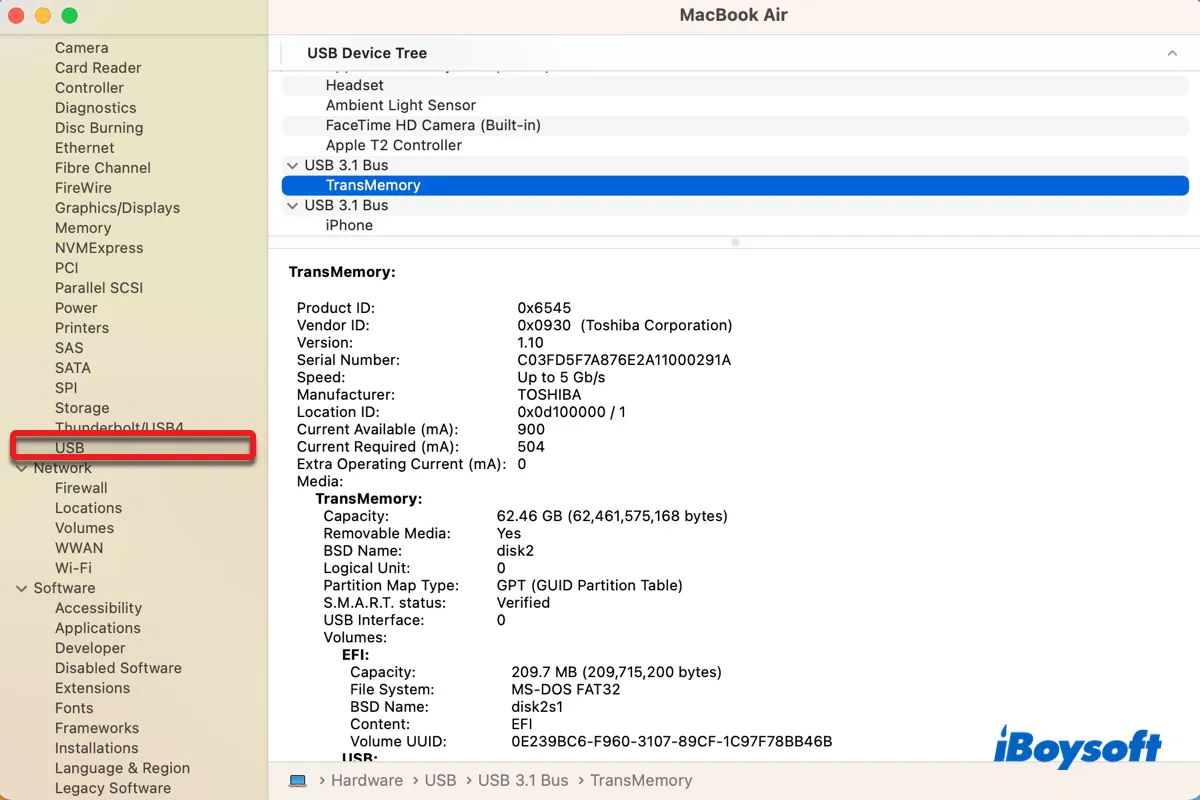
Press Command-Space and type in "System Information," then select USB under Hardware. Then check whether your Toshiba external hard drive appears in the device list.
Then you may see:
Case A: The drive does NOT appear at all
This usually points to a hardware-related issue, such as:
- A faulty or loose cable
- A damaged USB port
- Insufficient power supply
- Or potential physical damage to the drive
Case B: The drive appears but is not accessible
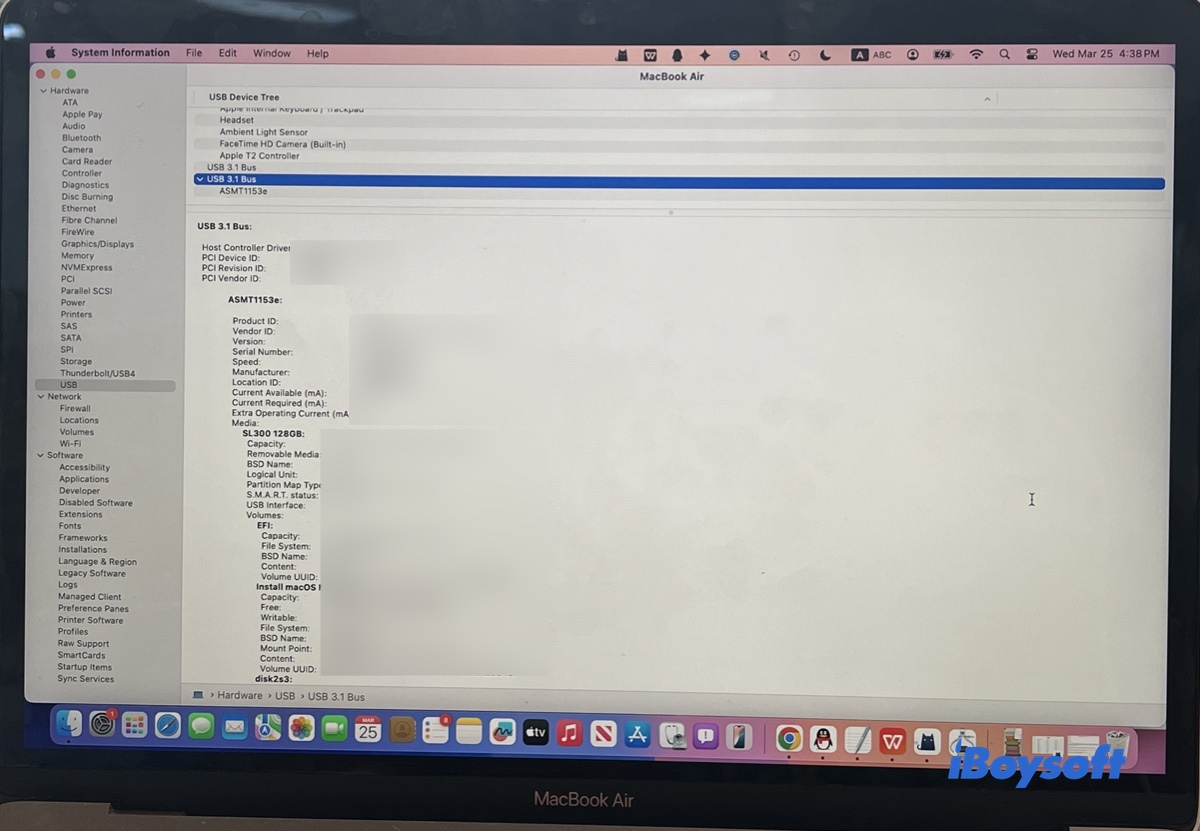
This means the connection is working, but macOS cannot use the drive properly. The issue is likely related to:
- Mounting failure
- File system errors
- Format compatibility (e.g., NTFS)
⚠️ If you find one of the following signs, it indicates hardware failure or physical damage, and continuing to operate the drive may worsen the condition or reduce the chances of data recovery. Stop repeated plugging, unplugging, or repair attempts immediately, and don't continue the troubleshooting:
- You hear clicking or unusual mechanical noises.
- You encounter I/O errors when trying to access the drive.
- The drive's LED keeps flashing abnormally without responding.
Step 2 — Check the Drive Status in Disk Utility
If your Toshiba external hard drive appears at the hardware level, the next step is to check its status in Disk Utility.
Open Disk Utility, then click View → Show All Devices to make sure all volumes and partitions are visible.
Case A: The drive is visible but not mounted (grayed out)
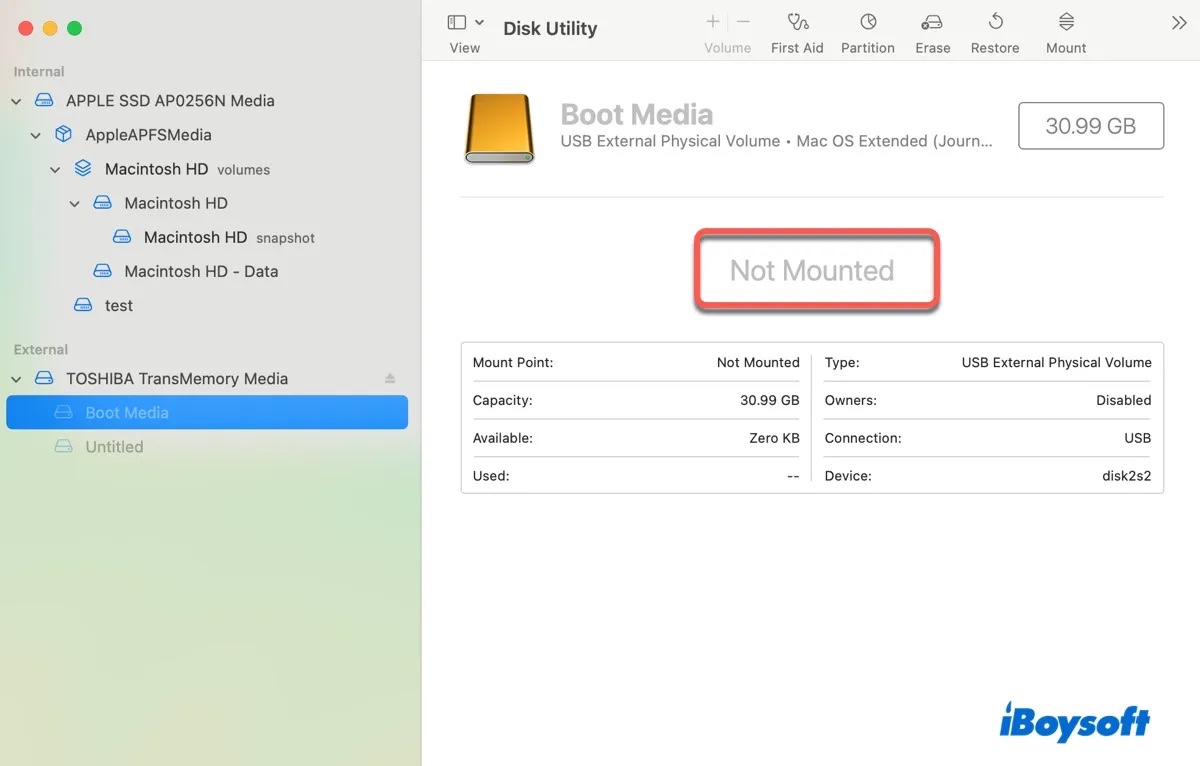
This usually means the drive is detected but not currently accessible. Select the volume and click Mount. In many cases, this is enough to restore access.
Case B: Mounting fails
If the drive refuses to mount, macOS may display an error message such as: "com.apple.DiskManagement error -49244."
Make sure to note the exact error code, as it can help identify whether the issue is related to file system corruption or deeper disk problems.
Case C: The drive is not visible in Disk Utility
If the drive appears in System Information but not in Disk Utility, it usually indicates your Mac detects the hardware, but can't recognize or access its storage structure. Common causes include: corrupted or missing partition map, severe file system damage, unsupported or unusual file system, or early-stage hardware failure.
Step 3 — Run First Aid (Before You Do, Read This)
If mounting the Toshiba drive fails, you can try running First Aid in Disk Utility to check and repair the file system.
However, it's important to understand its limitations before proceeding.
⚠️ While First Aid can fix logical file system errors, such as directory inconsistencies, it cannot repair physical damage or hardware-related failures.
- Open Disk Utility.
- Select the unmounted Toshiba hard drive and click First Aid at the top of the window.
- Wait till the verification and reparation process ends.
Note: First Aid failure does not always mean the drive is completely dead. It simply means the damage is beyond what macOS's built-in repair tool can handle. In many cases, data may still be recoverable, depending on the drive's condition.
Step 4 — Basic Hardware Isolation
If the drive is still not accessible, it's important to rule out basic hardware issues. Follow these checks in order of priority:
Try a different USB cable
Faulty or low-quality cables are one of the most common causes of detection issues. Try a different USB cable that's compatible with your Toshiba external hard drive.
Connect the drive directly to your Mac
Avoid using USB hubs or adapters, as they can cause unstable connections or insufficient power. Try to connect it to an externally powered USB hub, or try to insert the Type-C Multi-Port Adapter into another USB port on your Mac.
Test the drive on another computer
This helps determine whether the issue is with the drive itself or your Mac.
Test on a Windows PC (if available)
If the drive is recognized on Windows but not on macOS, the issue is likely related to file system compatibility rather than hardware failure.
Update the USB driver
Update the USB 3.0 driver of your Toshiba hard drive to the latest version on Mac.
Most of the time, you can see the Toshiba external hard drive showing up on Mac again after these checks. If not, let's move forward.
If the Drive Is NTFS (Read-Only on macOS)
Many Toshiba external drives are formatted using NTFS, which is designed for Windows. By default, macOS can read NTFS drives, but it cannot write to them. In some cases, NTFS drives may also fail to mount properly, especially if there are minor inconsistencies.
That's to say, the drive itself may be perfectly healthy, and the issue is due to file system compatibility, not hardware failure. So there are two safe ways to proceed with an NTFS drive:
👉 Learn more about the Toshiba NTFS drive read-only on Mac
Option B: Use an NTFS driver on macOS, like iBoysoft NTFS for Mac
- Enables full read/write access on Mac
- Useful if you need to continue using NTFS without reformatting
Warning:
- 1. Some Third-party NTFS drivers may affect system stability or performance, so it's important to pick a reliable one.
- 2. Avoid frequent unplugging or hot-swapping, especially when using such drivers.
- 3. If your data is important, always keep a backup before making changes.
When Data Is More Important Than the Drive
At a certain point, continuing to "fix" the drive can do more harm than good. If your files matter, your priority should shift from repairing the disk to protecting and recovering the data.
⚠️ Signs you should stop repairing and focus on data recovery
- First Aid reports serious or irreparable errors
- SMART status shows warnings or failure
- You encounter I/O errors during mounting or file access
- No backup is available
If you're seeing one or more of these signs, avoid repeated repair attempts, reformatting, or continuous scanning. These actions can further reduce the chances of successful recovery.
You should also set good expectations for recovery success. Recovery is not guaranteed. The success depends on the level of damage. If your drive has logical issues, it has a higher success rate. However, if it has physical damage, it's more unpredictable.
Tips: Always save recovered files to a different drive, as saving to the same drive may overwrite the files you want to recover, leaving them unrecoverable.
To recover data from the Toshiba external hard drive on Mac, you can use iBoysoft Data Recovery for Mac. It's capable of restoring lost photos, videos, documents, and music files from unreadable, corrupted, damaged, formatted, and inaccessible external drives on Mac OS X 10.11 El Capitan and later versions.
Tutorial to recover data from the Toshiba external hard drive with iBoysoft Data Recovery for Mac:
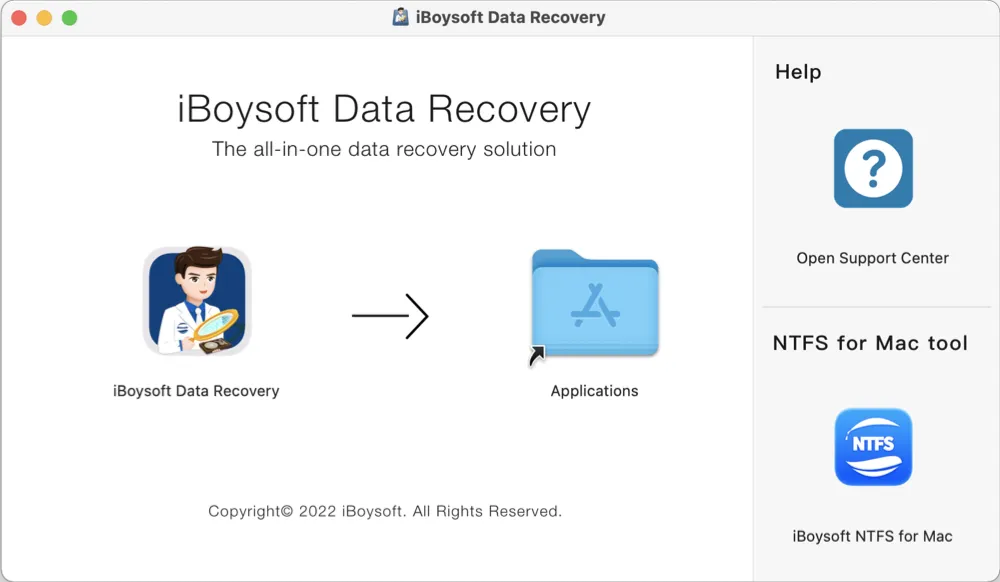
Step 1: Download, install and launch iBoysoft Data Recovery for Mac. For the first-time installation, you need to allow Full Disk Access and enable system extensions on Mac. If you have any problems doing that, click the hyperlinks to get more details.
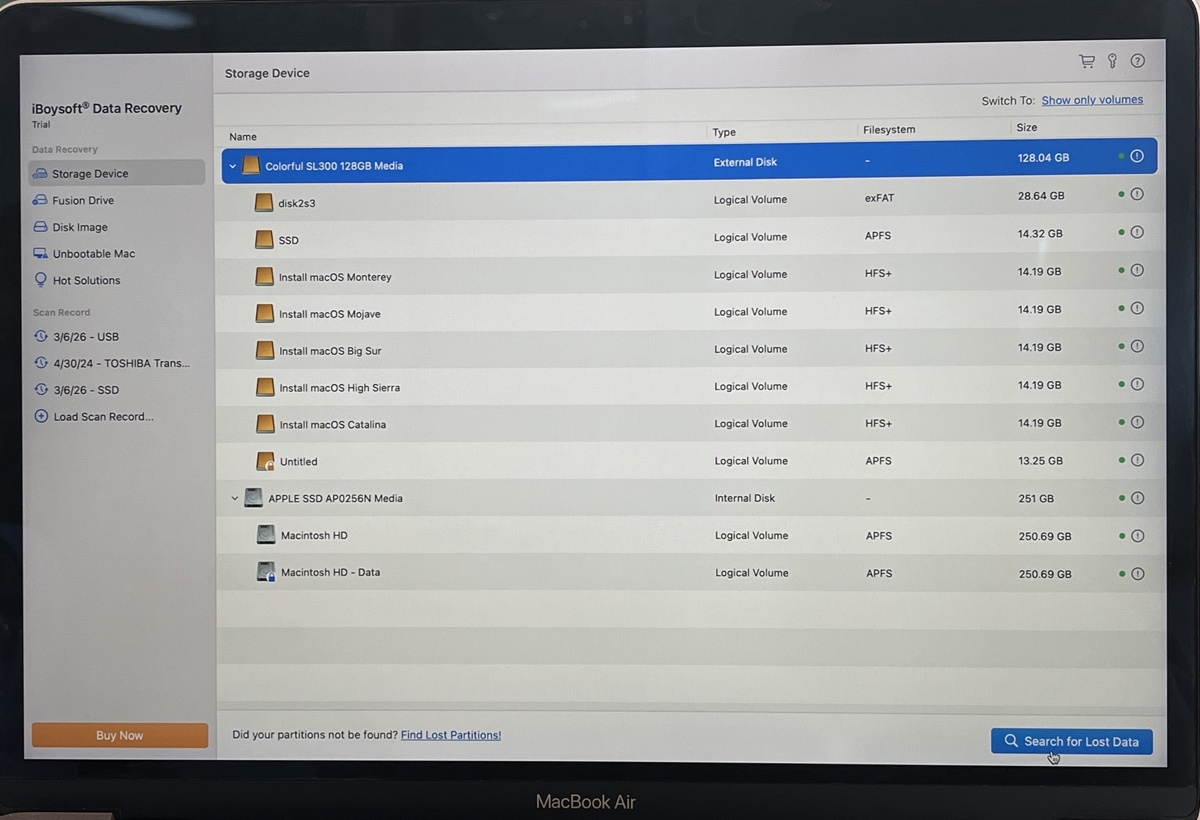
Step 2: Select the Toshiba external hard drive that's not working and click the "Search for Lost Data" button. This program will start scanning for lost data.
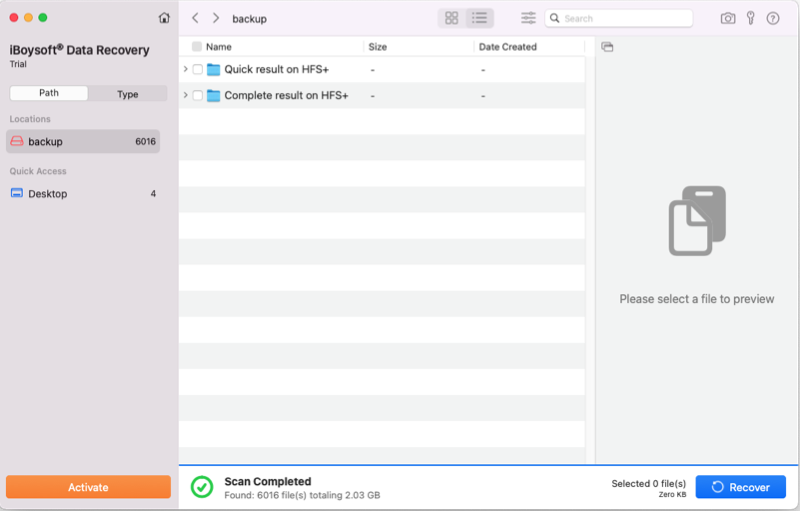
Step 3: You are allowed to pause or stop the scanning process and start the recovery at any time. But to recover the most data from your malfunctioning drive, you'd better wait until the scan is completed.
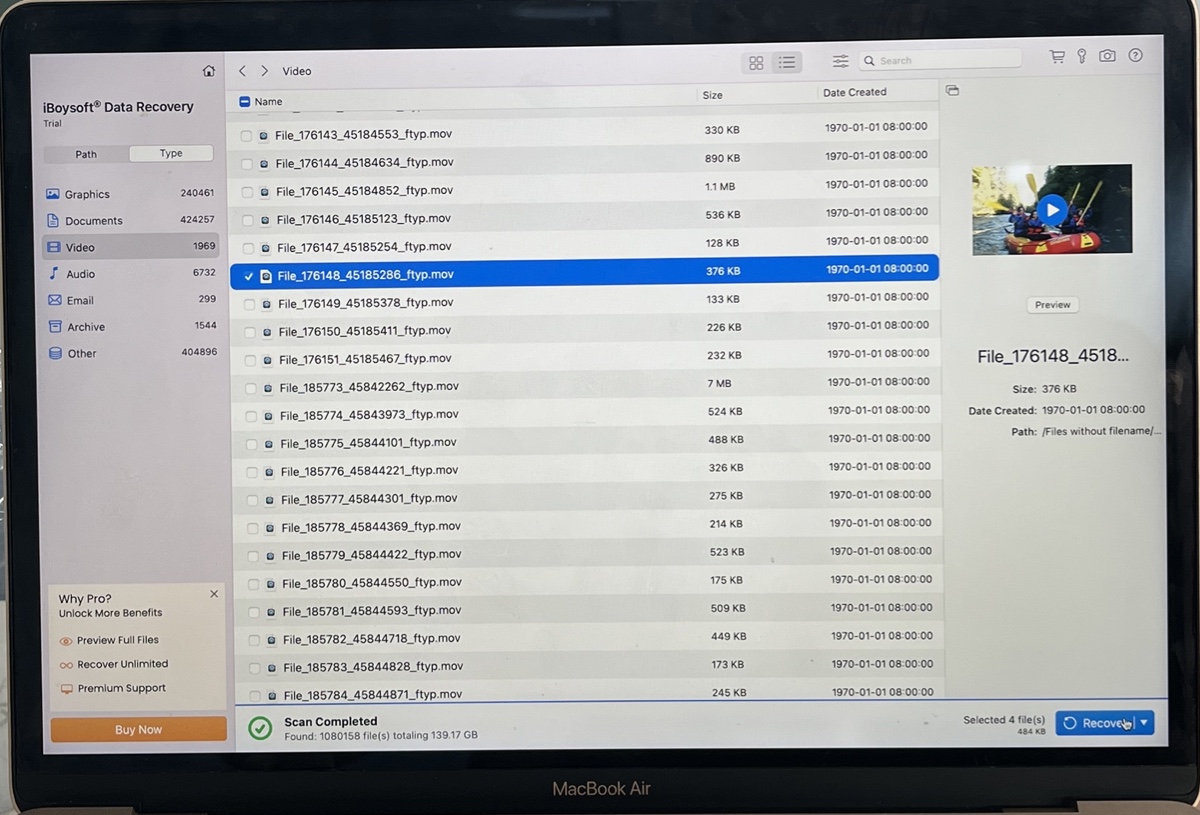
Step 4: Sort found files by different parameters if necessary. Then, select the files, and click the Preview button to check if the found files are corrupted.
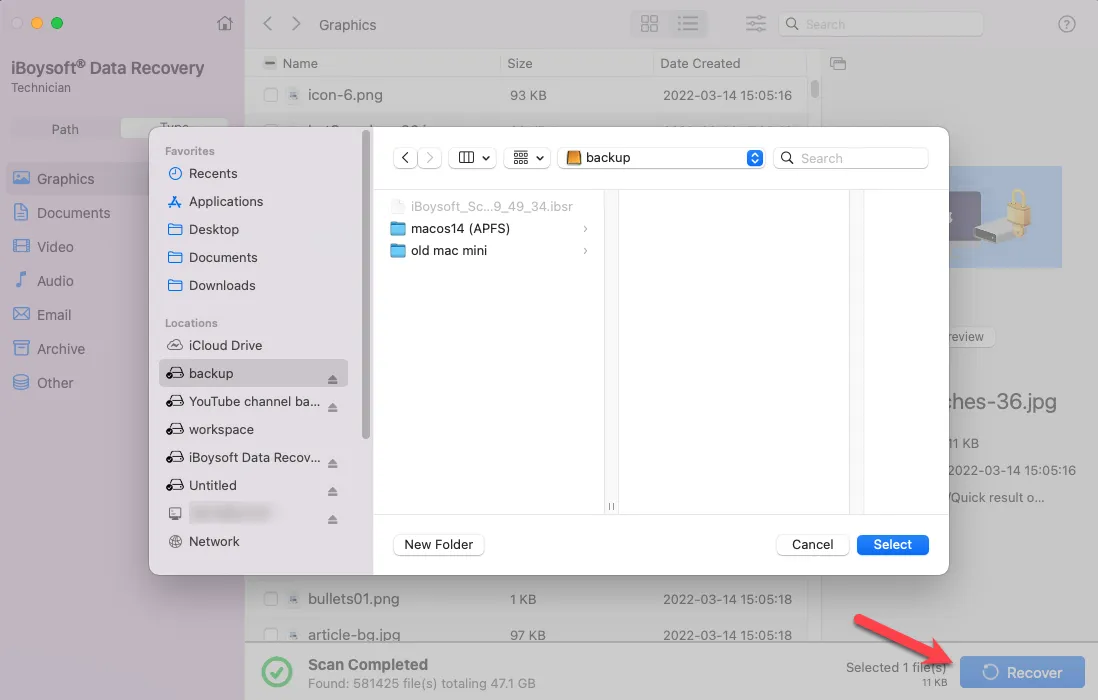
Step 5: Select the found files or folders that you want to recover by clicking the checkboxes next to them, and click the Recover button.
You can't save recovered files back to your not showing up Toshiba external hard drive, as it will cause permanent data loss. You can either save them to the internal drive of your Mac or connect another external storage device to your Mac if necessary.
When Reformatting Is Safe
Reformatting the Toshiba external drive can restore it to normal use, but only when you're certain it won't lead to data loss or further issues.
✅ Conditions that should be met before performing a reformat
- All important data has been backed up or recovered
- SMART status is normal (no hardware warnings)
- No unusual physical signs, such as clicking or buzzing noises
How to reformat the Toshiba drive on a Mac:
- Open Disk Utility.
- Click View > Show All Devices to reveal all disks and partitions.
- Select the unmounted Toshiba partition or the physical Toshiba disk and click Erase.
- Type a name.
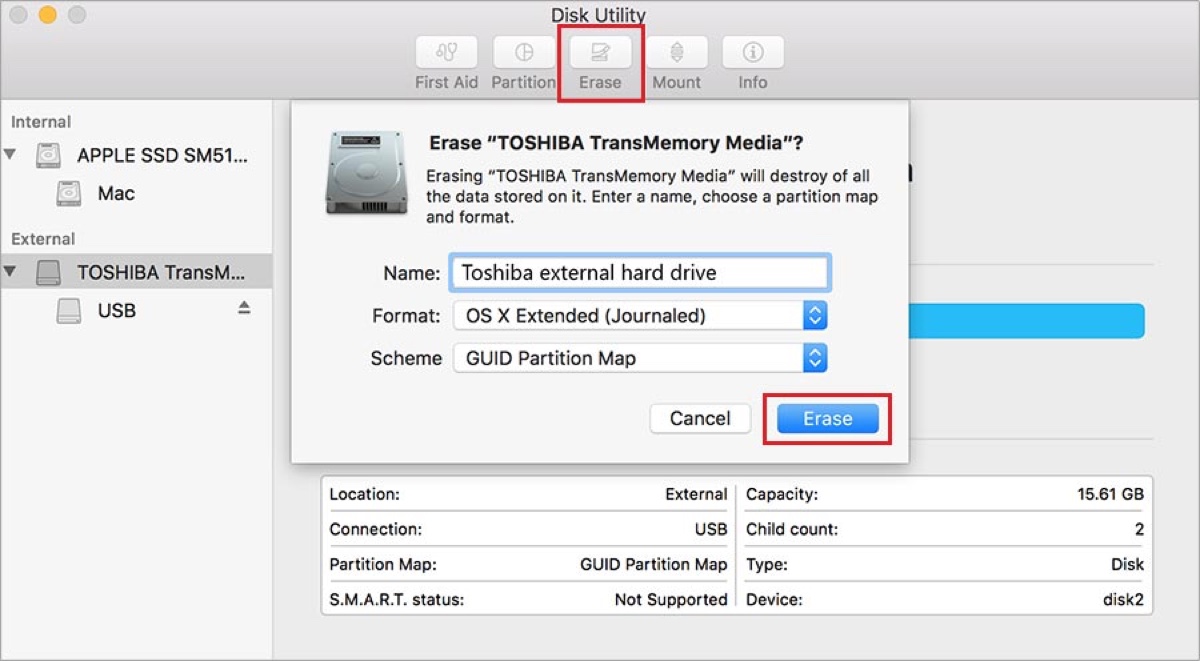
- Choose a format based on your needs. (APFS → best for Mac-only use; exFAT → compatible with both macOS and Windows) To learn more details, visit: How to Reformat External Drives on Mac
- Ensure the scheme is GUID Partition Map. (Only available if you chose the physical disk.)
- Click Erase again.
Note: Reformatting fixes file system issues, not hardware problems. If the drive has underlying physical damage, the issue may return even after formatting.
Signs of Physical Failure
Some symptoms clearly indicate that the problem is not just a software or file system issue, but physical damage to the drive. You should watch for the following warning signs:
- Clicking or unusual mechanical noises
- The drive becomes abnormally hot during use
- The LED behaves irregularly (e.g., the Toshiba external hard drive is blinking a blue light on Mac)
- The drive is not recognized on any device.
If you notice any of these signs, the issue is likely beyond what software can fix.
Note: DIY tools, including Disk Utility and data recovery software, cannot repair physical damage.
How to Prevent External Drive Issues on Mac
Once your Toshiba external disk is working again, or if you're setting up a new one, these habits can help you avoid similar issues in the future:
- Always eject the drive safely before unplugging.
- Avoid unstable USB hubs or adapters, especially for power-hungry drives.
- Avoid frequent cross-platform hot swapping (Mac ↔ Windows) without proper ejection.
- Check the disk regularly using Disk Utility to catch minor issues early.
Why is my Toshiba external hard drive not working on Mac?
There are various reasons why your Mac doesn't recognize an external hard drive. Generally, the problem of a Toshiba external hard drive not showing up or working on a Mac is caused by file catalog corruption, operating system errors, viruses, physical damage, etc.
How to Find USB Connected Devices on Mac and Open Them? (5 Ways)
This post tells you all the ways you can find your USB-connected Toshiba external hard drive on Mac. Read more >>
FAQs
- QDoes Toshiba external hard drive work with Mac?
-
A
Yes, Toshiba external hard drives are partially compatible with Mac computers. Most drives are pre-formatted in NTFS, which macOS can read but can't write to. Therefore, Toshiba drives formatted in NTFS will allow you to read their content but not to save new files to them. If you want to use the Toshiba drive on Mac in read/write mode, you can reformat it with a Mac-compatible format, such as APFS.
- QHow to configure Toshiba hard drive for MacBook?
-
A
To configure a Toshiba hard drive for a MacBook, you need to format it with a native macOS format.
1. Open Disk Utility.
2. Choose the Toshiba hard drive partition.
3. Name it.
4. Choose a file system. (If it's only used on your MacBook, choose APFS for macOS High Sierra and later; otherwise, go with Mac OS Extended (Journaled). If it's used cross-platform, choose exFAT.)
5. Click Erase and wait for the process to finish.