iBoysoft NTFS for Mac Online Help
Getting Started
iBoysoft NTFS for Mac is a full-featured NTFS driver for macOS. It can mount Microsoft NTFS drives in read-write mode on Mac, with or without enabling a kernel extension. It lets users read, write, copy, edit, delete, and move files on external NTFS drives, as well as the Windows BOOTCAMP partition on a Mac.
It supports transferring files between Windows and Mac computers with an NTFS drive without formatting it to FAT or exFAT. Besides, it also allows users to view disk information, unmount disks, check and repair NTFS disk errors, and erase disks to NTFS with one click.
Supported Operating Systems
macOS 27 Golden Gate, macOS 26 Tahoe, macOS 15 Sequoia, 14 Sonoma, 13 Ventura, 12 Monterey, 11 Big Sur, 10.15 Catalina, macOS 10.14 Mojave, macOS 10.13 High Sierra.
Supported Storage Devices
External hard drives, USB drives, SD cards, pen drives, flash drives, memory cards, CF cards, etc.
How to Install iBoysoft NTFS for Mac?
Step 1: Download iBoysoft NTFS for Mac from iBoysoft NTFS for Mac's official webpage.
Step 2: Double-click the .zip file, double-click the .dmg file, and then follow the instructions to finish the installation process.
Note: On macOS 11 or later, you will be asked to allow the utility to access files in your Desktop folder when you install the utility for the first time.
Step 3: After installation, the tool will open automatically.
How to Activate iBoysoft NTFS for Mac?
You need to purchase a license key and use it to activate iBoysoft NTFS for Mac before using the software to enable NTFS write support on Mac.
Step 1: Click "Purchase & Activate" in the bottom-left corner of the app's main interface.
Step 2: Purchase a license.
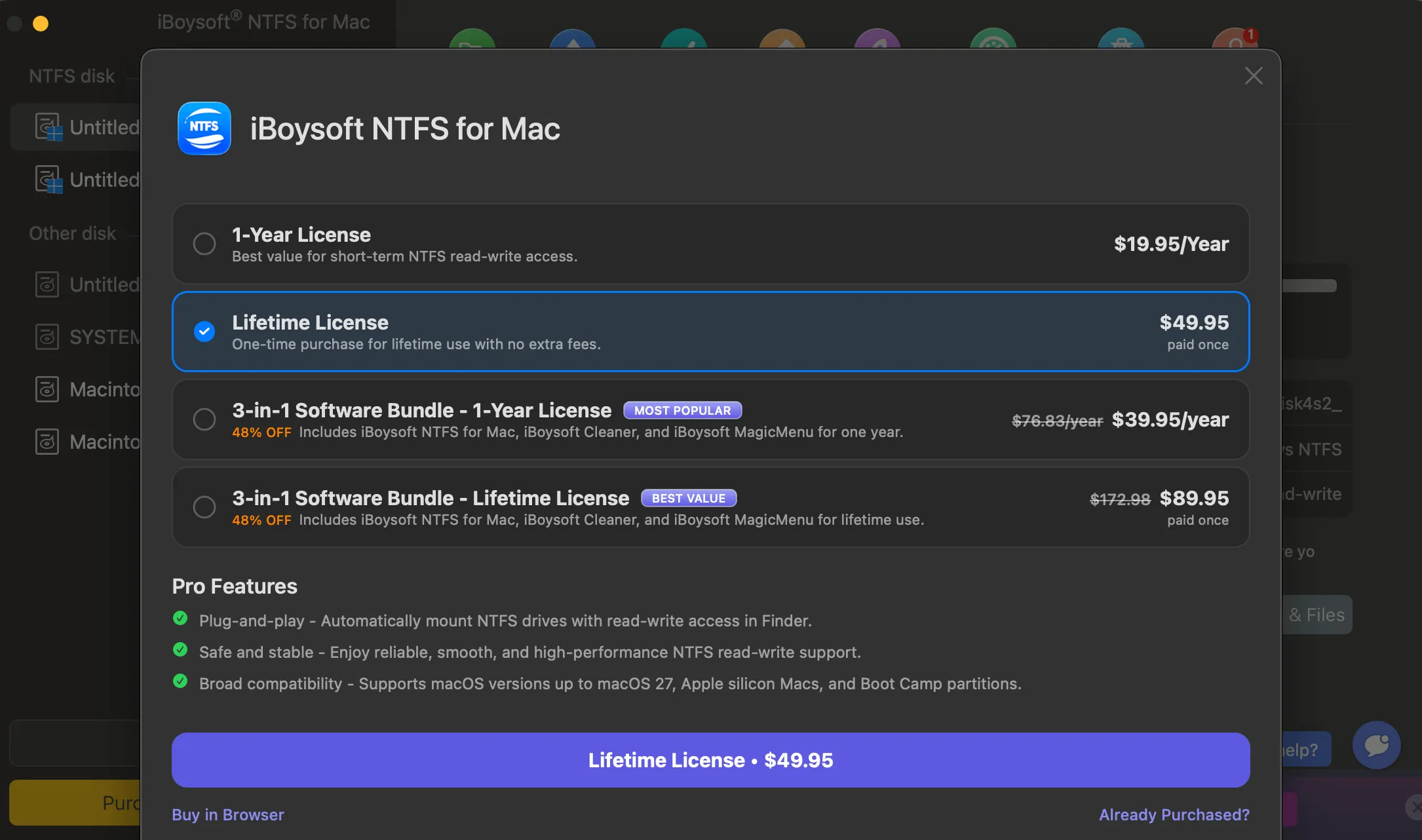
Step 3: After receiving the license key, click "Purchase & Activate" > "Already Purchased?", and copy and paste it to the license key field and then click "Activate".
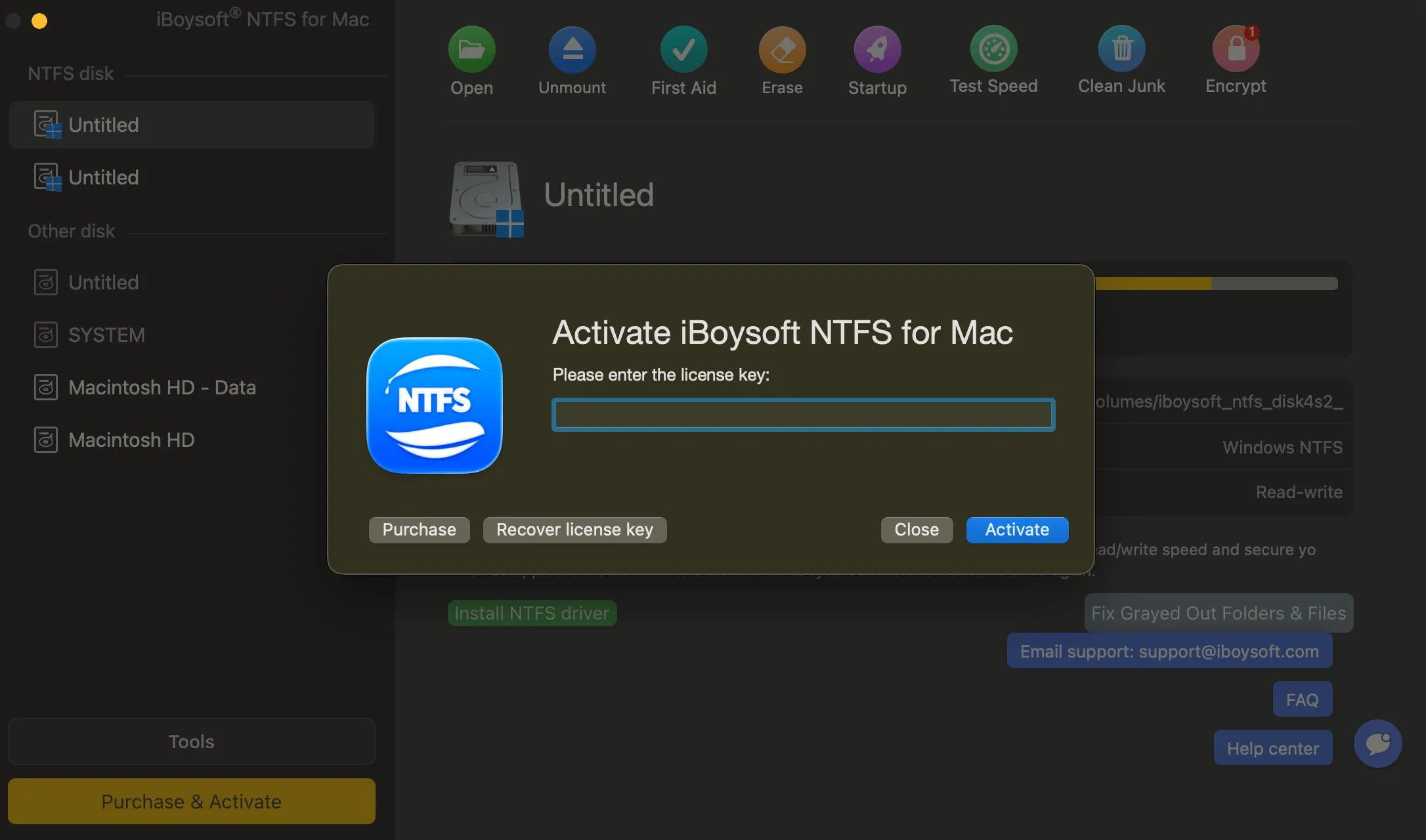
Note: Please make sure you have internet access (either Ethernet or Wi-Fi) while activating iBoysoft NTFS for Mac. If you are running a firewall or antivirus program on your computer, please temporarily turn it off to complete registration. Have no internet access or have other questions? Please contact us via [email protected].
How to Enable NTFS Drive Write Support on Mac?
Step 1: Connect your NTFS drive to the Mac.
Step 2: Select the NTFS drive in iBoysoft NTFS for Mac, click "Open" in the toolbar.
Step 3: Select a mode you prefer in the pop-up and click "Mount."
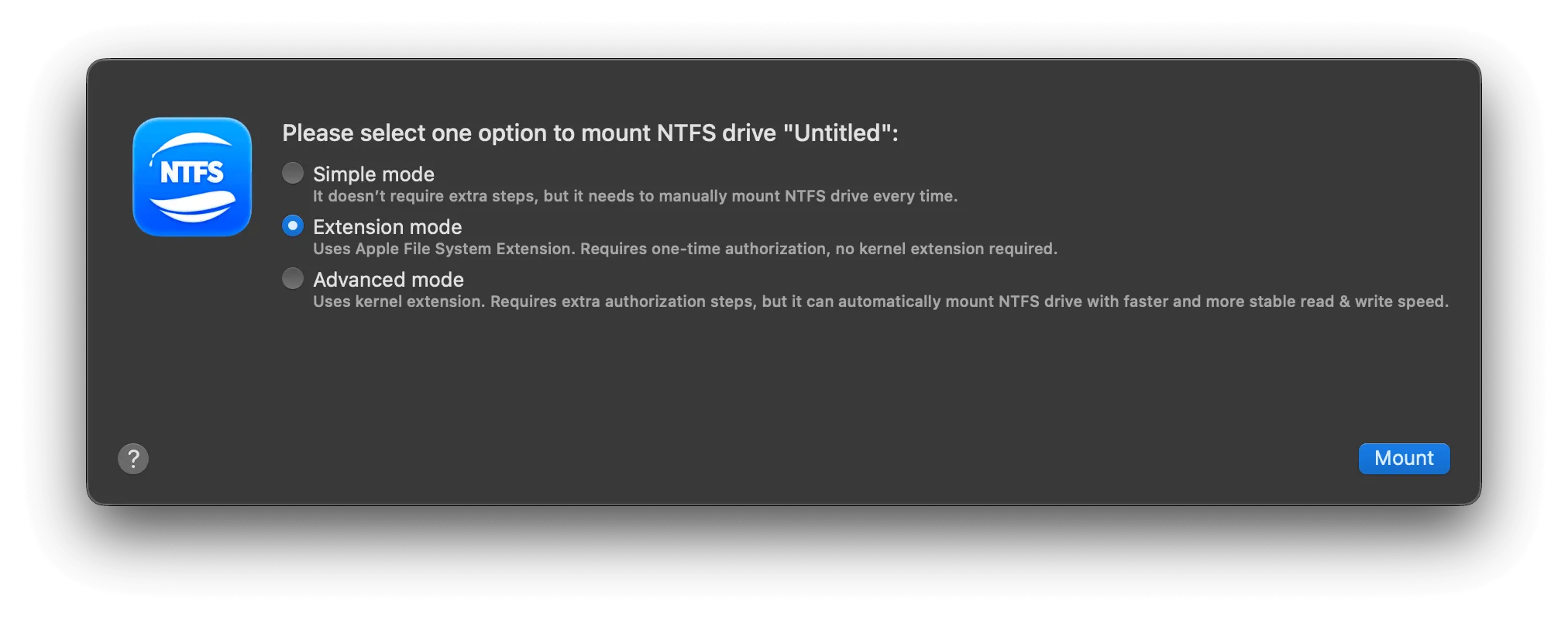
Here, you can see three modes:
Note: For macOS 15 Sequoia and earlier, only Simple mode and Advanced mode are available.
✓ Simple mode: Mount your NTFS drive in read-write mode directly without extra setup. However, you'll need to manually remount the drive each time you connect it to your Mac.
With this method, you can only access, read, and write to the disk using this software; the drive cannot be managed through Finder (it will not appear in the Finder sidebar) or mounted using Disk Utility.
✓ Extension mode: Uses iBoysoft's own NTFS file system implementation, which runs in macOS user space through Apple's FSKit framework. FSKit allows iBoysoft NTFS to integrate with macOS and provide read/write access to NTFS drives.
Unlike traditional NTFS drivers that run as kernel extensions, this mounting mode does not require enabling a kernel extension or restarting your Mac.
This method requires extra steps to enable the iBoysoft NTFS file system extension. After that, you can read and write to the NTFS drive in Finder even with this software closed. If you replug the disk, you should open iBoysoft NTFS for Mac and click "Mount" to remount it in read-write mode.
✓ Advanced mode: Automatically mount an NTFS drive in read-write mode with the iBoysoft NTFS driver. This method requires extra steps to install the iBoysoft NTFS driver and enable the system extension.
In this method, whenever you connect your NTFS disk to the Mac, it will be automatically mounted in read-write mode immediately after detected. No need to open the iBoysoft NTFS for Mac software.
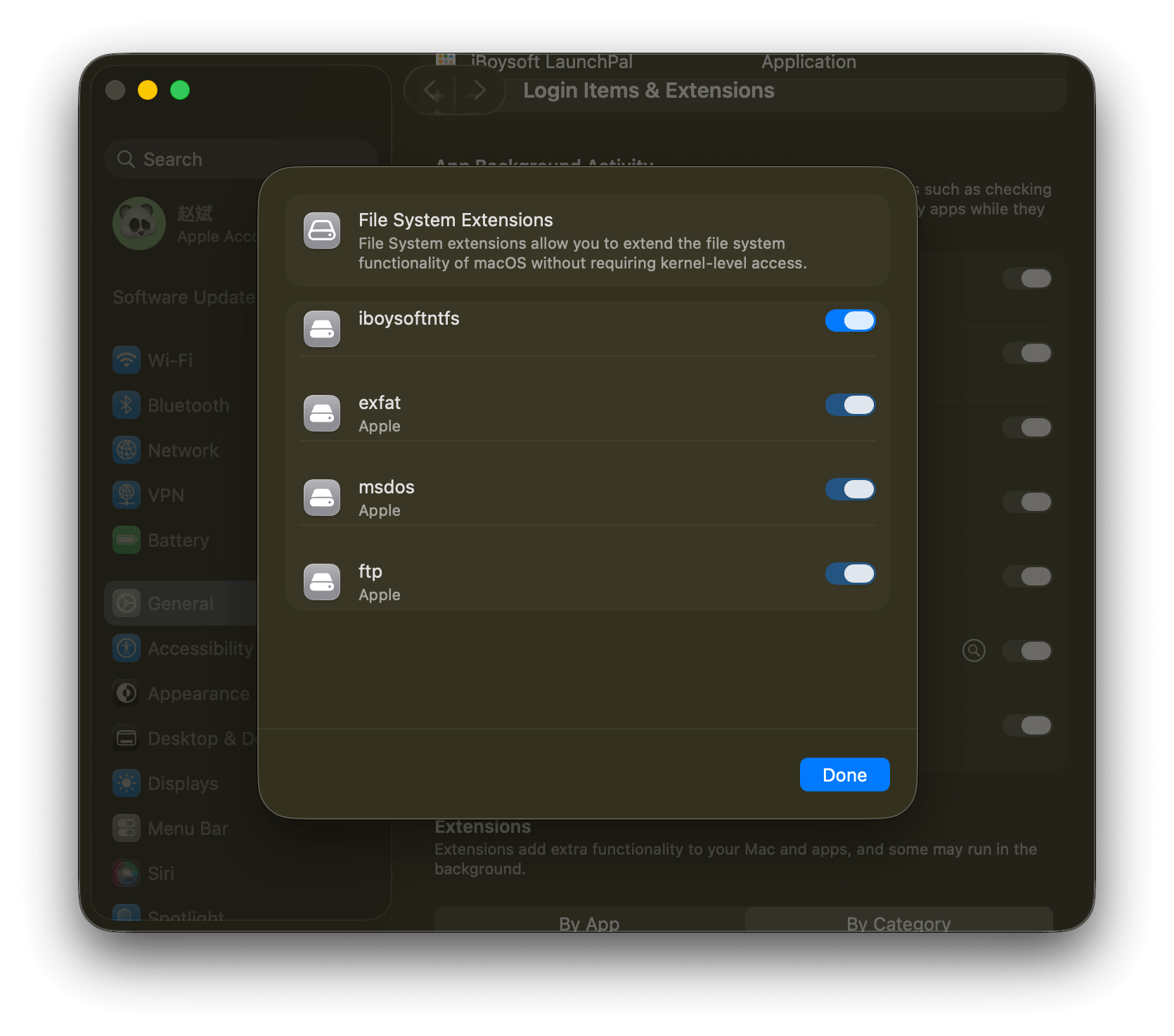
If you select the Extension mode, follow these extra steps:
#1. Click "Open System Settings" on the prompt to navigate to the System Settings window.
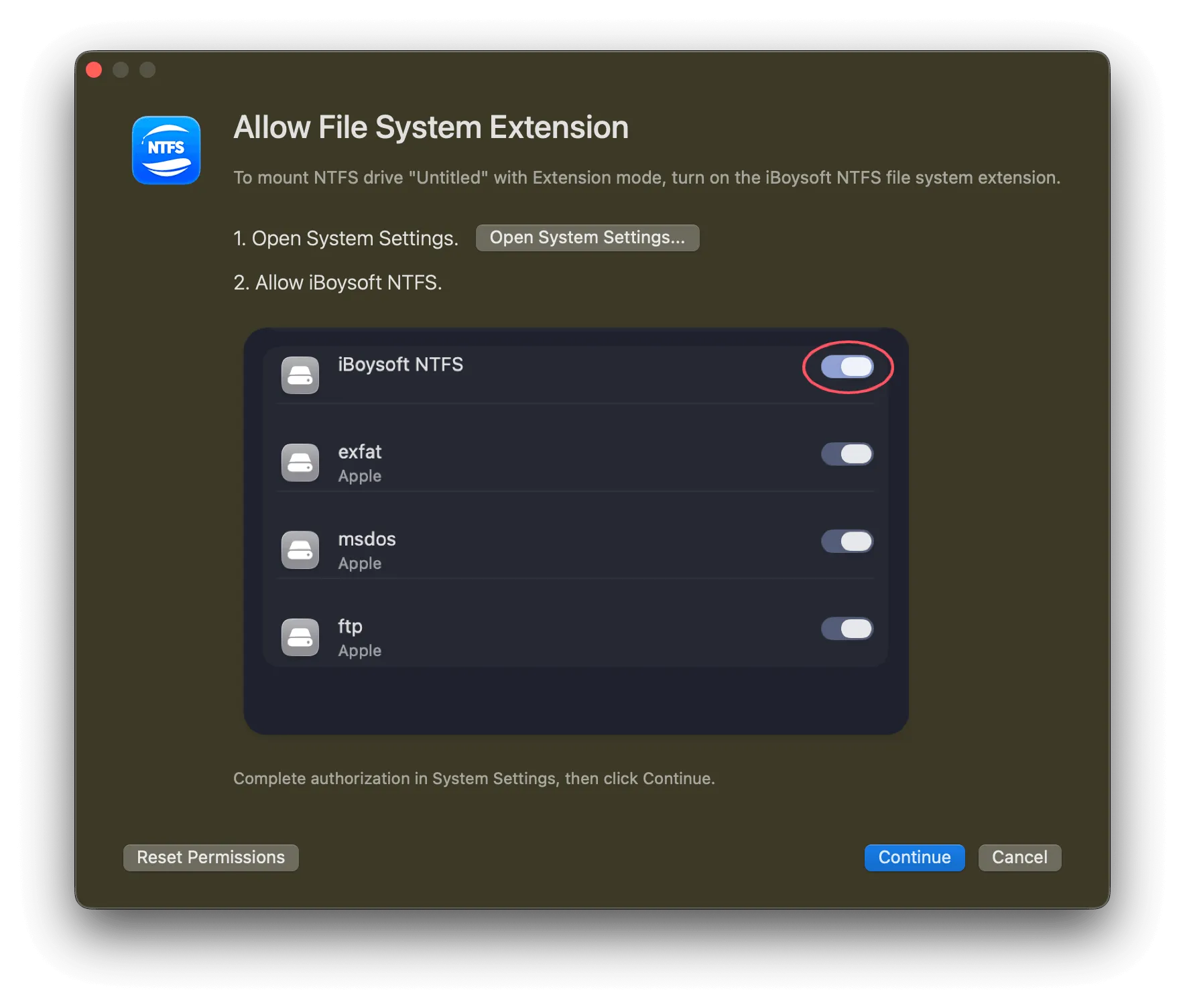
#2. Enable "iboysoftntfs" and click "Done."
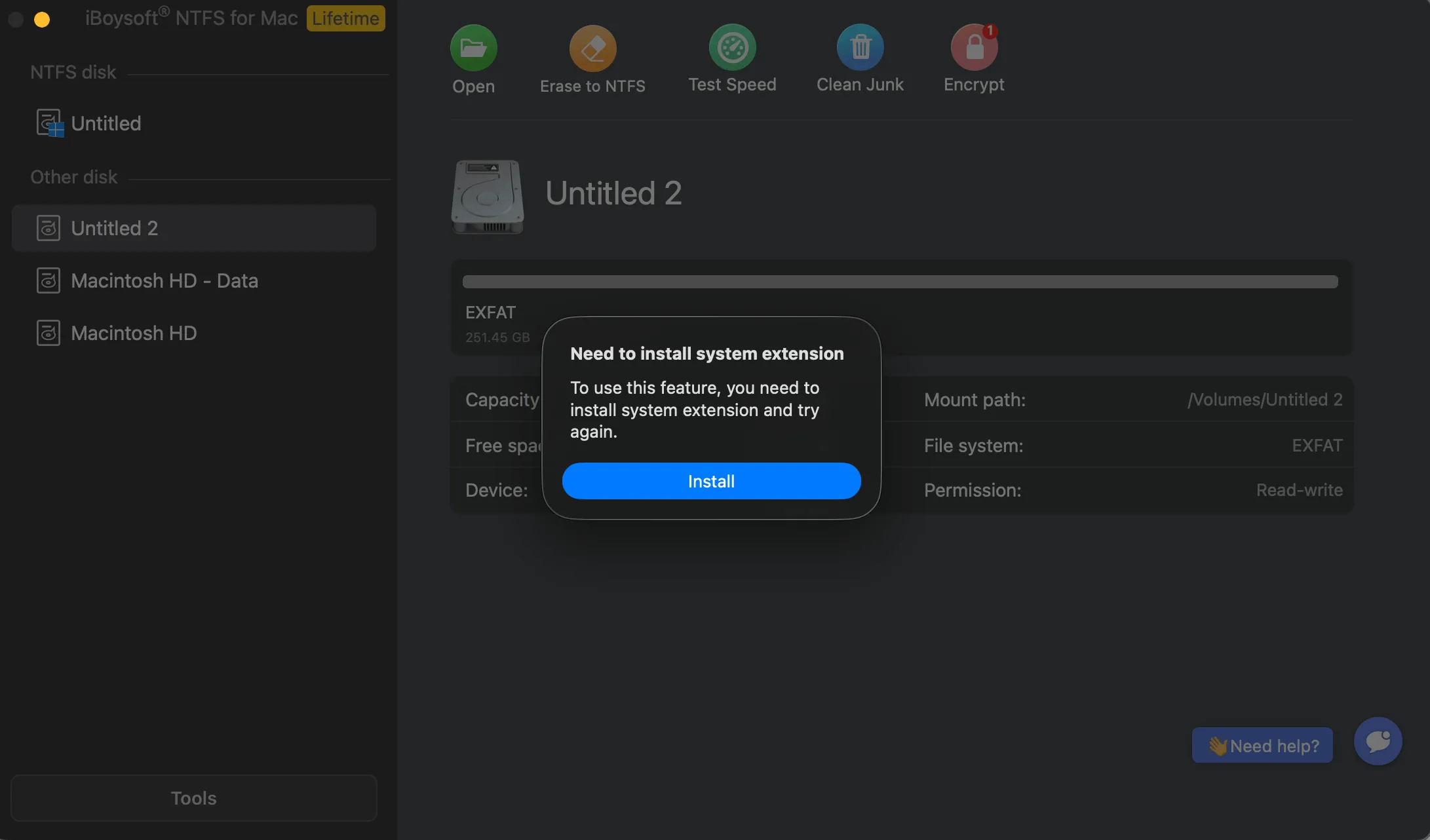
If you select the Advanced mode, follow these extra steps:
#1. Click "Install" on the prompt to install the iBoysoft NTFS driver.
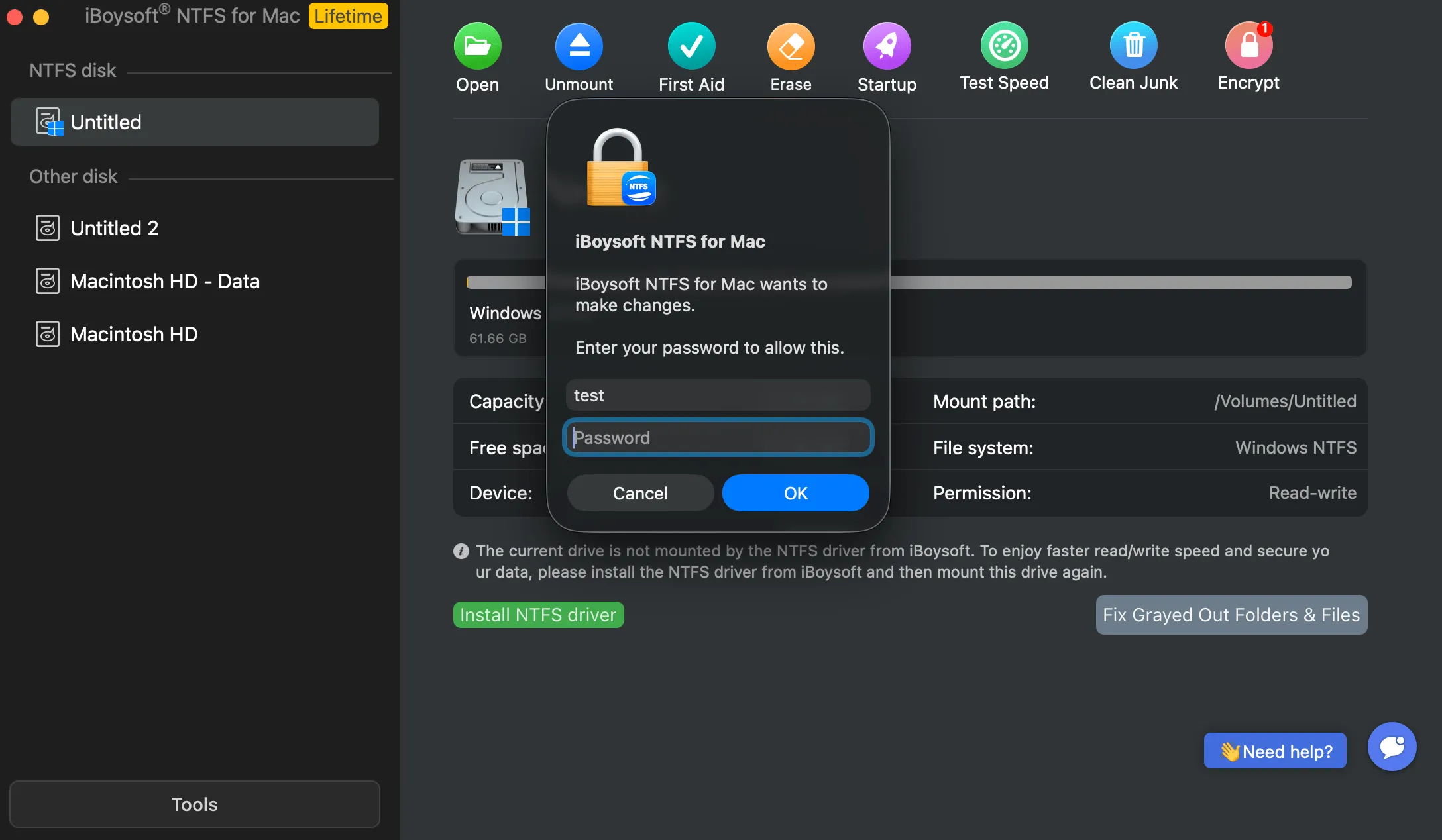
#2. Enter your admin password to allow iBoysoft NTFS for Mac to install the driver successfully.
#3. Click "Open Security Settings" when you see a System Extension Blocked pop-up and go to enable system extension.
Step 4: The NTFS drive will be automatically opened in read-write mode.
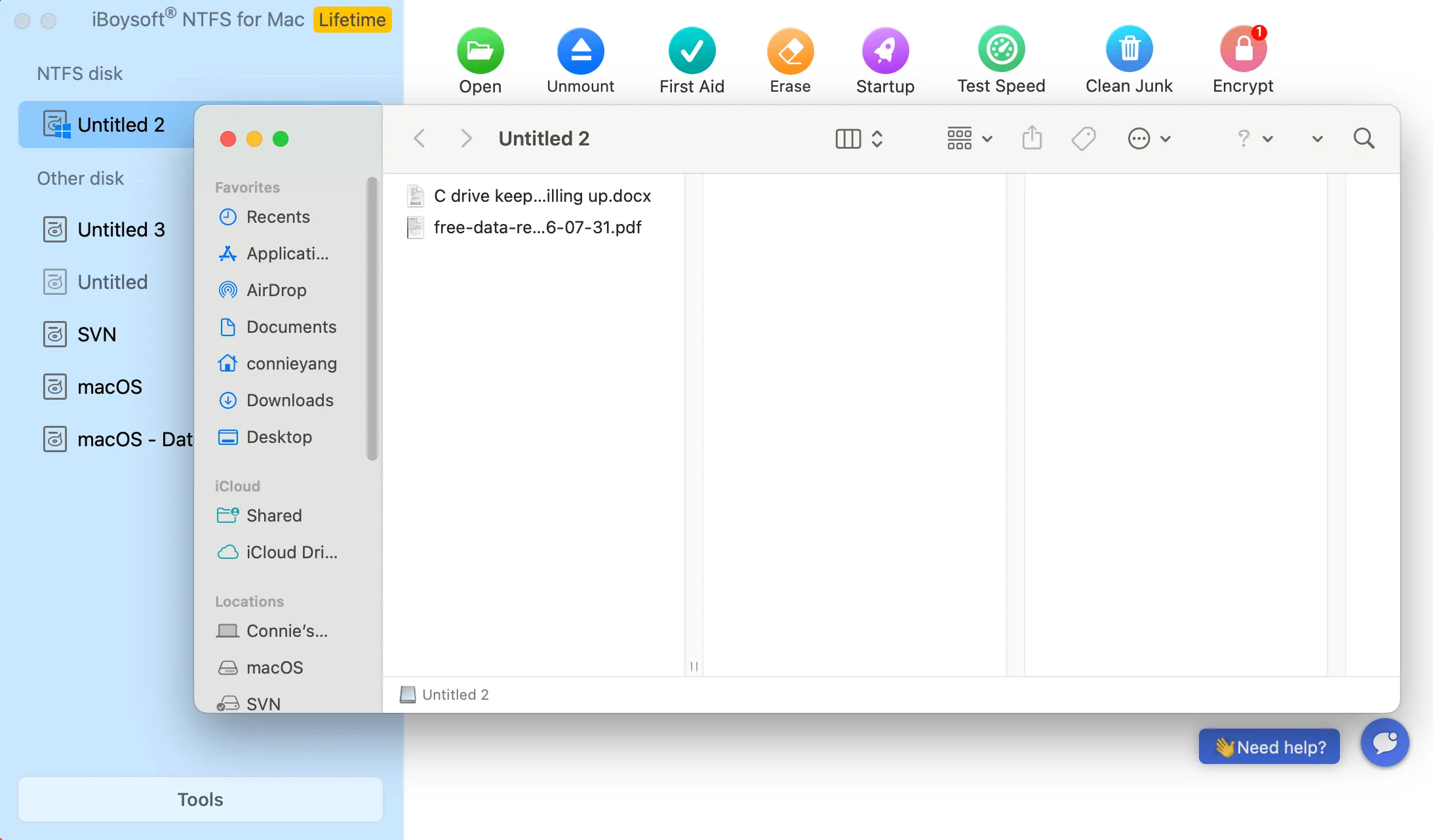
Now, you can read, write, edit, copy, delete, and move files on the NTFS disk as a native disk on Mac.
How to Enable System Extension on Mac?
To enable a system extension on an Apple Silicon M1/M2/M3/M4/M5 Mac, read our article here.
The following guide is for Intel-based Mac computers:
Step 1: Select "Advanced mode" and follow the setup wizard.
Step 2: When seeing "System Extensions Blocked", open the Security & Privacy tab and click the Lock to make changes.
Step 3: Click "Allow" in the context window or click "Details..." under "Some system software requires your attention before it can be used" to approve the developer: "Chengdu Aibo Tech Co., Ltd."
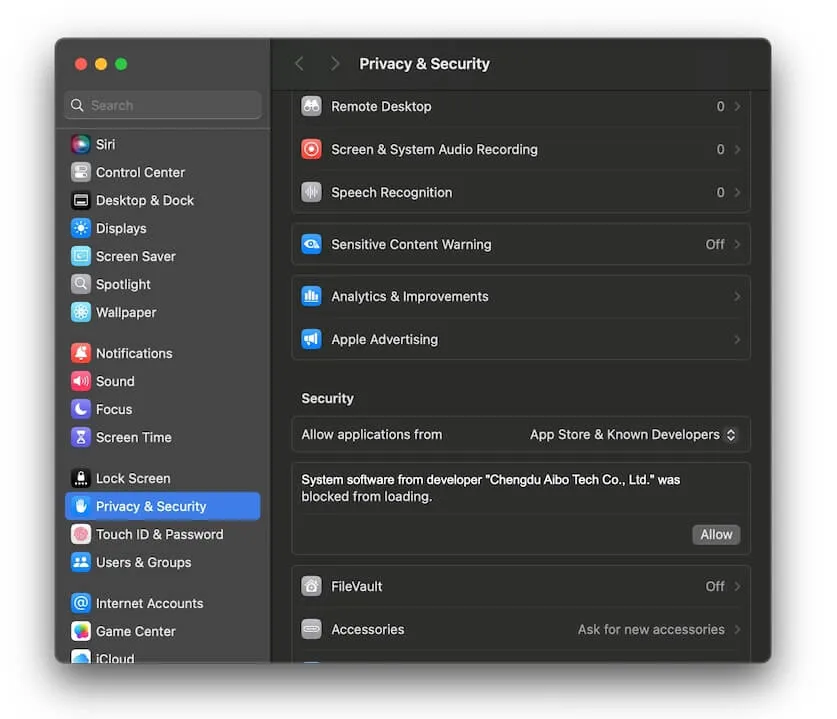
If you don't see the Allow option, click "Reload it" in the setup window to reload the system extension and then check if allow option appears, or click "Install NTFS driver" in "Settings" > "Advanced" of iBoysoft NTFS for Mac.
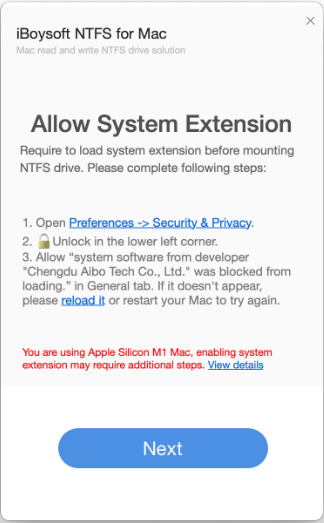
If the "Allow" option still does not appear, open the /Library/Extensions/ folder, manually delete the drivers that are not in use, and then reinstall iBoysoft NTFS for Mac and try again.
Step 4: Restart your Mac.
How to Manage NTFS Disks with iBoysoft NTFS for Mac?
How to Unmount an NTFS Disk?
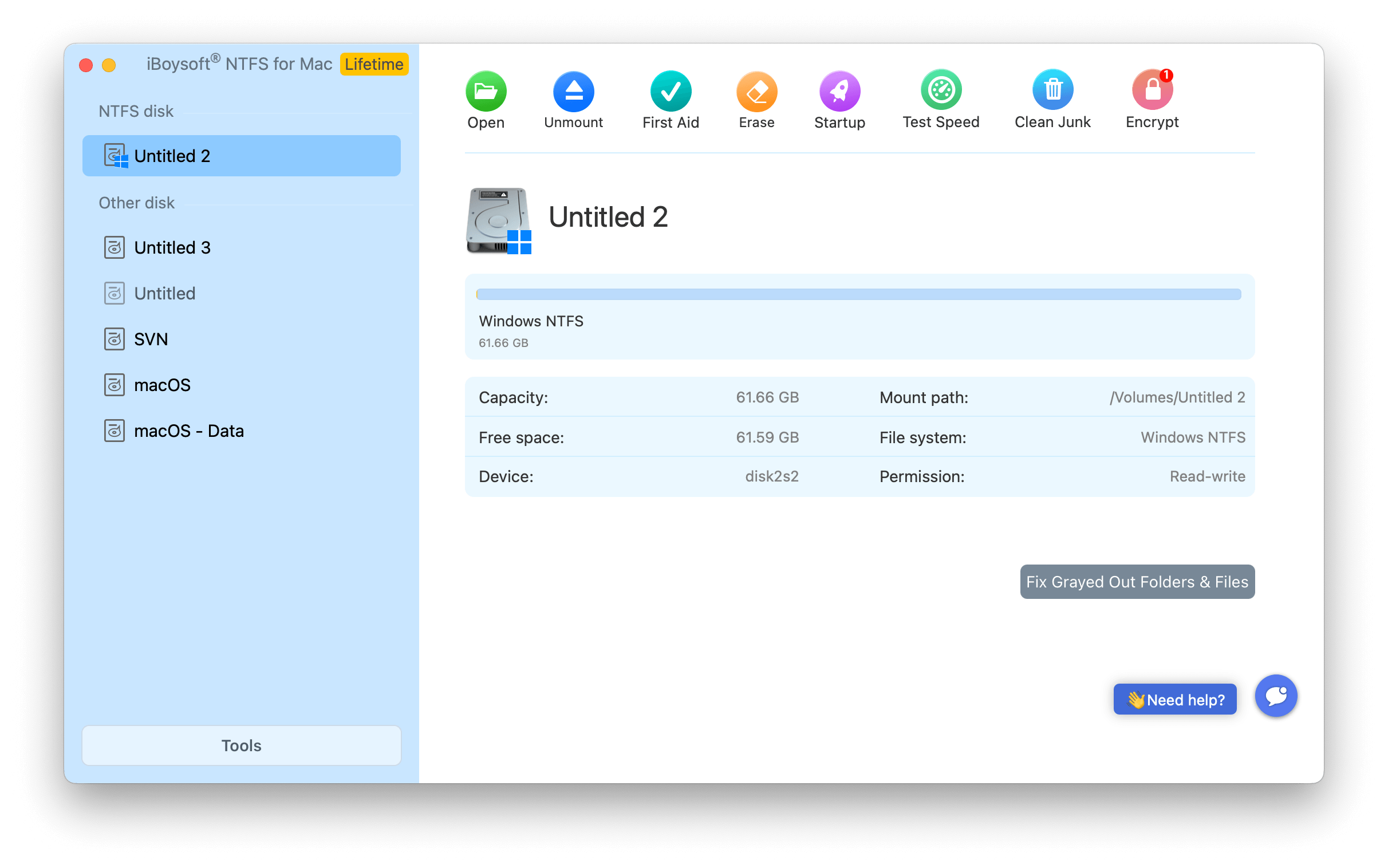
Step 1: Select the NTFS disk you want to unmount from the left sidebar.
Step 2: Click "Unmount" on the right panel. The NTFS disk will be unmounted immediately.
How to Repair an NTFS Disk?
Step 1: Select the NTFS disk you want to check and repair from the left sidebar.
Step 2: Click "First Aid" on the right panel.
Step 3: In the pop-up, you have two options: Check disk (Check the errors without repairing them) and Repair disk (check and repair errors).
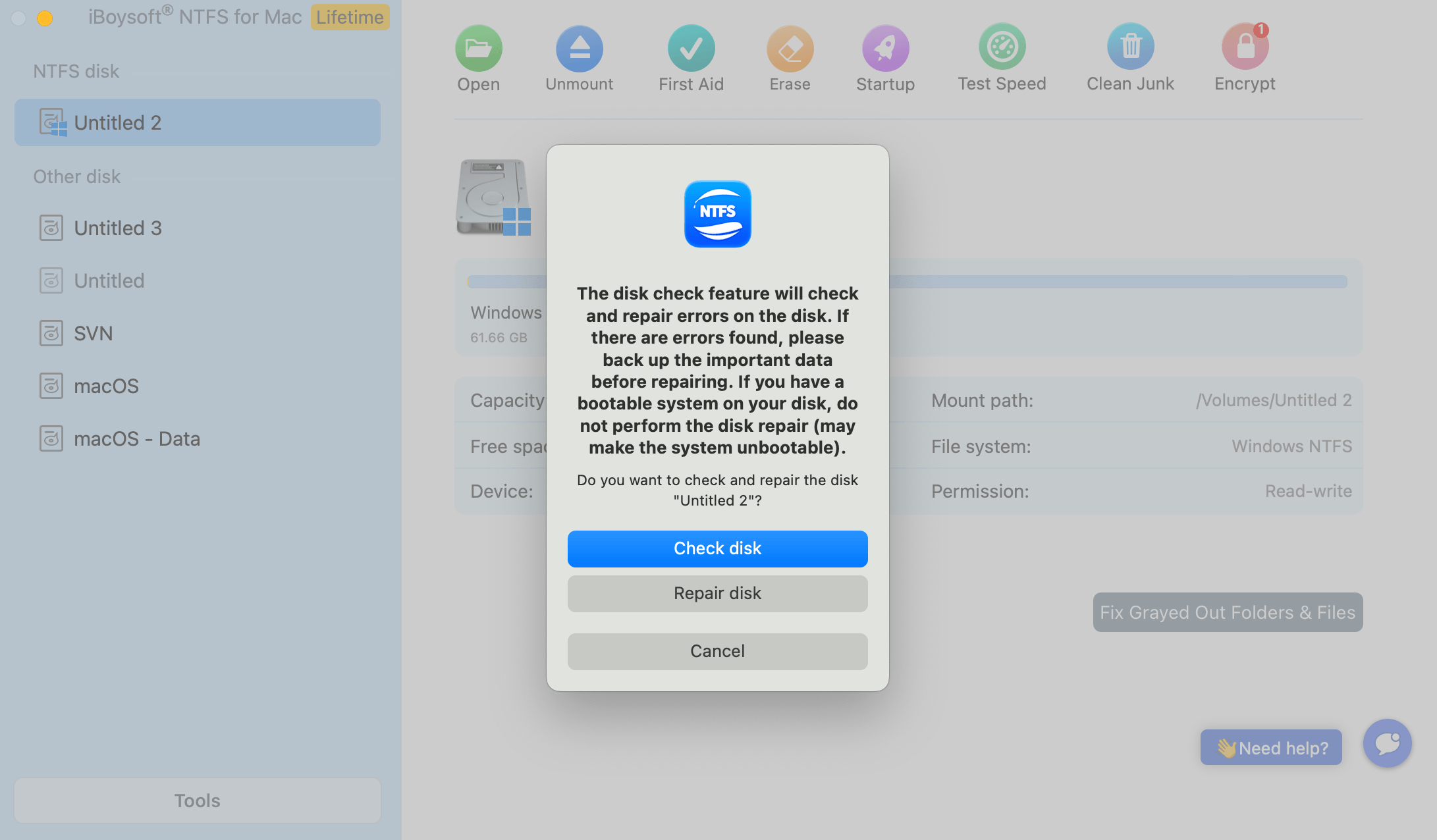
Step 4: Click "Repair disk" and iBoysoft NTFS for Mac will start verifying and repairing the selected drive.
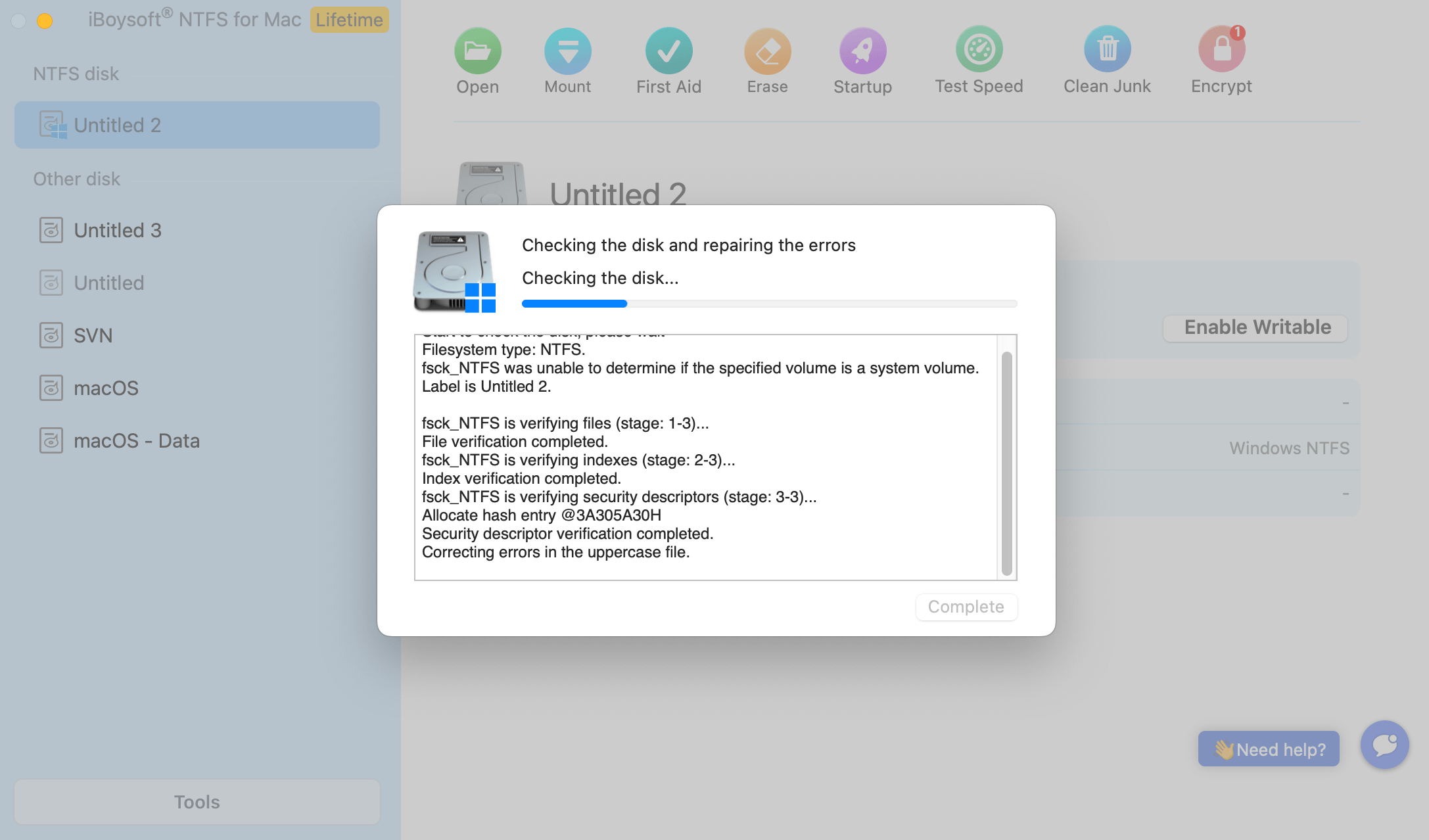
Note: During the repair, your disk will be unmounted and won't be automatically mounted after the repair is complete. You can either manually mount it in Disk Utility or click Open to mount and open the disk.
If First Aid can't help with repairing your NTFS disk to make it workable on Mac, you can find a Windows PC and try to repair it with FSCK command.
Step 1: Go to the Start menu, type in cmd in the search bar, and press "Enter."
Step 2: Right click "cmd.exe" and choose "Run as administrator".
Step 3: Run the following command:
chkdsk volume: /fPlease replace "volume" with the drive letter of your NTFS disk. For example, if the drive letter is "G", then you need to type in chkdsk G: /f.
How to Erase an NTFS Disk?
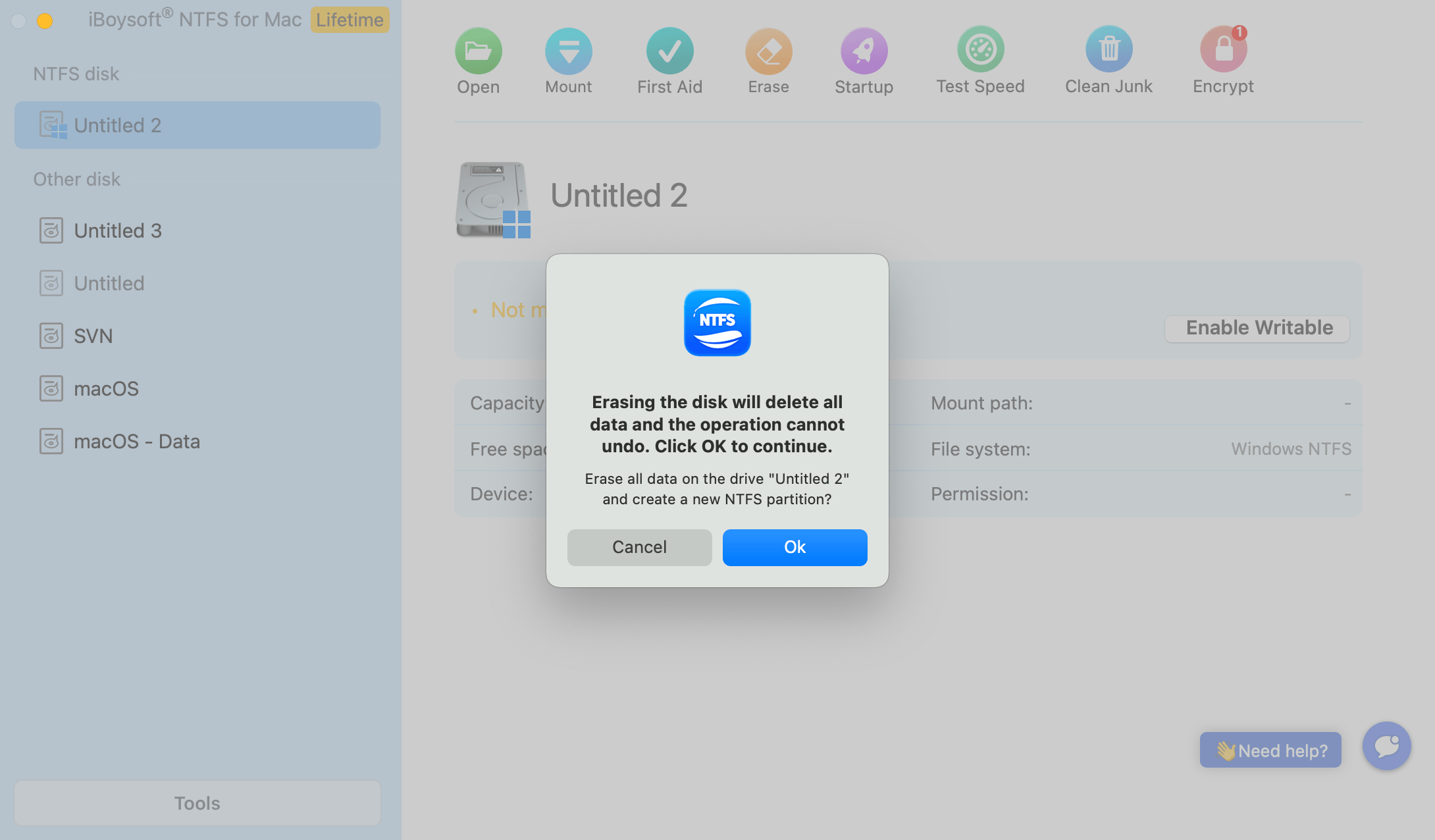
Note: Disk erasure will wipe all data on the disk, so make sure you have a full and up-to-date backup of your important files before you do so. For data lost due to disk formatting, you can recover lost data with iBoysoft Data Recovery software.
Step 1: Select the NTFS disk you want to erase from the left sidebar.
Step 2: Click "Erase" on the right panel > "OK."
How to Erase Other Disks to NTFS on Mac?
macOS doesn't support erasing disks to NTFS natively. However, with iBoysoft NTFS for Mac, you can complete this task on a Mac.
To do that, you should install the iBoysoft NTFS driver first. If you haven't installed it yet, click "Install NTFS driver" in the app.
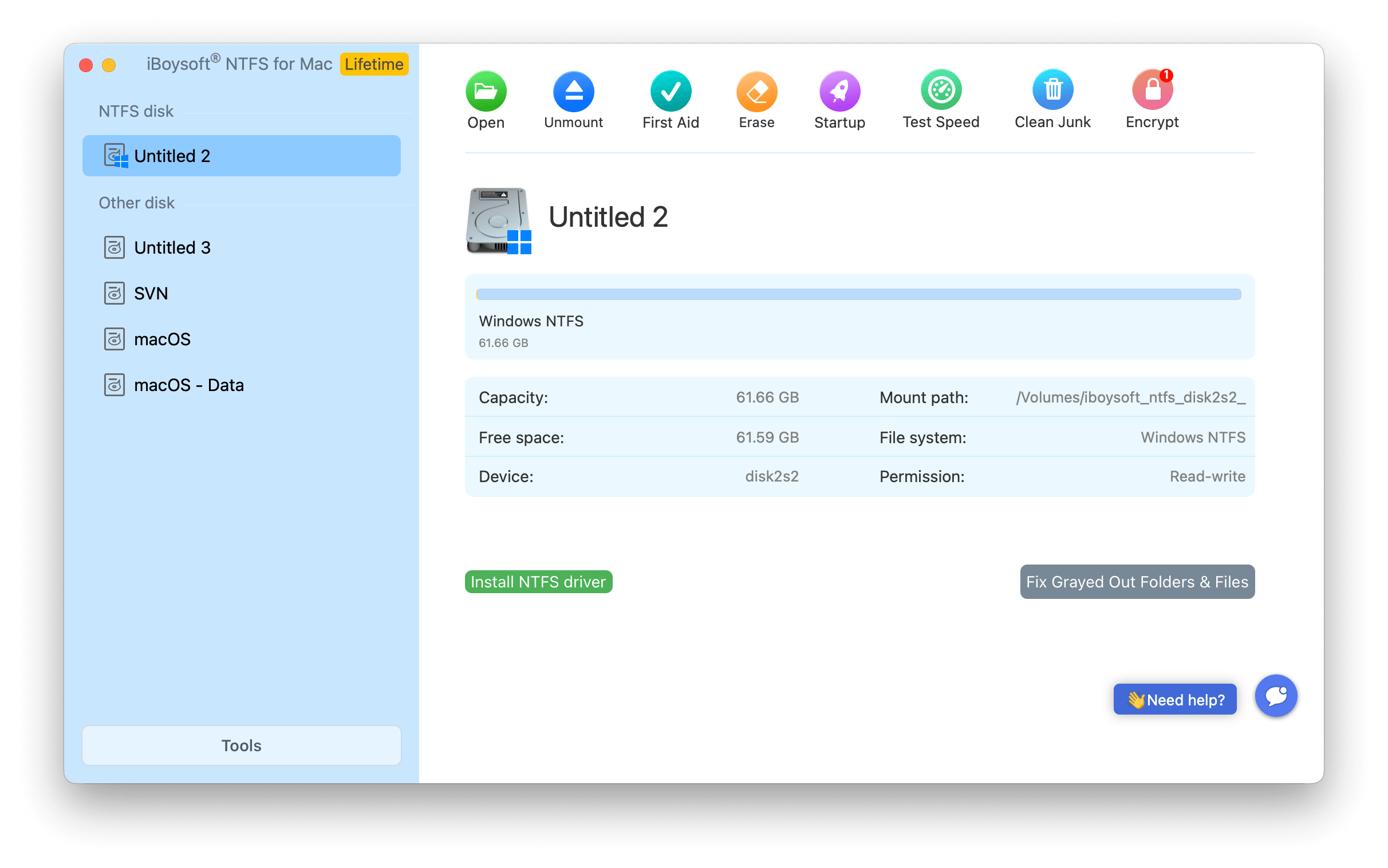
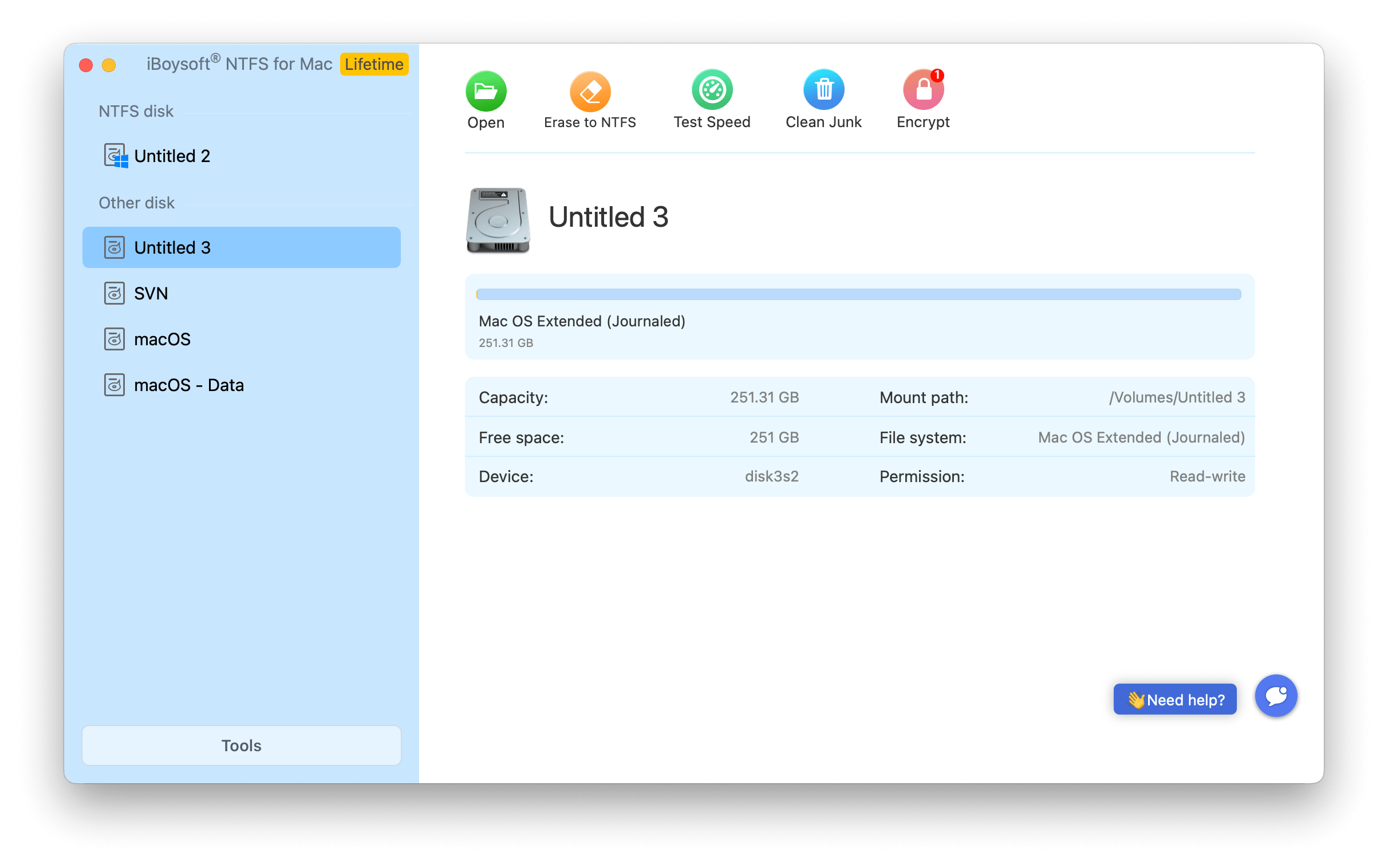
Step 1: Select the disk you want to convert to the NTFS file system.
Step 2: Click "Erase to NTFS" on the toolbar.
Note: If you need to format an APFS-formatted volume to NTFS on a Mac, you need to go to Disk Utility > select the container name instead of the volume name > Erase. You will find Windows NTFS in your format options there.
How to Uninstall iBoysoft NTFS for Mac?
Step 1: Open the software and click "iBoysoft NTFS for Mac" next to the Apple logo in the menu bar.
Step 2: Select "Uninstall" to completely remove iBoysoft NTFS for Mac from your Mac.
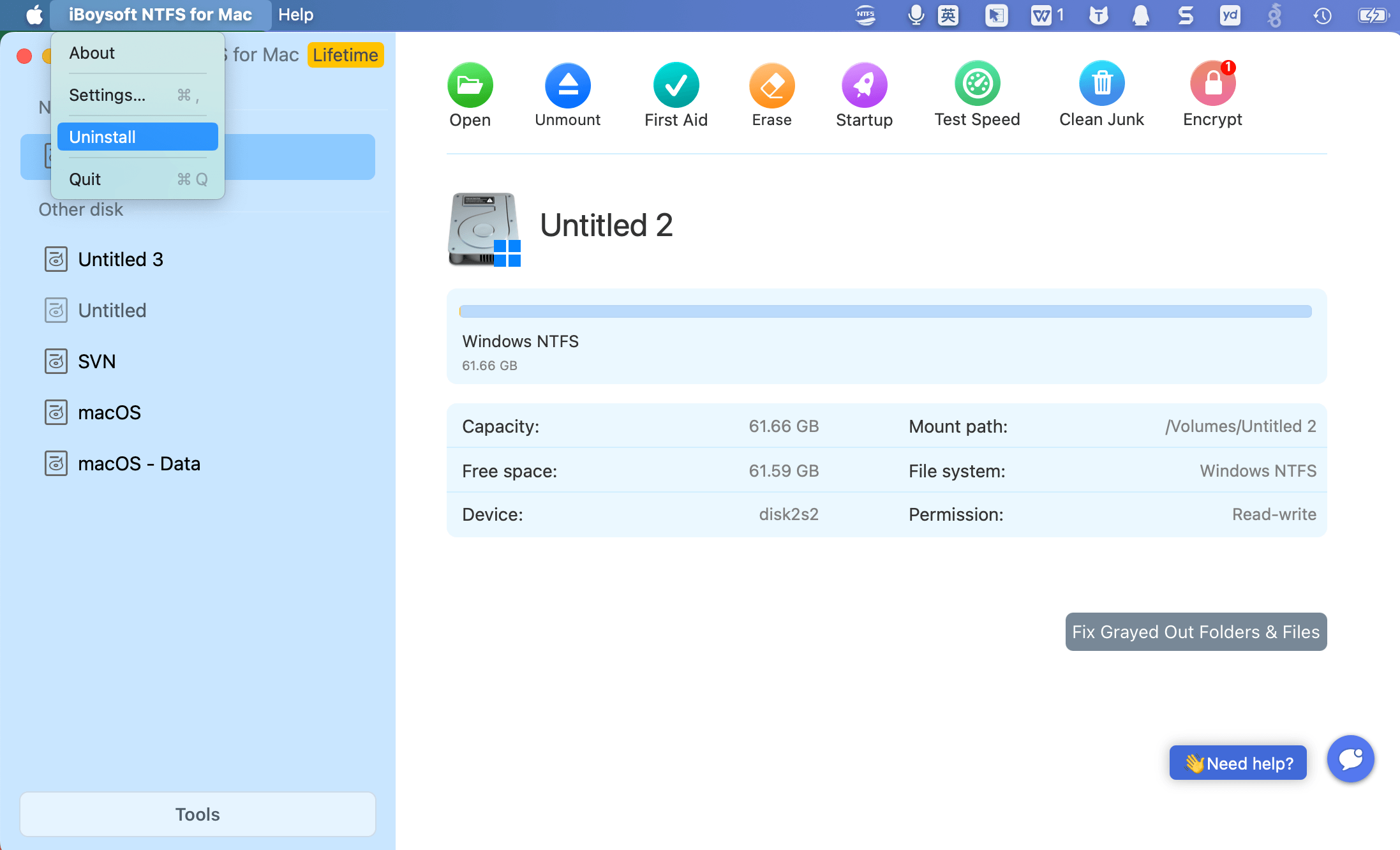
If you just deleted the iBoysoft NTFS for Mac app from the Applications folder, two driver components are left. To completely remove these two driver components, the following commands need to be used:
sudo rm -rf /Library/Filesystems/iboysoft_NTFS.fs
sudo rm -rf /Library/Extensions/ms_ntfs.kext
What does 'Reset the activation' (built-in Preferences) mean?
'Reset the activation' is just used to delete the activation information from your local computer when the activation is not working, instead of deactivating it from one computer and activating it on another computer. If you want to transfer the license, please see the licensing FAQ.