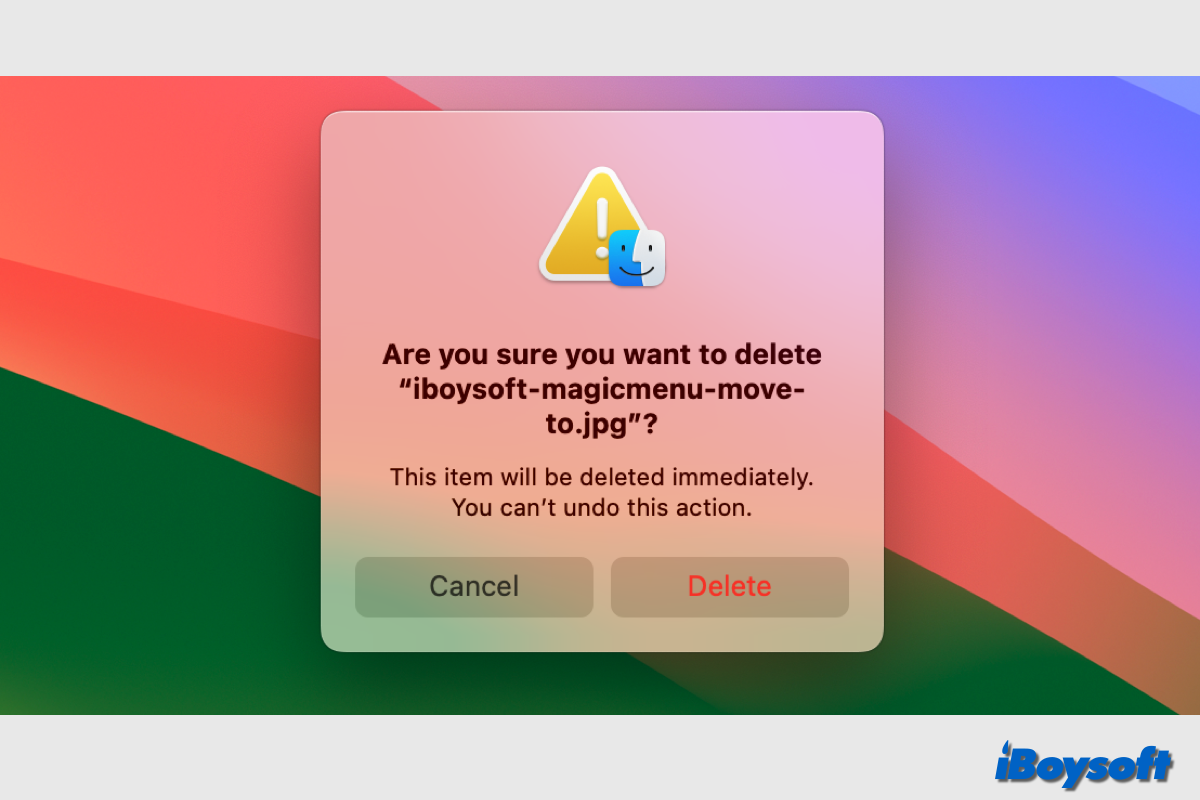
Deleting a file on your Mac doesn't necessarily remove it from your storage. In most cases, selecting "Move to Trash" simply moves the file to the Trash folder, where it continues occupying disk space and can be recovered until the Trash is emptied.
How to permanently delete files on a Mac? Below are the available ways:
| Methods | Specific Steps |
| Empty the Trash | Move the files to the Trash, click the Trash icon, and select Empty Trash. |
| Utilize shortcuts | Select the files you want to delete and press Option + Command + Delete. Or, select the files you want to completely remove, click File on the menu bar, press and hold Option, and choose Delete Immediately. |
| By a right-click | Install iBoysoft MagicMenu, right-click the unwanted files, and choose Delete Directly. |
| By file shredding | Install iBoysoft Cleaner, access File Shredder, select the target files, and click Start Shredding. |
| Utilize Terminal | Launch Terminal, type rm or rm -rf and a space, drag unwanted items to Terminal, and press Enter. |
| Use Disk Utility | Open Disk Utility, select the drive you want to wipe, click Erase, and follow the on-screen guide to complete the process. |
How to permanently delete files on Mac by emptying the Trash
When you choose Move to Trash, drag a file to the Trash, or press Command + Delete, macOS does not immediately erase the file. Instead, it moves the item to the Trash, allowing you to restore it later if it was deleted accidentally.
Unless you've enabled "Remove items from the Trash after 30 days" in Finder settings, files remain in the Trash indefinitely, continuing to consume storage space.
To permanently delete everything currently in the Trash:
- Right-click the Trash icon in the Dock.
- Select Empty Trash.
- Click Empty Trash again to confirm.
Alternatively:
- Open the Trash.
- Review the files inside.
- Click Empty in the upper-right corner.
- Confirm by selecting Empty Trash.

Once the Trash is emptied, the files are no longer accessible through Finder.
However, depending on your storage device, they may still be recoverable with data recovery software until their storage space is overwritten.
If you delete files from a Mac's SSD or an external SSD connected to the Mac with a Thunderbolt port, the emptied files are almost impossible to recover, even with a data recovery tool, due to the TRIM feature.
How to permanently delete files on Mac with shortcuts
Alternatively, you can use keyboard shortcuts to permanently delete files on Mac while bypassing the Trash.
Steps:
- Select the item you want to delete on the desktop or within a folder in Finder.
- Simultaneously press Option + Command + Delete.
- Click Delete on the pop-up window to confirm the option.
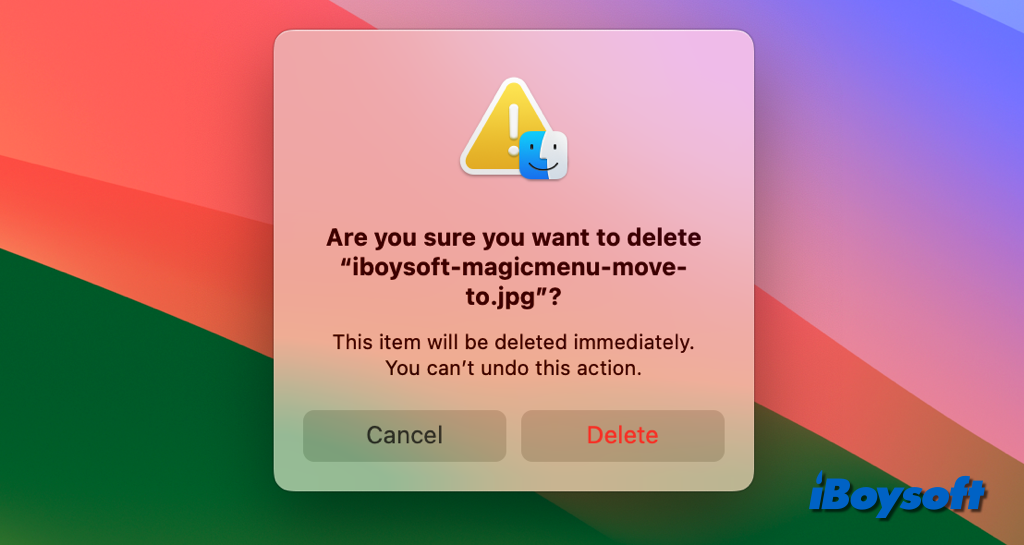
Similar to the keyboard shortcuts Option + Command + Delete, Finder provides the same functionality through its File menu. This option is named Delete Immediately.
Follow the steps below to remove files on a Mac via Delete Immediately:
- Select the file you want to remove from your Mac.
- Click File from the top menu bar.
- Hold down the Option key, the Move to Trash option will change to Delete Immediately, and click Delete Immediately.
- Click Delete in the pop-up box to confirm.
How to right-click to permanently delete files on Mac with iBoysoft MagicMenu
If you frequently delete files and don't want them to pass through the Trash first, or the Delete key is not working on your Mac, using a Finder extension can make the process much faster.
iBoysoft MagicMenu adds additional actions to Finder's right-click menu, including the ability to permanently delete files with a single click. Instead of moving files into the Trash and emptying it later, you can remove unwanted files immediately with the context menu.
Steps:
- Download and install iBoysoft MagicMenu on your Mac.
- Click Extension on the app's main interface and download the Delete Directly extension to add it to your right-click menu.
- Right-click the unwanted files and choose Delete Directly.
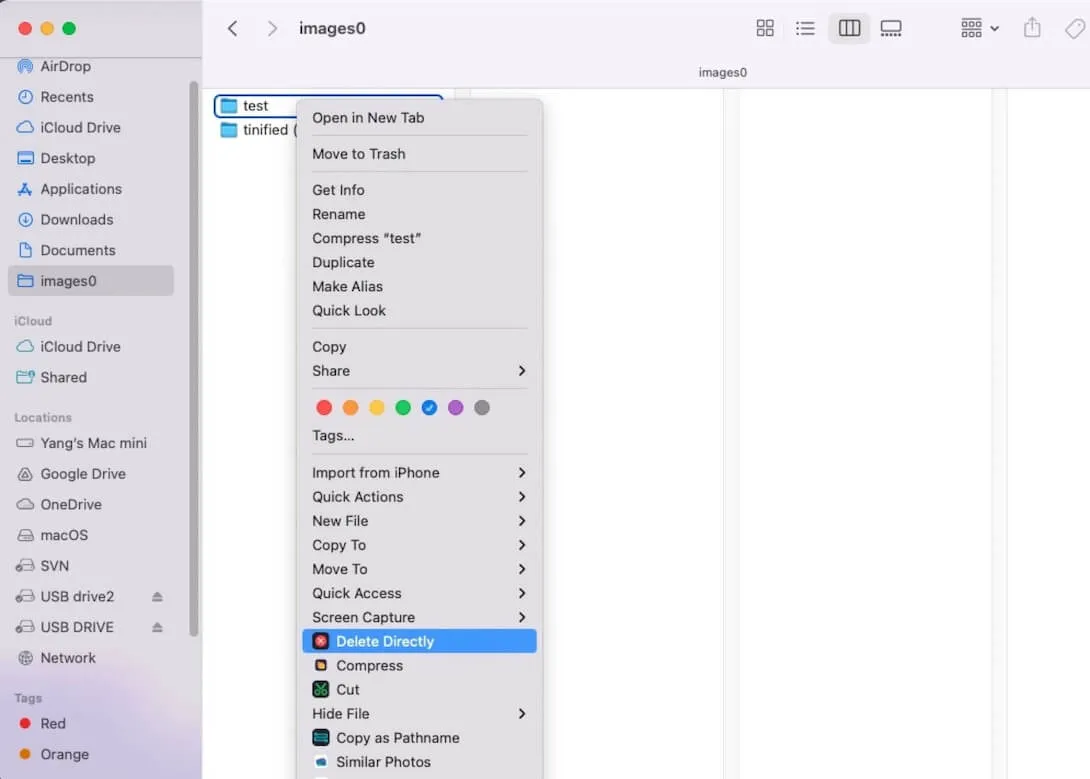
The selected item is permanently deleted without first being placed in the Trash.
Tips: Besides direct deletion, iBoysoft MagicMenu also enhances Finder with many productivity features, including:
✅ Creating new files from the right-click menu
✅ Copying or moving files more efficiently
✅ Quickly accessing frequently used folders
✅ Uninstalling applications
✅ Compressing files
✅ Finding duplicate files
✅ Converting image formats
✅ More…
For users who spend a lot of time managing files in Finder, these additions can significantly streamline everyday workflows.
How to permanently delete files on Mac by shredding (with iBoysoft Cleaner)
If your goal is to permanently delete files on a Mac so that they cannot be recovered, you are recommended to use a file shredder.
iBoysoft Cleaner is a multi-functional Mac cleaning tool that securely erases unwanted files by shredding them. With it, the shredded files cannot be recovered, even with professional data recovery tools.
Here's how:
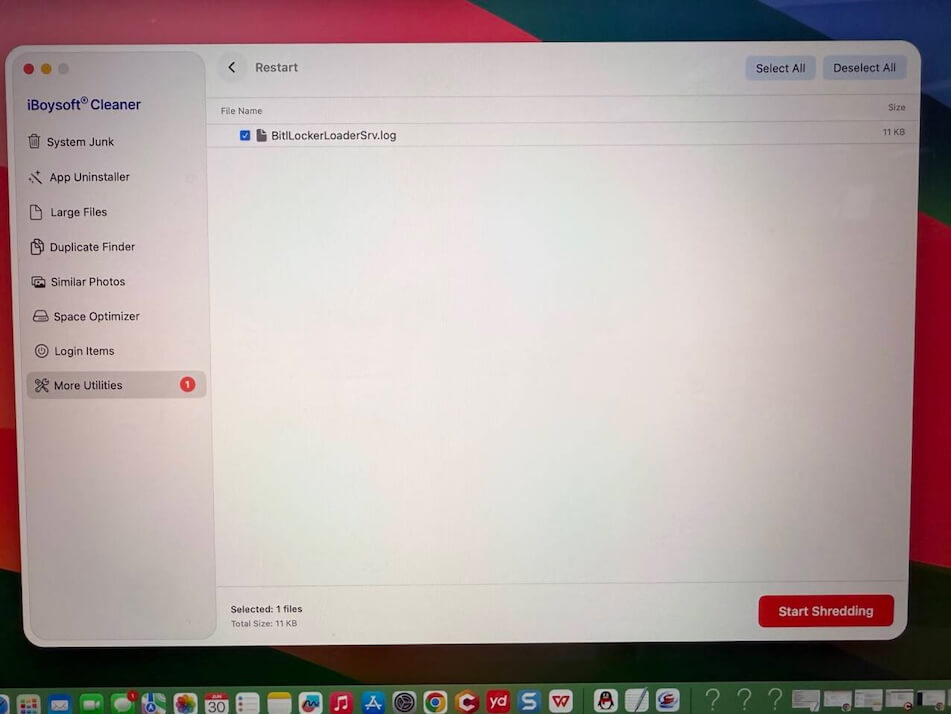
- Download, install, and launch iBoysoft Cleaner.
- Select More Utilities.
- In the File Shredder section, click Start Now.
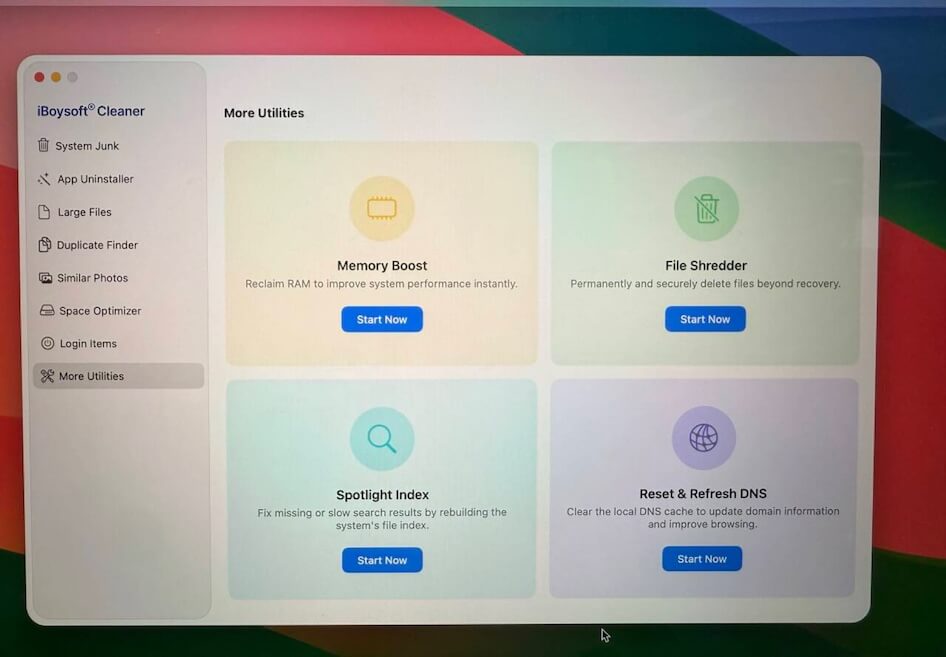
- Click Select Files and choose the files you want to securely erase.
- Click Start Shredding.
How to permanently delete files on Mac via Terminal
For advanced users, macOS offers a fast way to permanently delete files and folders on a Mac through specific commands.
Warning: The rm and rm -rf commands permanently delete files without moving them to the Trash. Double-check the file path before pressing Return, especially when using rm -rf, as deleting the wrong files cannot be easily undone.
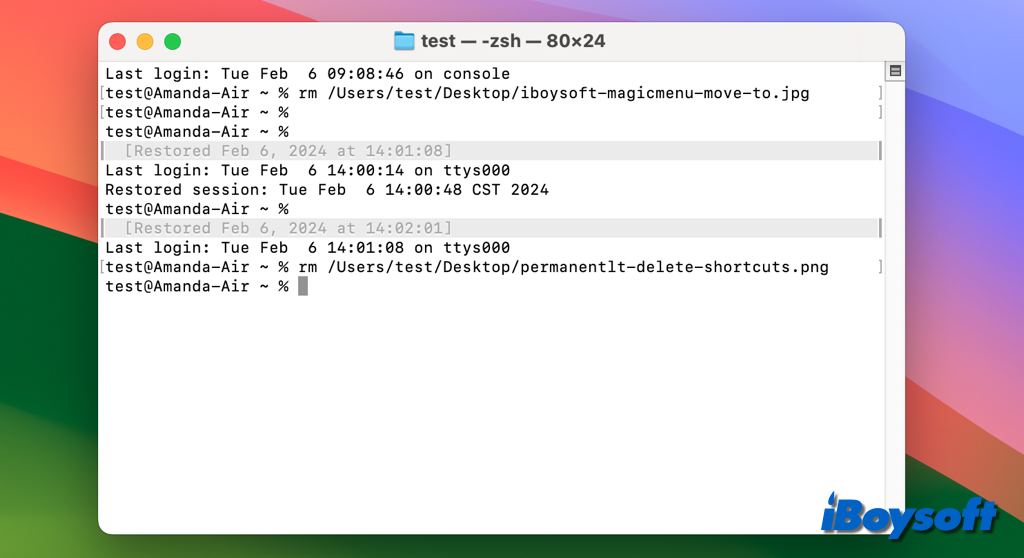
Completely delete a file on Mac:
- Open Terminal from Finder > Applications > Utilities.
- Type the command below.rm
- Press a space, then drag the file you want to remove into Terminal and press Return.
Completely delete a folder on Mac:
- Open Terminal.
- Type the command below and press a space, drag the folder you want to shred into Terminal, and press Return. rm -rf
How to permanently delete files by erasing the drive in Disk Utility
In case you want to permanently delete all files on the Mac's internal drive or connected external drives, you can just reformat the drive in Disk Utility. This is the easiest way.
To wipe a startup disk, you need to boot the Mac into macOS Recovery Mode to access Disk Utility there.
- Connect the external drive to your Mac if you want to erase it.
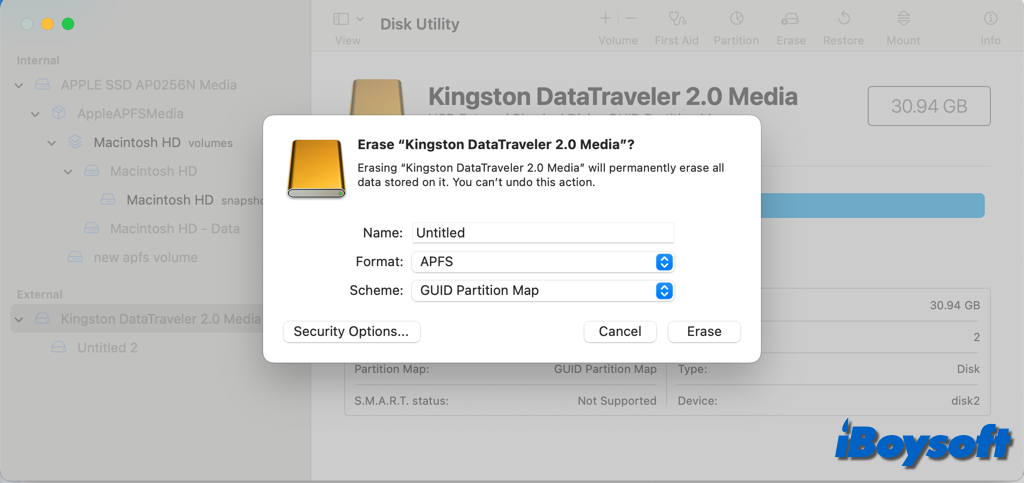
- Launch Disk Utility from Finder > Applications > Utilities, or access it in macOS Recovery Mode from the macOS Utilities screen.
- Select the target drive on the left list.
- Click the Erase button on the toolbar.
- Enter a name, choose a file system, select a partition map, and click Erase.
- When the process is done, all data are permanently deleted.
Share these methods to permanently delete files on Mac!
Can permanently deleted files be recovered?
It depends on how the files were deleted and whether the storage space has been overwritten.
If you have a Time Machine backup or another backup, restoring permanently deleted files is usually straightforward.
If you don't have a backup, recovery may still be possible—but only under certain conditions:
- The deleted data hasn't been overwritten.
- And the storage device isn't an SSD with TRIM enabled.
Therefore, to catch the best chance of recovery:
- Stop using the affected drive immediately to avoid overwriting deleted data.
- Avoid copying new files to the drive.
- Run data recovery software like iBoysoft Data Recovery for Mac as soon as possible.
If the drive has developed hardware issues, or software recovery cannot locate the deleted files, a professional data recovery service may be your last option.
FAQ
- QHow to permanently delete files on Mac so they cannot be recovered?
-
A
You can use Delete Immediately in the File menu bar, the Option + Command + Delete shortcut, or empty the Trash to permanently remove files.
To erase all data on a drive, use Disk Utility to format it. Or, use a file shredder.
On TRIM-enabled SSDs, permanently deleted files are often unrecoverable once TRIM has erased the storage blocks.
- QHow to delete files on a Mac to free up space?
-
A
Move unwanted files to the Trash and empty it, or use a disk cleanup tool like iBoysoft Cleaner to identify and remove junk files, large files, and other unnecessary data that occupy storage space.
- QHow do I securely erase files on a Mac?
-
A
To securely erase all data before selling or disposing of a Mac or drive, erase the entire drive in Disk Utility. On TRIM-enabled SSDs, deleted files are typically made unrecoverable automatically.
- QHow to force delete files on a Mac that won't delete?
-
A
Close any apps using the file, check that you have permission to delete it, then try Delete Immediately or use the rm command in Terminal. If the file is locked or the drive has file system errors, unlock the file or repair the disk with Disk Utility before trying again.