Working with Adobe Illustrator (.ai) files offers unmatched vector scalability, but unexpected crashes, power outages, or accidental closures can instantly put hours of design work at risk.
While Illustrator's built-in recovery prompt helps in many cases, a secondary crash during the recovery loop can leave your project seemingly lost. When automated restoration fails, you need a reliable manual approach.
This guide walks you through actionable, step-by-step methods to bypass failed recovery loops, locate hidden temporary backup files, and safely restore your lost Illustrator work.
The Most Effective Way to Recover Unsaved, Deleted, Corrupted AI files
If built-in recovery methods fail or you have already emptied your Trash or Recycle Bin, data recovery software like iBoysoft Data Recovery can help restore permanently deleted .ai files.
The tool scans internal and external drives, SSDs, USBs, and SD cards to recover lost .ai files alongside other standard file formats.
Continue reading for step-by-step instructions on recovering deleted Illustrator files on Mac and Windows.
Recover AI files on Mac using iBoysoft Data Recovery for Mac
Step 1: Free download and install iBoysoft Data Recovery for Mac. Double-click the installation file to open it. Drag the iBoysoft Data Recovery icon to the Application folder when prompted.
Step 2: Enable full disk access and system extensions for iBoysoft Data Recovery for Mac. Then launch it from Applications in Finder.
Step 3: Choose the drive or volume from which you deleted AI files.
Step 4: Click the "Search for Lost Data" button to start searching for deleted AI files.
Step 5: Once the scanning process is complete, it shows the list of deleted and lost files by full file types, file names, file size, and the date created.
Step 6: Locate the deleted AI file you want to restore and click it to preview. At this point, you can confirm if it is your desired correct file version to recover.

Step 7: Check the box in front of it, then select the "Recover" button to restore the deleted AI files to a new location.
Recover AI files on Windows using iBoysoft Data Recovery for Windows
Step 1: Free download and install iBoysoft Data Recovery for Windows. It's better to download this software to a different partition to avoid overwriting data.
Step 2: Launch it and then choose the Data Recovery Module. This module applies to recover deleted files from a non-BitLocker encrypted drive.
Step 3: Choose the drive or partition from which you deleted AI files.
Step 4: Click "Next" to initiate the default Quick Scan process. You can also choose Deep Scan when the deleted AI files are not found.
Step 5: Filter the scanning results by searching the file name in the search box or by file format.
Step 6: Locate the deleted AI file you want to restore and right-click it to preview deleted AI files. 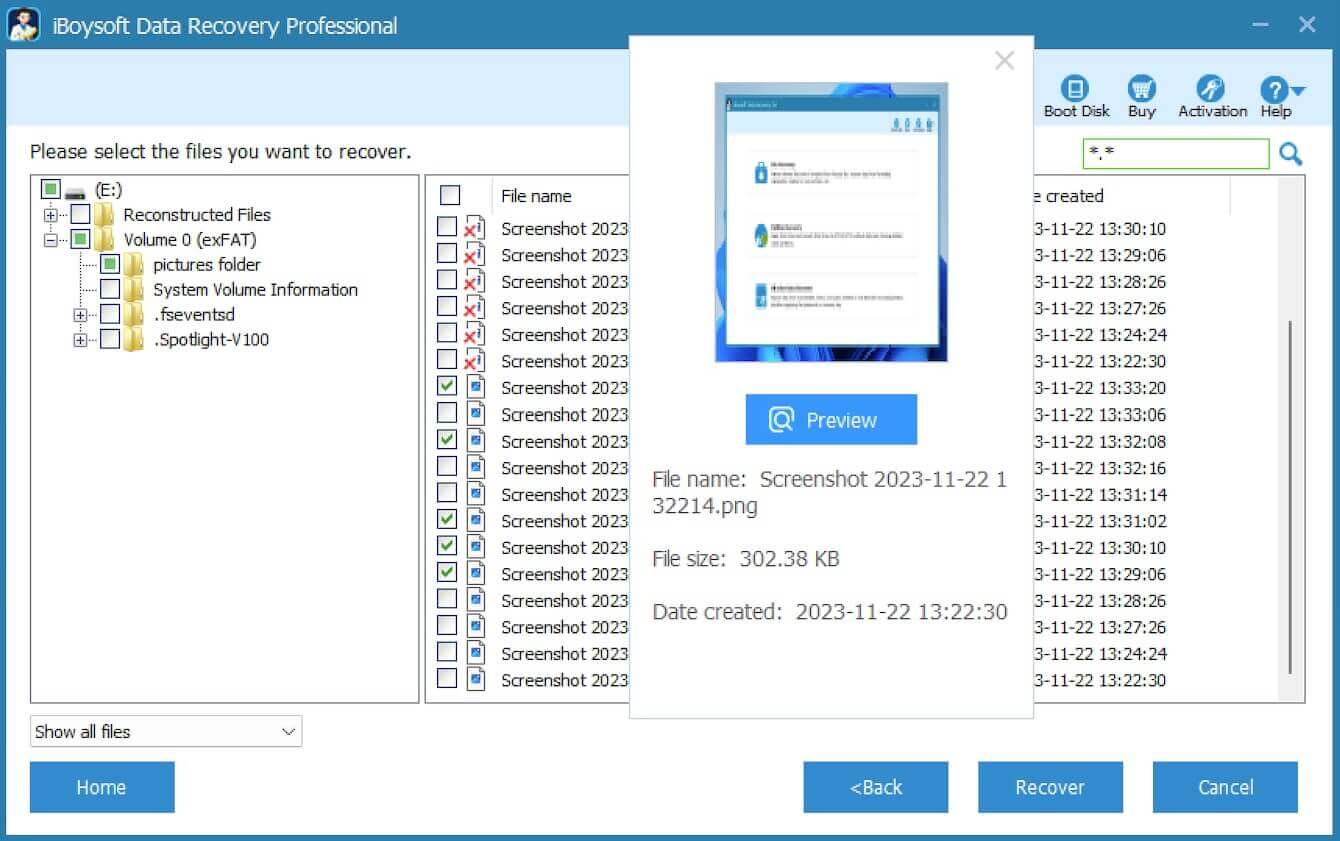
Step 7: Check the box in front of it, then select the "Recover" button to restore the deleted AI files to a different drive or partition.
Note: Be sure not to perform any operations on your computer when you may have deleted your files. Otherwise, the data loss will be irreversible.
Find these solutions helpful? Please share with more people.
How to Recover Adobe Illustrator Files After a Crash
If Adobe Illustrator crashes, freezes, or closes unexpectedly while you're working, you may lose unsaved changes. Before recreating your design, try Illustrator's built-in recovery feature and check its backup location for recoverable files.
Method 1. How to Recover Unsaved Adobe Illustrator Files Using Auto-Recovery
If Adobe Illustrator crashes or doesn't respond, then force quit and relaunch it. This app has a built-in autosave function, so you can recover unsaved files easily. Please refer to the specific steps below.
- Relaunch Adobe Illustrator.
- When the following dialogue box appears, click "OK".

- Then the unsaved AI files with the "Recovered" suffix show up.

- Go to File Save As option, and save it with a new name.
Note: This solution only works when the Automatically Save Recovery Data option in Adobe Illustrator is enabled.
Method 2. Manually Recover Unsaved, Deleted AI files Using Auto-Backup Folder
Besides the Autosave function, you can restore AI files on Mac from the default auto-backup folder.
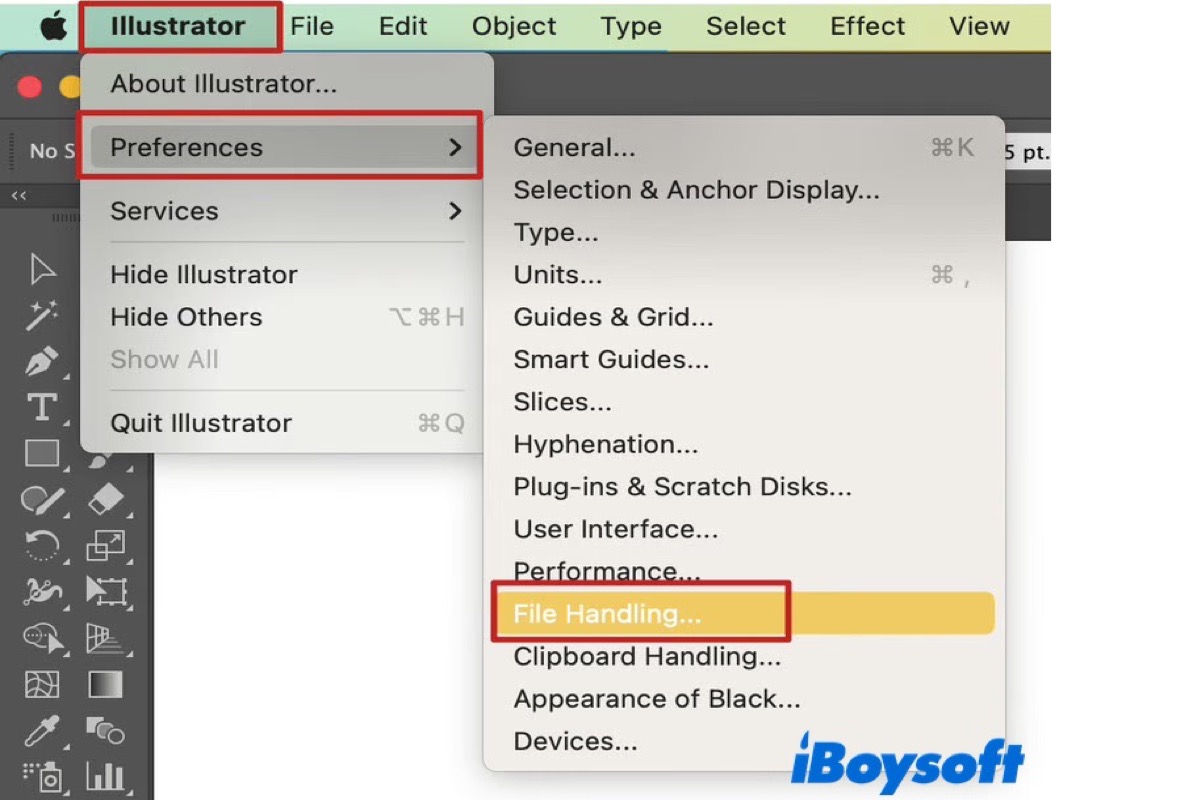
- Inside Adobe Illustrator, go to Edit > Preferences > File Handling & Clipboard.
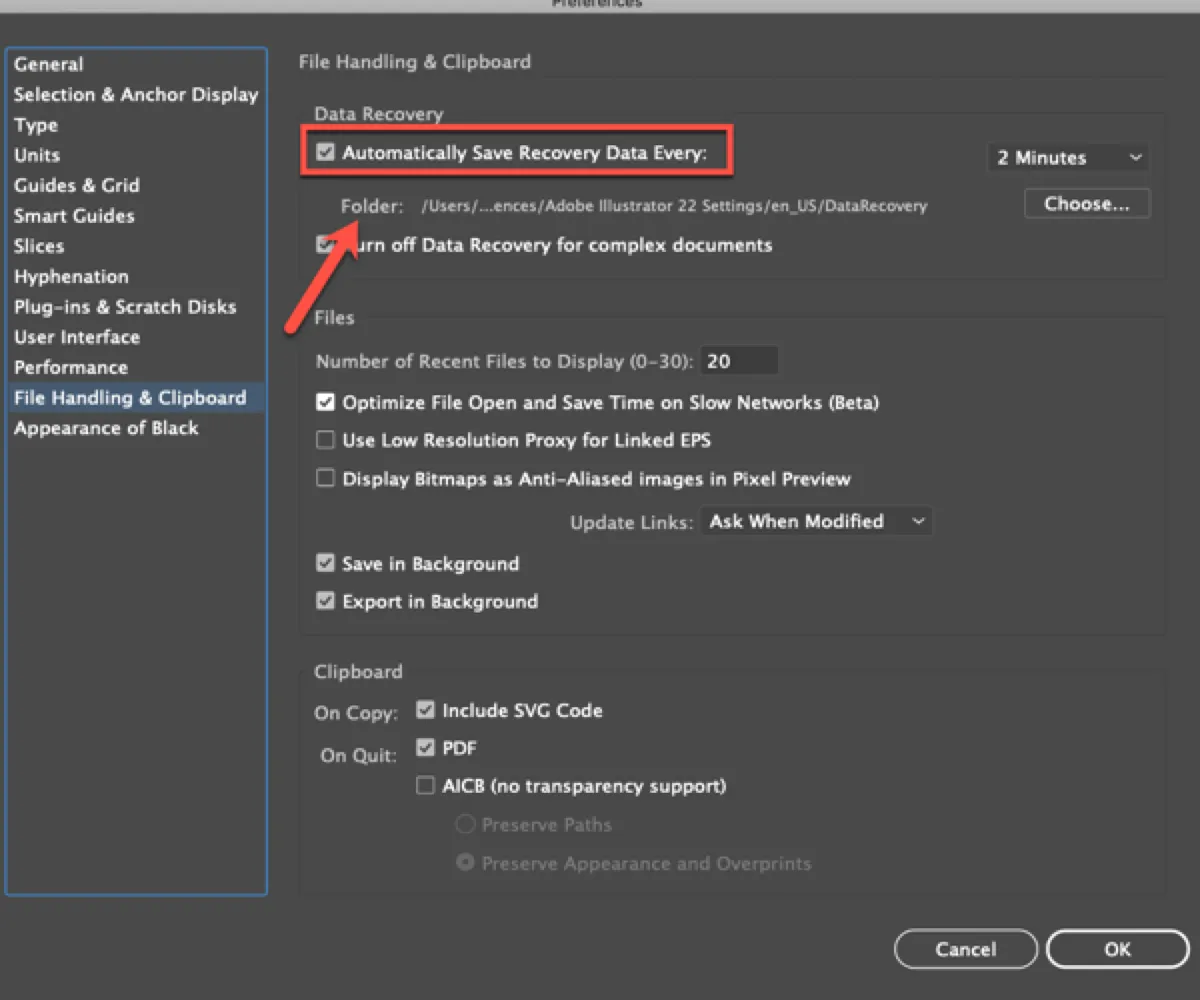
- On the right panel, you will see a Folder option that tells you the default recovery files' location.
- In the default backup folder, find and open the files with "recovery" or "recovered" in the name.
- After opening the recovered AI files, go to File > Save As, rename the chosen files and save them.
Note: To use the Backup function in Adobe Illustrator, you must ensure this function is already turned on. If not, you should enable Automatically Save Recovery Data Every and set an appropriate interval time value. By clicking Choose, you can change the save path for backup files. Otherwise, they will be saved under the default location.
Method 3. Recover Unsaved & Overwritten Files Using the Revert option
Another solution to recover unsaved or overwritten AI files on Mac/Windows is the Revert option in Adobe Illustrator, but the Automatically Save Recovery Data option must be enabled in advance. Go to File > Revert, shown as follows. This will revert back to the previously saved version of your AI files.

Method 4. Recover Illustrator Files from Temporary Folder on Mac and Windows
The Temporary Folder is used to hold temporary files from various operations on your computer. So it is possible to recover AI files from the Temporary Folder. Please refer to the steps below.
For Mac:
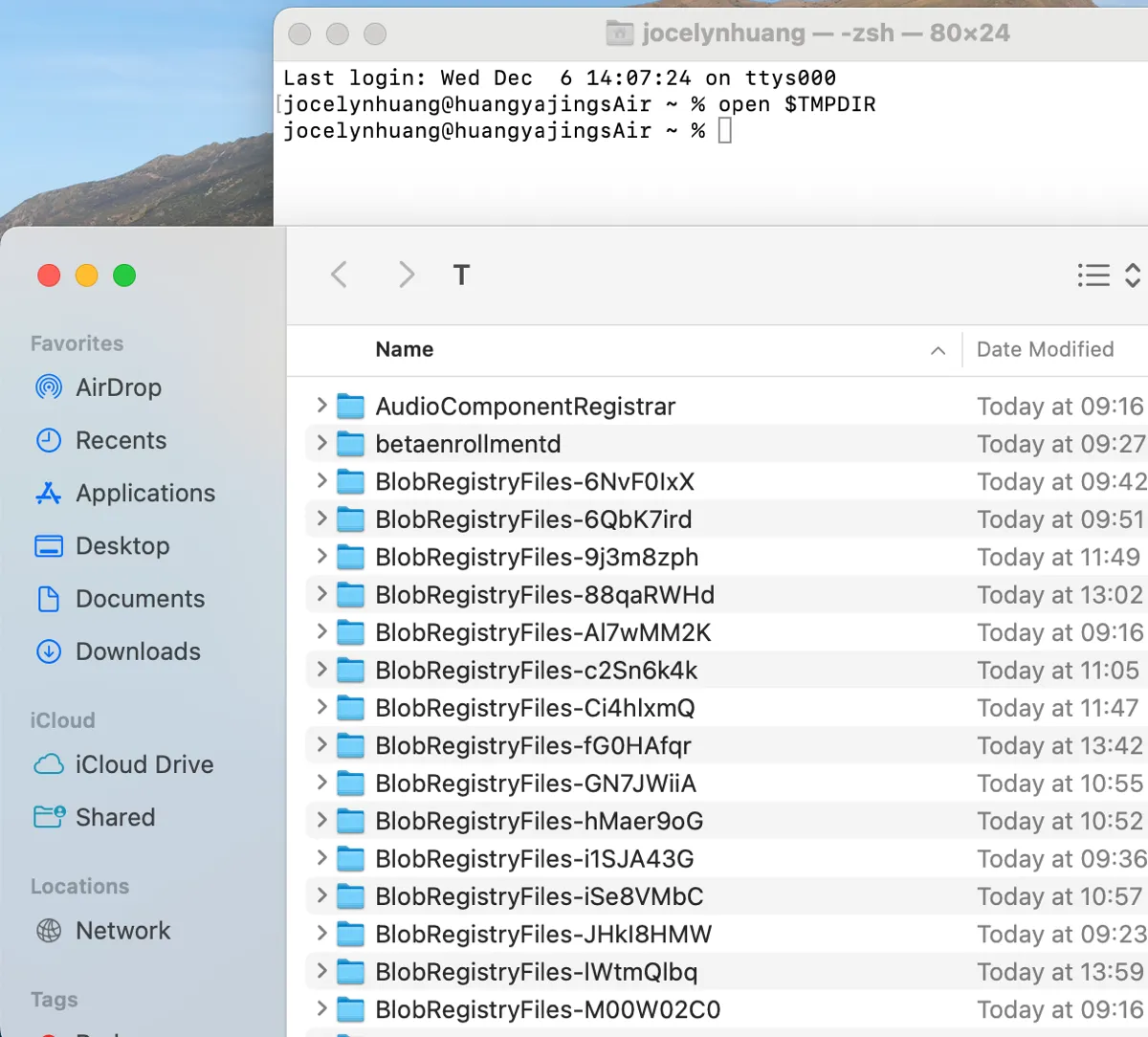
- Go to Finder > Applications > Utilities folder, open the Terminal app by double-clicking.
- Type the following command and press "Enter" to access the temporary folder on Mac.$TMPDIR
- Find and open the unsaved AI files with Adobe Illustrator. Save them with the new file names.
For Windows:
- Go to C:/Users/UserName/AppData/Local/Temp.
- In the Temporary Folder, look for the unsaved AI files.
- Open the unsaved AI files with Adobe Illustrator, then rename and save them.

Already recovered your unsaved AI files? Please share with others.
Method 5. Recover Corrupted Al Files by Changing Their Format
If your AI files are damaged, there is an easy and possible recovery solution: change the specified corrupted files to the PDF version. The needed steps are as follows.
- Open the corrupted AI files with the .ai extension in Acrobat Reader.
- Save these files in the PDF format.
- Open the PDF files in Adobe Illustrator, and save them using the .ai extension.
- Reopen the saved file using Adobe Illustrator.
Please share with other people if you think the above solutions are useful.
Method 6. Recover Deleted & Overwritten Illustrator Files Using Recent Files
Sometimes you cannot find AI files, so you think you deleted them, but they are saved in another location. In such circumstances, the Recent Files option is your best choice.
In Adobe Illustrator, go to File > Open Recent. Then you can find the desired AI file from the list of recently accessed AI files shown up.

Method 7. Recover Overwritten AI Files Using Mac Time Machine and Windows File History
Mac Time Machine or Windows File History allows you to restore a previously saved version of your AI files. Thus, you can also adopt this solution to recover unsaved or corrupted AI files to their last saved version.
Please note that you can only use this recovery solution if you have already enabled Time Machine/File History in advance. It is highly recommended to enable this function in case you need to restore your data. Specific steps are listed below.
Using Mac Time Machine:
- Connect the external backup drive to your Mac computer.
- Go to the Apple menu > System Settings/Preferences > Time Machine.
- Select the overwritten AI files you want to recover according to the timeline.
- Click the "Restore" button to save the selected files.

Using Windows File History:
- Connect the external backup drive to your Mac computer.
- Go to Control Panel > System and Security > File History.
- Select Restore Personal Files. The file history recovery window shows up.

- Find the overwritten AI files, then click the green "Recycle" icon at the bottom to restore them.
Share the above solutions to help others out! Thanks a lot!
Warm Tips: No matter whether you are using a Mac or Windows computer, it is highly suggested to enable the Automatically Save Recovery Data option to protect your data, before you start production work in Adobe Illustrator.
Why Does Adobe Illustrator Crash?
Here are several common situations that lead to Adobe Illustrator crash and their corresponding fixes.
- Outdated computer system. Please make sure your computer meets the minimum system requirements.
- Legacy version of Adobe Illustrator. Updating to the latest version brings you more stable features. Remember to restart your computer after the update is done.
- Something is wrong with Adobe Illustrator Preferences. You just need to back up and reset app preferences to eliminate any corrupt setting issues.
- Incompatible GPU drives. You should identify the GPU card manufacturer, and update the specific GPU drivers.
- Unsupported Wacom devices. Please update the Wacom drivers.
- Improper app installation. It is recommended to perform a clean reinstall of Adobe Illustrator with the Creative Cloud Cleaner tool.
- Viruses and malware attacks. Regularly detect your computer to maintain its health condition using professional security software.
Tips to Prevent Illustrator File Loss After a Crash
To reduce the risk of losing your design work in the future:
- Enable automatic recovery or backup in Illustrator's File Handling settings.
- Choose a suitable recovery interval based on your workflow.
- Save important Illustrator projects manually and regularly.
- Keep multiple versions of important AI files on a separate storage device or backup service.
Note: Automatic recovery is not a substitute for regular backups. If Illustrator crashes while saving or recovery data is being written, some changes may be unrecoverable.
Conclusion
Losing an Adobe Illustrator file can be frustrating, but it doesn't always mean your design work is gone forever. Whether your file was unsaved after a crash, accidentally deleted, corrupted, or overwritten, try Illustrator's Auto-Recovery feature, check its backup folders, or restore an earlier version from a backup. If these methods fail, a data recovery tool may help retrieve lost files.
More importantly, don't rely on Illustrator's Auto-Recovery alone. Save your work frequently, enable automatic recovery, and maintain multiple backups of important AI projects to avoid losing hours of creative work.
FAQs
- QWhere is Adobe Illustrator’s autosave location/default backup location?
-
A
For Windows: C:\Users\username\AppData\Roaming\Adobe\Adobe Illustrator version number Settings\en_US\x64\Adobe Illustrator Prefs/DataRecovery
For Mac: Macintosh hard disk/Users/username/Library/Preferences/Adobe Illustrator version number Settings/en_US/Adobe Illustrator Prefs/DataRecovery
- QWhat can I do in advance to prevent loss caused by Adobe Illustrator crash?
-
A
Always ensure the Automatically Save Recovery Data option in Adobe Illustrator is enabled.
- QCan I recover the deleted AI files?
-
A
Yes! If deleted recently, you can retrieve the deleted AI files by recovering them from Recycle Bin/Trash on your Windows/Mac computer or using the built-in Recent Files and Backup functions in Adobe Illustrator; If deleted permanently, iBoysoft Data Recovery software can help you get rid of data loss.
- QCan I recover an Illustrator file if the program crashes again during recovery?
-
A
Possibly. Restart Illustrator and check its recovery folder for remaining backup files. However, Adobe may automatically turn off recovery settings after another crash during recovery. Check and re-enable the settings if necessary. Recovery is not guaranteed if the backup data was damaged or lost.
- QDoes Illustrator automatically save files before crashing?
-
A
Illustrator has automatic recovery and backup features, but they do not guarantee that every change is saved. Recovery depends on the application's settings, backup interval, and whether recovery data was successfully written before the crash.