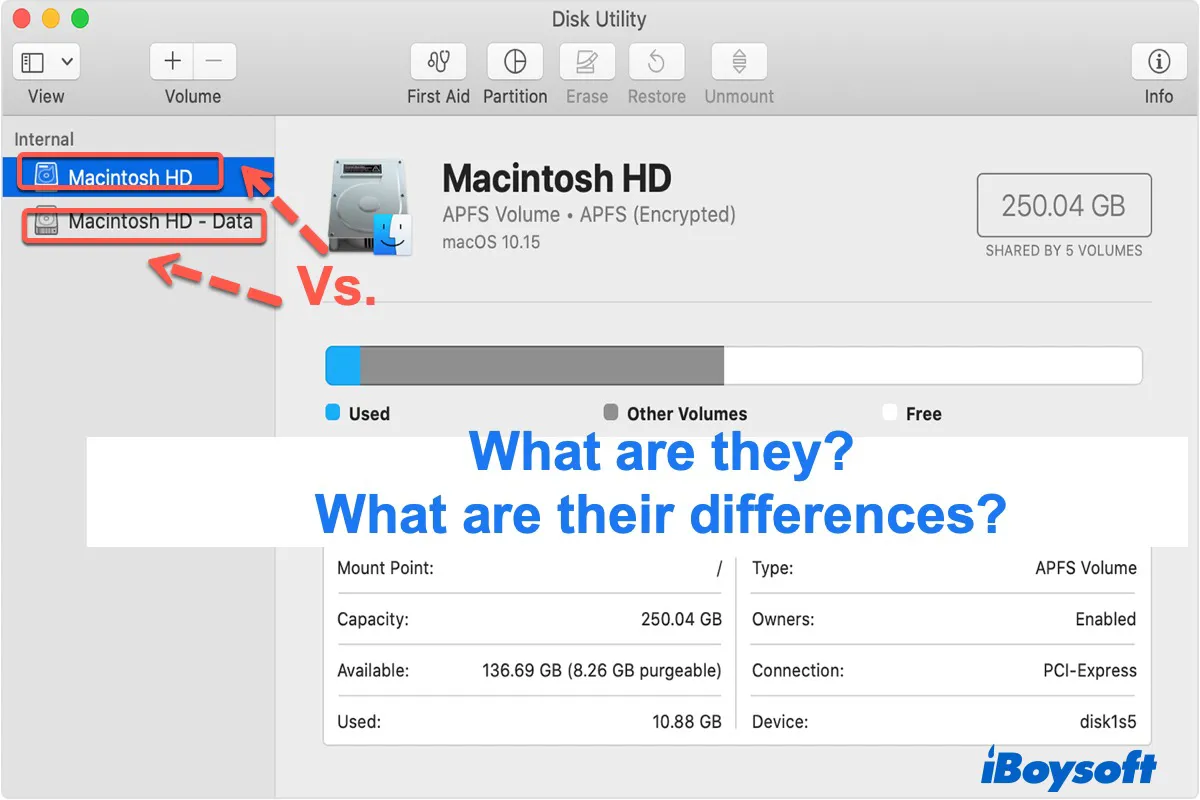
If you open Disk Utility on a Mac running macOS Catalina or later, you may notice two volumes under your internal drive:
- Macintosh HD
- Macintosh HD - Data
or
- macOS
- macOS - Data
Many Mac users assume they are two separate hard drives or duplicate system volumes. They are not.
Macintosh HD and Macintosh HD - Data are two APFS volumes that work together as one startup disk. Apple introduced this structure in macOS Catalina to separate system files from user data, improving security and preventing accidental modification of critical macOS components.
In simple terms:
- Macintosh HD stores macOS system files.
- Macintosh HD - Data stores your personal files and user data.
Understanding the difference is important when reinstalling macOS, downgrading macOS, fixing Disk Utility problems, or recovering lost files.
Why does Mac have Macintosh HD and Macintosh HD - Data?
Before macOS Catalina (10.15), a Mac normally used one main startup volume called Macintosh HD. Both macOS system files and user data were stored together.
This design had a problem: if malware, software errors, or users accidentally modified important system files, macOS could become unstable.
Starting with macOS Catalina, Apple changed the storage architecture.
Instead of storing everything in one volume, macOS separates the startup disk into two APFS volumes:
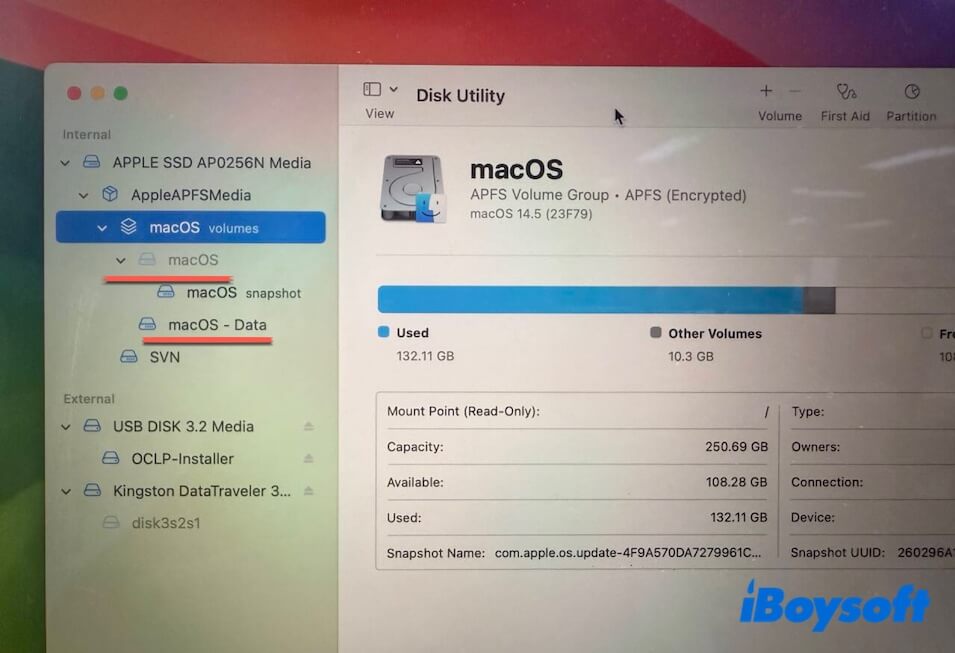
Macintosh volumes (APFS Volume Group)
↓
- Macintosh HD: macOS system files (read-only)
- Macintosh HD - Data: User files and writable data
These two volumes are linked together by APFS and appear as one Macintosh HD drive in Finder.
Macintosh HD and Macintosh HD - Data are not two hard drives
One of the most common misunderstandings I see when helping Mac users troubleshoot Disk Utility issues is that they think Macintosh HD and Macintosh HD - Data represent two different disks.
They do not.
They are logical APFS volumes located on the same physical storage device, such as an internal SSD.
For example:
Your MacBook SSD:
Physical SSD
│
└── APFS Container
│
├── Macintosh HD
│
└── Macintosh HD - Data
Deleting or modifying these volumes incorrectly can affect your ability to start macOS.
What is Macintosh HD?
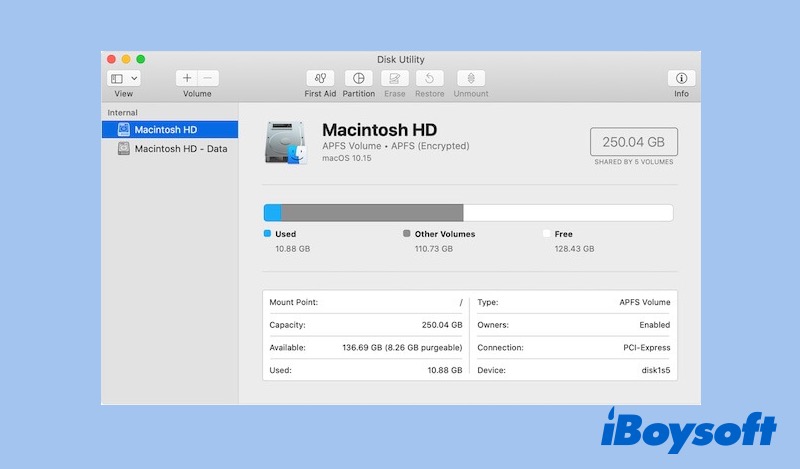
Macintosh HD is the system volume of your Mac. It only stores macOS system files, system frameworks, Apple-provided applications, startup-related files, and protected operating system components.
Mac users can't erase, delete, or edit this volume.
Why is Macintosh HD read-only?
Starting with macOS Catalina, Apple introduced the concept of the Sealed System Volume (SSV).
The purpose is to protect macOS from unauthorized changes.
The system volume is mounted as read-only during normal operation, meaning users and applications cannot freely modify important macOS files.
This security design helps:
- Prevent malware from changing system files
- Protect macOS integrity
- Make system updates safer
Can you delete Macintosh HD?
Technically, Macintosh HD can be erased from macOS Recovery.
However, you should not delete it manually during normal Mac usage.
Erasing Macintosh HD removes the operating system, and your Mac will no longer boot until macOS is reinstalled.
What is Macintosh HD - Data?
The Macintosh HD - Data volume is the user data volume. It is used to store files created or modified by users and applications such as documents, videos, photos, and audio.
Unlike Macintosh HD, Macintosh HD - Data allows normal read and write operations.
When you save a file, install an application, or create a new document, the data is usually stored on Macintosh HD - Data.
Can you delete Macintosh HD - Data?
No, you should not delete Macintosh HD - Data manually unless you are intentionally erasing your Mac.
Erasing this volume may delete:
- Personal files
- User accounts
- Application data
- Settings
If you accidentally erase Macintosh HD - Data, you may need a Mac data recovery tool like iBoysoft Data Recovery for Mac to recover lost files.
Macintosh HD vs. Macintosh HD - Data: Key differences
The biggest difference between Macintosh HD and Macintosh HD - Data is their usage. The Macintosh HD volume loads the Mac system files and scripts, while the Macintosh HD - Data volume stores personal data on the Mac.
| Macintosh HD | Macintosh HD - Data | |
| Purpose | Stores macOS system files | Stores user data |
| Access | Read-only | Read-write |
| Contains | macOS, system libraries, built-in apps | Documents, photos, downloads, personal files |
| File system | APFS / APFS Encrypted | APFS / APFS Encrypted |
| Should you erase it? | Only during macOS reinstall | Only during a complete Mac wipe or proceed with a clean installation |
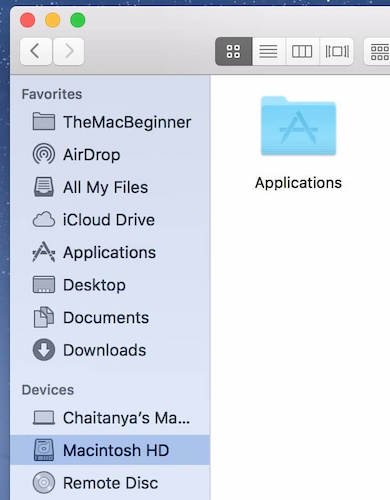
| Visible in Finder | Appears as Macintosh HD | Usually hidden and merged with Macintosh HD |
Which one to erase when reinstalling macOS?
This depends on your goal.
Goal 1. Reinstalling macOS without removing personal files
- Erase the Macintosh HD volume only
If you reinstall macOS over the existing system:
- Do not manually erase Macintosh HD - Data
- Follow Apple's macOS Recovery installation process
The installer can recreate or update the system volume while preserving your data.
Goal 2. Clean install macOS
- Erase both Macintosh HD and Macintosh HD - Data
If you proceed with a clean install due to insufficient storage space or other reasons, you need to erase the Macintosh HD volume group.
That is, erase Macintosh HD and Macintosh HD - Data.
Note: If you don't want to suffer an unexpected loss of your important files during the reinstallation, you should back up your data beforehand.
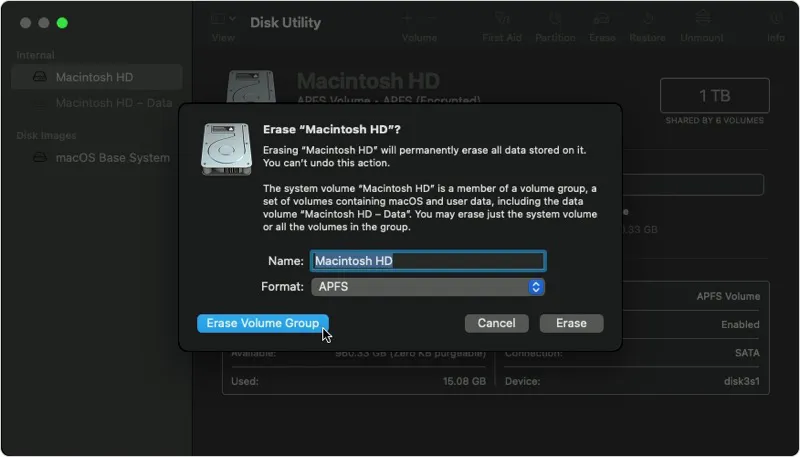
Goal 3. Downgrade macOS to an earlier version
- Erase both Macintosh HD and Macintosh HD - Data
When downgrading macOS, you normally need to erase both Macintosh HD and Macintosh HD - Data.
The reason:
The newer macOS version may leave behind its Data volume. After installing an older macOS version, the system may create another Data volume.
This can result in:
- Multiple Macintosh HD - Data volumes
- Incorrect startup disk selection
- Storage confusion
Note: You can recover data with the data recovery software for Mac if accidental data loss happens during a macOS reinstall or downgrade.
Related posts:
• How to factory reset your Mac without losing data?
• How to fix Macintosh HD not mounted?
FAQs about Macintosh HD
- QWhy do I have multiple Macintosh HD - Data volumes?
-
A
This usually happens after:
- macOS downgrade
- failed macOS installation
- interrupted system migration
- restoring from backups incorrectly
You may see names like Macintosh HD - Data or Macintosh HD - Data - Data. Before deleting anything, confirm which volume contains your current user files.
- QWhy does Finder show only Macintosh HD?
-
A
Although Disk Utility displays Macintosh HD and Macintosh HD - Data separately, Finder usually shows only one Macintosh HD drive.
This happens because macOS combines them through the APFS volume group.
The system volume and data volume work together behind the scenes, but macOS presents them as a single storage location for normal users.
- QHow to recover data from Macintosh HD?
-
A
The file system on Macintosh HD is APFS or APFS encrypted. Mac models since 2020 are even encrypted by T2 security chips or Apple Silicon chips. Thus recovering those encrypted files is challenging. So you need professional Mac data recovery software which supports recovering files from encrypted APFS partitions, T2-secured Macs, and M1-powered Macs.
- QCan’t find Macintosh HD on Mac, why?
-
A
Check:
Whether your system is macOS Catalina or later or not.
Whether you've renamed the system volume or not.
Whether you've hidden the Macintosh HD volume in Finder or Disk Utility.
- QHow to show Macintosh HD in Finder and Desktop?
-
A
To show Macintosh HD in Finder:
Open Finder from the top Finder menu and select Preferences, then select Sidebar > Locations > Hard disks.
To show Macintosh HD on the Desktop:
Open Finder from the top Finder menu and select Preferences, then select General > Show Hard disks on the desktop.