A macOS Catalina ISO file is a disk image of Apple's macOS Catalina operating system, version 10.15. This file format is commonly used for running macOS Catalina in a virtual machine environment (e.g., VMware, VirtualBox).
With it, you can run macOS Catalina on a computer along with other OSes, such as Windows or Linux, without needing separate hardware or rebooting.
Download macOS Catalina ISO on Windows directly
If you need the ISO file to install macOS Catalina on a Windows PC, download it directly from iBoysoft DiskGeeker for Windows. This tool has a comprehensive library of safe macOS ISO files, including macOS Catalina and other versions.
With this tool, you can quickly download the macOS Catalina ISO file or create a macOS Catalina bootable USB installer on your Windows PC, without worrying about malware.
Follow the steps below to download the macOS Catalina ISO image on Windows:
Step 1: Free download and install iBoysoft DiskGeeker for Windows.
Step 2: Launch the tool and click Download and create boot disk > Download macOS system image.
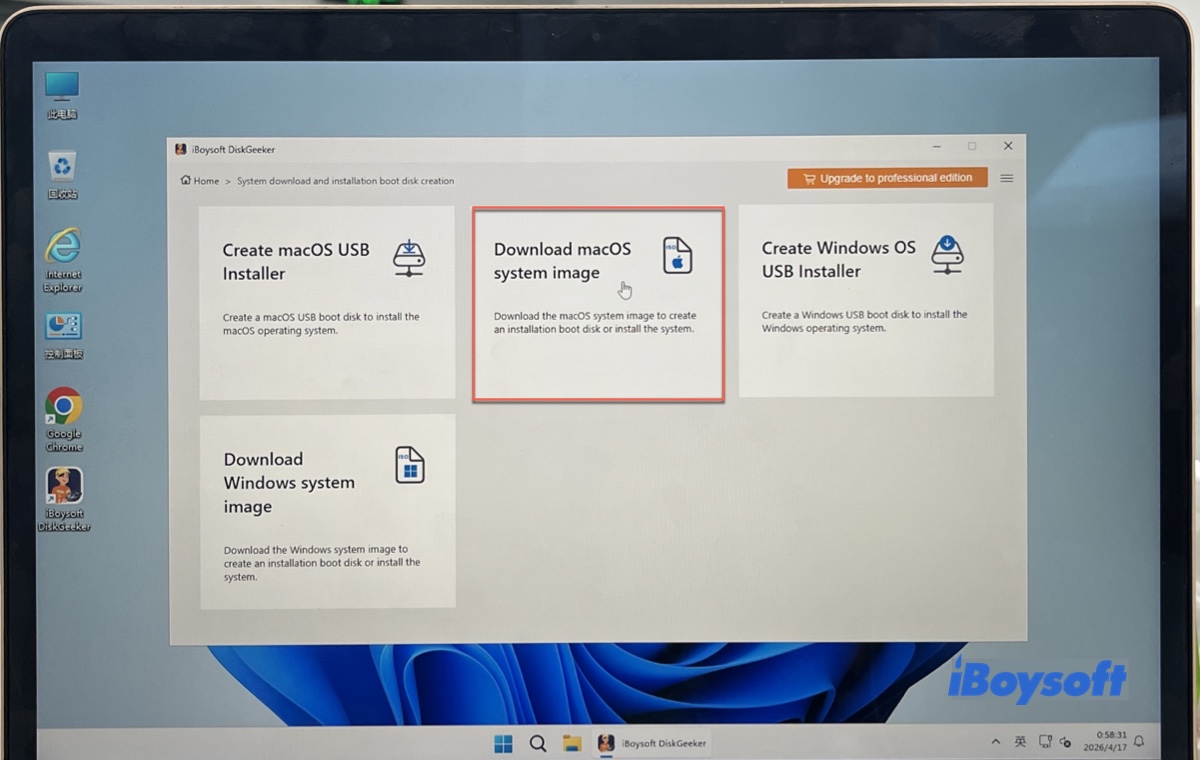
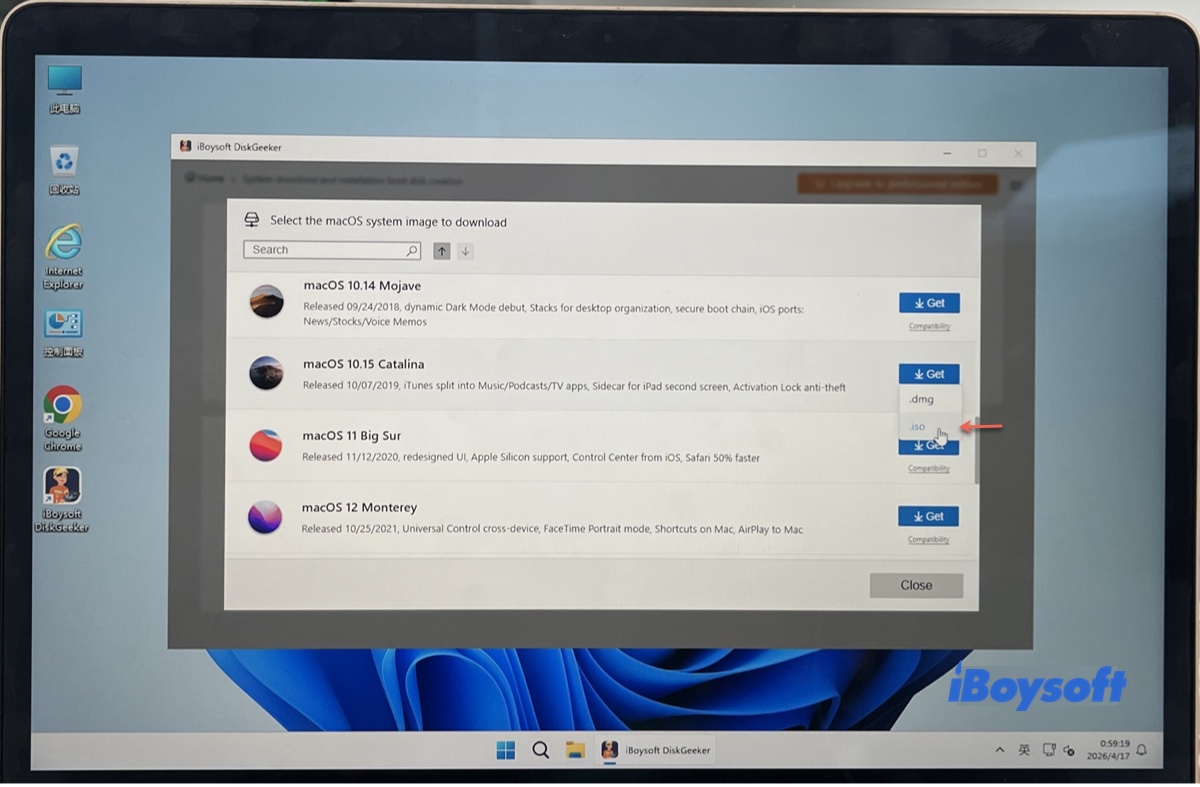
Step 3: Select macOS Catalina and click Get.
Step 4: Choose the .iso format.
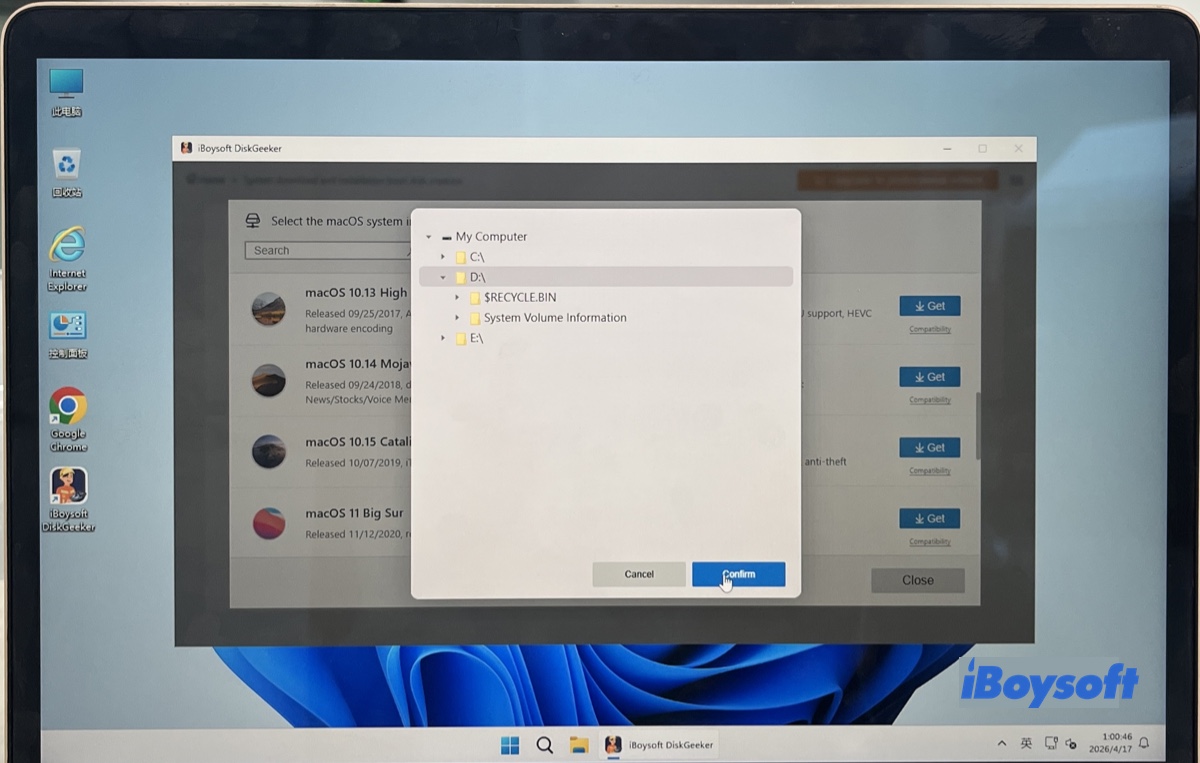
Step 5: Specify a location to save the macOS Catalina ISO file.
Step 6: Wait until the macOS Catalina ISO file is downloaded.
Create macOS Catalina ISO on Mac manually
If you have a Mac and want to create the macOS Catalina ISO file (64-bit) manually, use the image file provided in iBoysoft DiskGeeker and then convert the DMG to ISO.
It saves you time that would have been wasted creating the DMG file manually, simplifying the 8-step process into 2. With it, you can create the Catalina ISO image regardless of whether the Mac is compatible with macOS Catalina.
This app also allows you to create a bootable USB installer for macOS Catalina easily.
How to create a macOS Catalina ISO 64-bit the easy way:
Step 1: Download the macOS Catalina DMG file from iBoysoft DiskGeeker.
Open iBoysoft DiskGeeker, select a Mac partition, click Download Image, then choose macOS 10.15 Catalina and click Get.
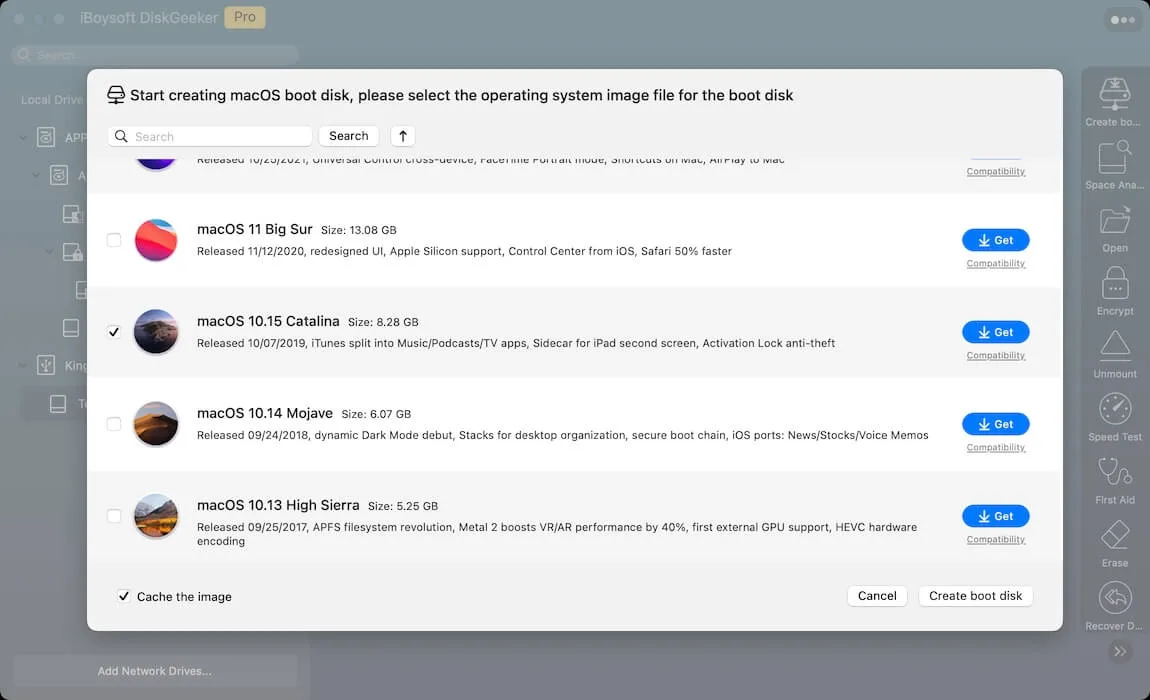
Step 2: Open Terminal and run the commands below to convert the Catalina.dmg file to the .iso format.
hdiutil convert dmg_file_path -format UDTO -o ~/Desktop/Catalina.cdrmv ~/Desktop/Catalina.cdr ~/Desktop/Catalina.isoReplace the dmg_file_path with the actual file path.
If you have a Mac that's compatible with macOS Catalina, you can also create the macOS Catalina ISO file with the following steps:
Step 1: Download the macOS Catalina full installer
The first step in creating a macOS Catalina 10.15.7 ISO file is to download its full installer. You can open this link to get it from the Mac App Store.
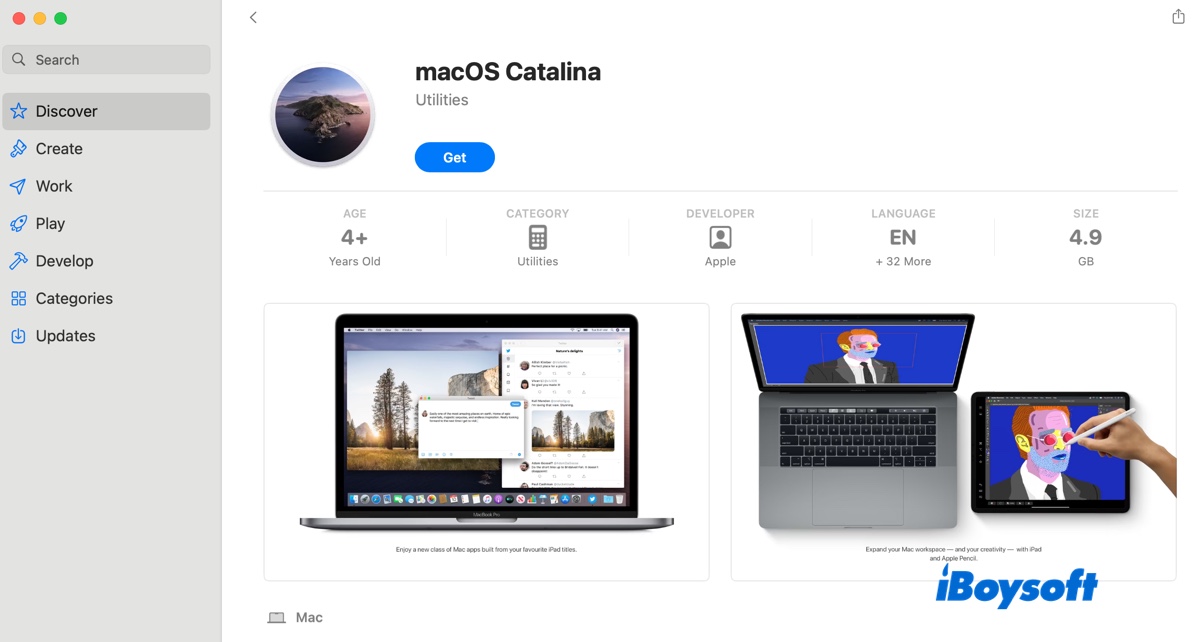
Click Get > Download to download the latest macOS Catalina 10.15.7 in Software Update. After the download is complete, you should find it in your Applications folder.
Step 2: Create the macOS Catalina 10.15.7 ISO file in Terminal
The procedures below require running commands in Terminal. Make sure the command is correctly typed before executing it. Otherwise, it may cause unexpected results.
- Open Terminal.
- Copy and paste the command below into Terminal and press Enter to create a disk image.
hdiutil create -o /tmp/Catalina -size 8500m -volname Catalina -layout SPUD -fs HFS+J - Mount the disk image on your Mac.
hdiutil attach /tmp/Catalina.dmg -noverify -mountpoint /Volumes/Catalina - Create a macOS Catalina bootable installer.
sudo /Applications/Install\ macOS\ Catalina.app/Contents/Resources/createinstallmedia --volume /Volumes/Catalina --nointeraction - Type your administrator passoword and press Enter.
- Unmount the macOS Catalina bootable volume.
hdiutil detach /volumes/Install\ macOS\ Catalina - Convert Catalina.dmg to Catalina.cdr.
hdiutil convert /tmp/Catalina.dmg -format UDTO -o ~/Desktop/Catalina.cdr - Rename Catalina.cdr to Catalina.iso and move it to the desktop.
mv ~/Desktop/Catalina.cdr ~/Desktop/Catalina.iso
Now, you have a bootable macOS Catalina 10.15.7 ISO file. Share this guide if you find it helpful!
macOS Catalina ISO 64-bit download links
Though not recommended, if you prefer a free download from an online archive, you can also try the links in the following section. Be aware that these ISO files are not verified. For security purposes, back up important data before using any of the files.
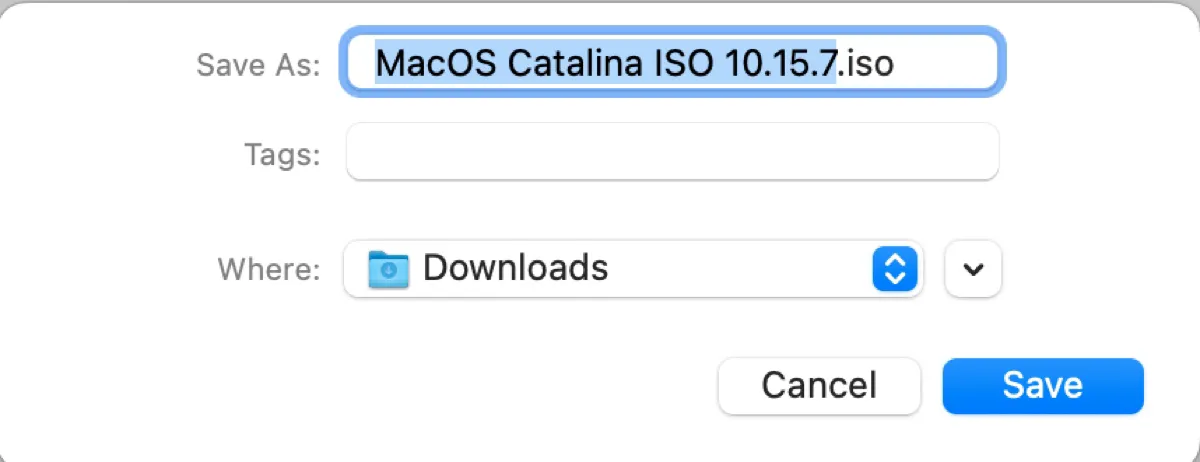
Get macOS Catalina ISO download 64-bit for VirtualBox/VMware:
macOS Catalina ISO download 10.15.7 (mega.nz)
macOS Catalina 10.15.7.iso download (mediafire)
macOS Catalina ISO download 10.15.7 (archive.org)
macOS Catalina ISO file download (archive.org)
macOS Catalina ISO download 10.15.5 (archive.org)
Share these resources to help others download the macOS Catalina ISO for VirtualBox or VMware.
Want to download the latest macOS Golden Gate ISO file? Follow: macOS Golden Gate ISO Download.
FAQs
- QIs macOS Catalina still safe to use?
-
A
macOS Catalina is generally considered less safe than newer versions because it hasn't received security updates since its support ended in 2022. In early 2026, Apple released a surprise 'Security Update 2026-001,' but it's specifically designed to extend security certificates for services like iMessage rather than patch vulnerabilities.
However, if your Mac is stuck with macOS Catalina, avoid downloading files from unknown resources and switch to a search engine that maintains its own security updates.
- QWhat Macs can run macOS Catalina?
-
A
These Macs are compatible with macOS Catalina:
MacBook: Early 2015 or newer
MacBook Air: Mid 2012 or newer
MacBook Pro: Mid 2012 or newer (including the final Unibody models)
Mac mini: Late 2012 or newer
iMac: Late 2012 or newer
iMac Pro: All models (2017)
Mac Pro: Late 2013 (the 'trash can' model) or newer