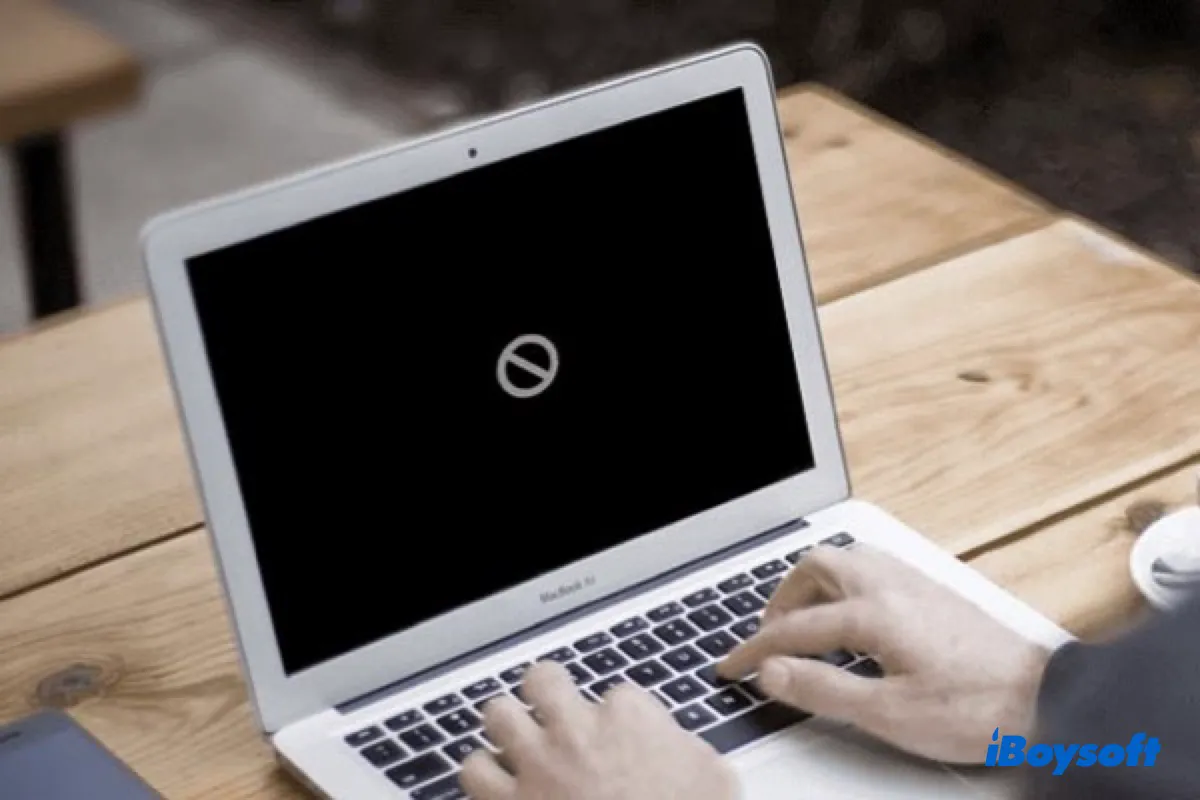
Seeing a circle with a line through it (🚫) when your Mac starts up is alarming—but in most cases, your files are not immediately damaged.
This symbol means your Mac has found an operating system on the startup disk, but that system cannot be used by your Mac's hardware or firmware. The problem is usually software compatibility, not instant disk failure.
Before reinstalling macOS or thinking about data recovery, it's critical to understand which situation you're actually in. This guide walks you through that decision step by step.

What does the prohibitory symbol mean on Mac?
Apple uses the prohibitory symbol (sometimes with the text: support.apple.com/mac/startup) to indicate one specific condition: your Mac detects a startup disk, but the macOS version on it is incompatible with your Mac model.
This commonly happens when:
- A macOS upgrade installs a version your Mac doesn't fully support.
- A downgrade via Time Machine restores an older, incompatible macOS build.
- The macOS system files on the startup disk are damaged.
Important distinction:
- 🚫 is not the same as a flashing folder with a question mark.
- 🚫 usually means the OS is the problem, not the hardware.
Should you worry about data loss right now?
Not always. Use this quick check:
| Low risk: Disk Utility can see your startup disk. |
| Moderate risk: Disk Utility sees the disk, but First Aid reports errors. |
| High risk: Disk Utility does not detect the startup disk at all. |
Data recovery is only urgent in the last two scenarios.
Step 1: Boot into macOS Recovery Mode
If your Mac is stuck on the 🚫 symbol, Recovery Mode is the safest starting point. Here's how to boot into macOS Recovery Mode on Intel and Apple Silicon Macs.
Intel-based Macs:
- Shut down the Mac completely.
- Power it on and immediately hold Command + R.
- Release when you see the Apple logo or a loading bar.
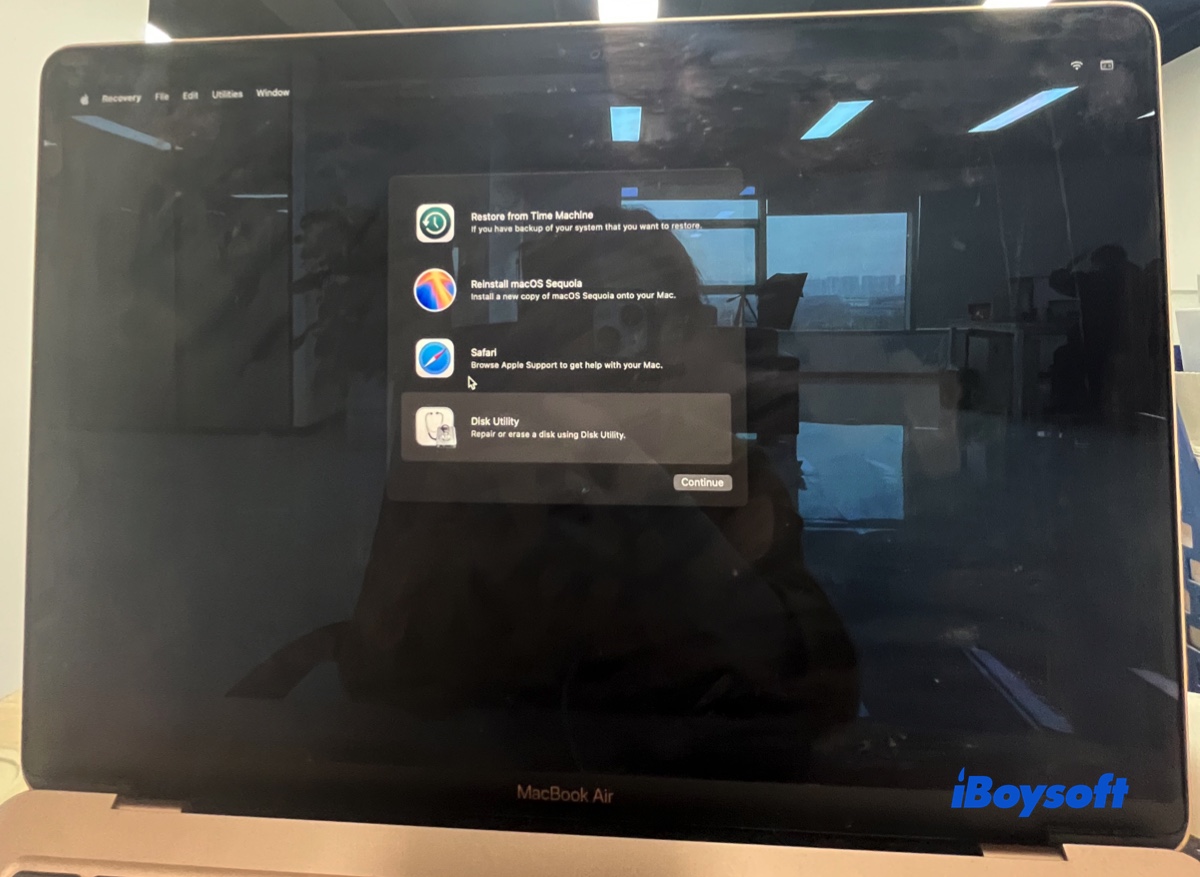
- When you see the "macOS Utilities" window, you're in Recovery Mode.
Apple Silicon (M1 / M2 / M3/M4):
- Shut down the Mac.
- Press and hold the power button.
- Release when "Loading Startup Options" appears.
- Wait for the "macOS Utilities" window to show up.
If standard Recovery doesn't work, try Internet Recovery: Option + Command + R (or Shift + Option + Command + R).
Step 2: Check the startup disk with Disk Utility
Once in Recovery Mode, you can run the First Aid feature in Disk Utility to check and repair the startup disk.
- Open Disk Utility.
- Select View > Show All Devices.
- Choose your internal disk (not just the volume).
- Run First Aid.
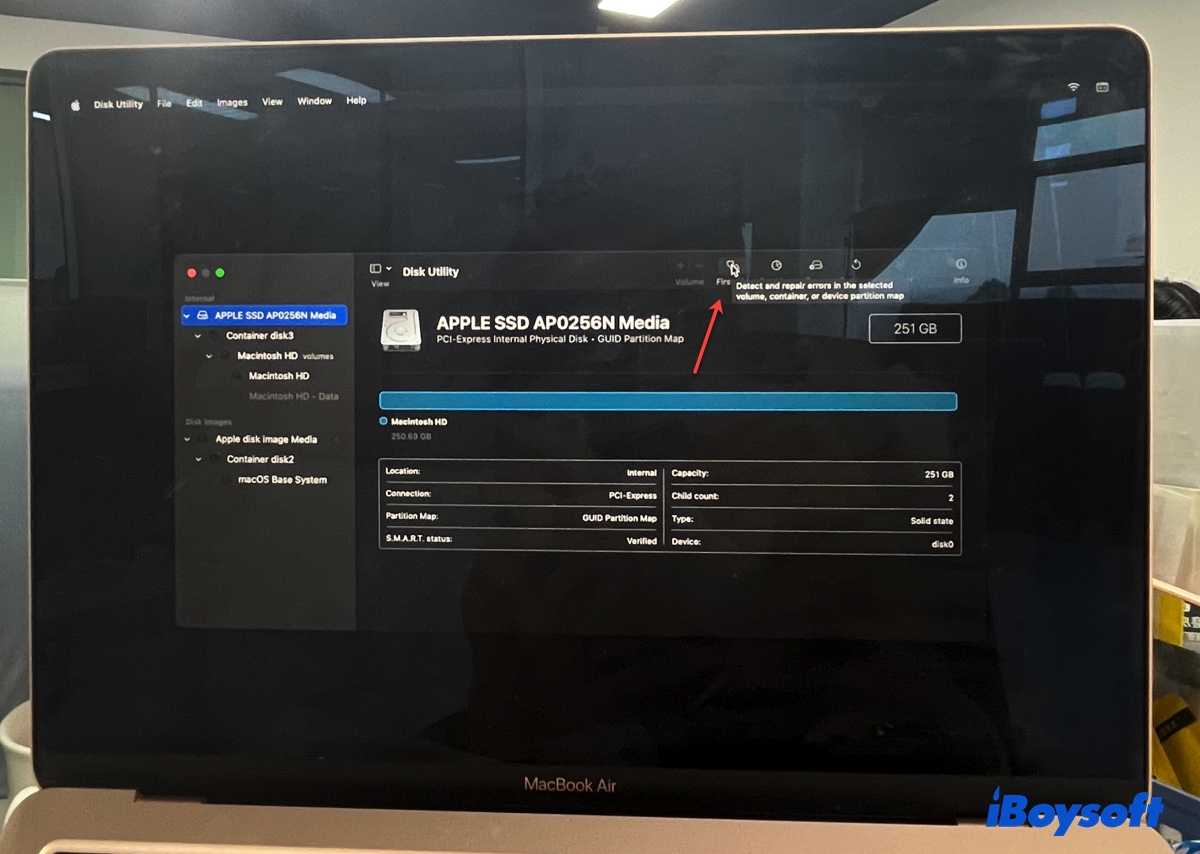
- If it reports no errors, continue checking the volumes one by one.
What the Results Mean:
| First Aid succeeds: Restart your Mac and test. |
| Errors found but repaired: Restart and monitor. |
| Errors cannot be repaired: Back up or recover data before reinstalling macOS. |
| Disk not visible: Possible hardware failure (data recovery strongly recommended). |
Step 3: Reinstall a compatible version of macOS
If Disk Utility doesn't fix the issue, the 🚫 symbol is usually caused by macOS incompatibility.
Common triggers include:
- Installing a macOS version newer than your Mac supports.
- Restoring an older macOS via Time Machine.
- Corrupted system files after an interrupted update.
Important before you reinstall: Reinstalling macOS normally preserves personal files, but failures do happen—especially on unstable disks. If your data is important and First Aid failed, or the Mac has frozen repeatedly during boot, it's safer to secure your files before reinstalling.

When data recovery is actually necessary?
You should consider data recovery only if:
- The startup disk doesn't appear in Disk Utility.
- macOS reinstallation cannot detect the disk.
- The Mac repeatedly fails during system reinstall.
In these cases, Recovery Mode–compatible tools can help extract files without booting into macOS.
iBoysoft Data Recovery for Mac is such a tool that can recover data from Recovery Mode when a Mac won't turn on. Follow the video below to retrieve data from the Mac showing up 🚫 with a line through it.
If you prefer a written guide, check out: How to run iBoysoft Data Recovery in macOS Recovery mode.
Real-world scenario (Tested Case)
A common example involves Intel MacBook Pro models downgraded from macOS Big Sur using Time Machine backups created on newer Macs. The restored system boots to a 🚫 symbol because the firmware no longer supports that macOS build.
Reinstalling a supported macOS version resolves the issue without data loss—as long as the disk itself is healthy.
(Tested on Intel MacBook Pro (2017) / M1 MacBook Air)
If none of these steps work
If the internal disk is missing in Disk Utility, and macOS Recovery cannot detect a valid target disk, the drive may have failed physically. At that point, consider replacing the internal drive (if possible) or consulting Apple Support or a professional data recovery service.
Key takeaway
The prohibitory symbol (🚫) usually signals a software compatibility problem, not instant data loss.
Understand the cause first, verify disk health second, and only then decide whether macOS reinstallation or data recovery is necessary.
That decision order is what prevents unnecessary risk—and unnecessary panic.
FAQs
- QHow to fix the prohibitory symbol Mac error do not enter symbol?
-
A
To fix the prohibitory symbol that prevents your Mac from booting up, you can repair the internal hard drive in Recovery Mode or reinstall macOS.
- QCan the prohibitory symbol indicate a hardware problem?
-
A
Yes, the prohibitory symbol can indicate a hardware issue, especially if:
The startup disk is failing (e.g., physical damage, bad sectors, or aging SSD/HDD).
There is an issue with the Mac's internal connection (e.g., loose cables or failed motherboard components).