
サードパーティのプログラムや拡張機能をインストールすると、Apple Silicon Mac で "システム拡張機能がブロックされています/更新済み" エラーが発生します。その後、画面の指示に従って、Mac のシステム拡張機能をバイパスしようとすると、別のエラーウィンドウが表示されて "システム拡張機能を有効にするには、リカバリ環境でセキュリティ設定を変更する必要がある" または レガシーシステム拡張機能を削除と表示されます。
混乱していますか?この記事では、M1/M2/M3/M4 Mac パソコンでの システム拡張機能を有効にする方法 について詳細なチュートリアルを提供しています。この方法は、次の Apple Silicon Mac デバイスに適用されます:
| MacBook Air (M1, 2020) MacBook Pro (13 インチ, M1, 2020) Mac mini (M1, 2020) iMac (24 インチ, M1, 2021) MacBook Pro (14 インチ, M1 Pro/M1 Max, 2021) MacBook Pro (16 インチ, M1 Max/M1 Max, 2021) Mac Studio (M1 Mac/M1 Ultra, 2022) MacBook Pro (13 インチ, M2, 2022) MacBook Air/Pro (M2, 2022) MacBook Air (M2, 2023) Mac Mini (M2, 2023) MacBook Pro (M2 Pro, 2023) | MacBook Pro (M2 Max, 2023) Mac Studio (M2 Max, 2023) Mac Pro (M2 Ultra, 2023) Mac Studio (M2 Ultra, 2023) MacBook Pro (M3, 2023) MacBook Pro (M3 Pro, 2023) MacBook Pro (M3 Max, 2023) iMac (M3, 2023) MacBook Pro (M4, 2024) MacBook (M4 Pro, 2024) Mac Mini (M4 Pro, 2024) iMac (M4, 2024) |
注: ハードドライブ、外付けハードドライブ、SD カードなどからデータを失った場合は、プロフェッショナルなデータ復旧ソフトウェア iBoysoft Data Recovery を強くお勧めします。
アップルシリコンMacでシステム拡張機能を有効にする方法 - ビデオチュートリアル
私たちのビデオを視聴して、アップルシリコンMacでシステム拡張機能を有効にしてください。プロセスはmacOS Big Surを実行するM1 Mac上で実証されており、手順はすべてのアップルシリコンMacモデルにほぼ同じです。ソフトウェアのインターフェースは異なる macOSバージョンによって異なる場合があります。
M1/M2/M3/M4 Macでシステム拡張機能を有効にする方法 - テキストチュートリアル
テキストのガイドラインを希望する場合、以下の手順に従ってください。
1. MacのAppleメニュー>このMacについてで、MacにM1、M2、M3、またはM4などのアップルシリコンチップが搭載されているかを確認します。
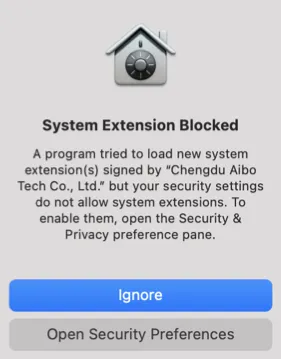
2. macOSカーネル拡張プログラムを必要とするiBoysoft NTFS for Macなどをインストールした後、システム拡張機能がブロックされていますポップアップが表示されたときは、セキュリティ設定を開くをクリックします。
ポップアップを閉じてしまった場合は、Gatekeeper(ゲートキーパー)プライバシー&セキュリティ設定をAppleロゴ>システム設定(またはシステム設定)で見つけることもできます。
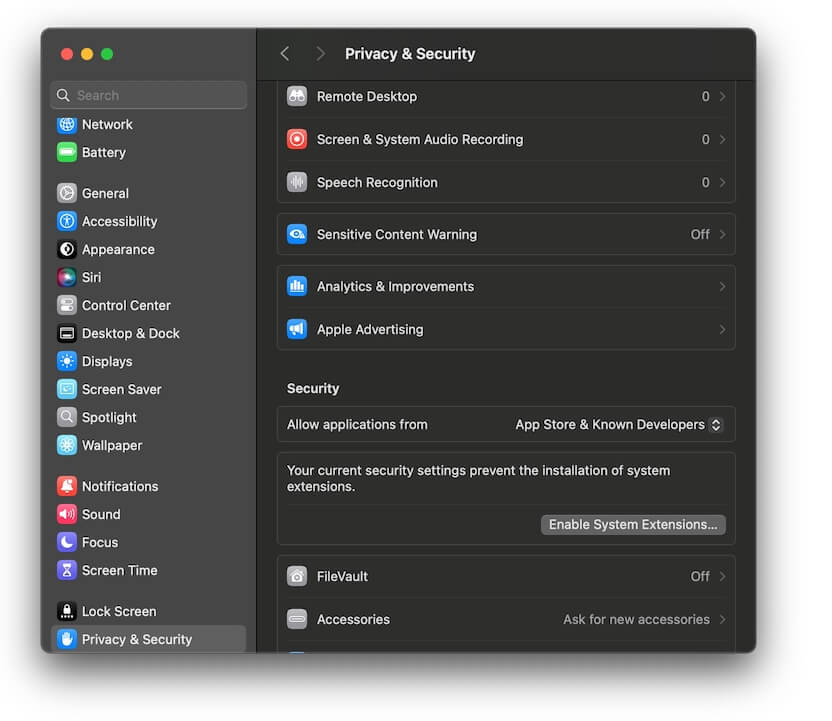
3. 下にスクロールしてセキュリティセクションを見つけ、App Storeおよび認証済み開発元を選択します(macOS Sonomaおよびそれ以前のバージョンでは、App Storeおよび識別された開発元を選択します)。
4. システム拡張機能を有効にするをクリックして管理者パスワードを入力します。
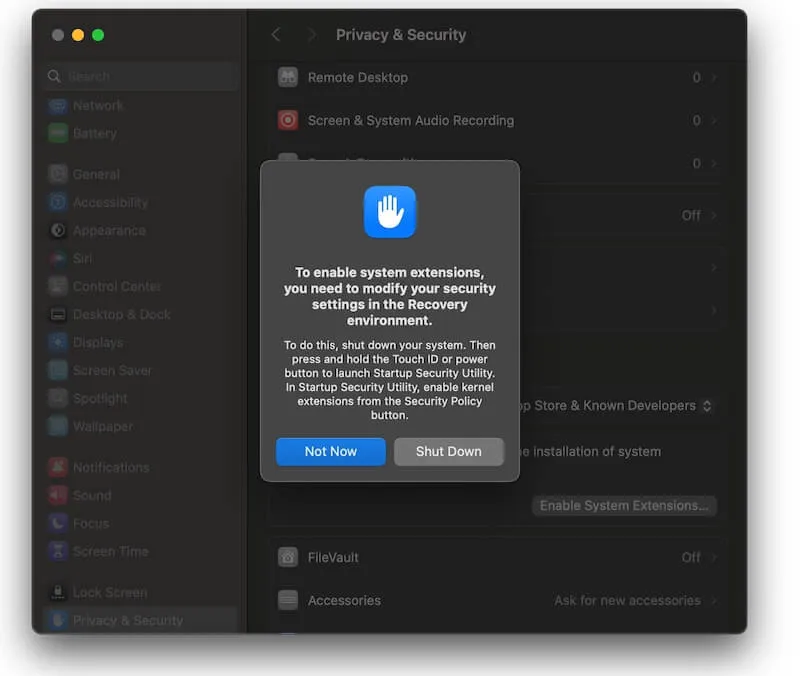
5. ポップアップに「システム拡張機能を有効にするには、リカバリ環境でセキュリティ設定を変更する必要があります」と表示された場合は、Macをシャットダウンするためにシャットダウンボタンをクリックします。
6. Macが完全にオフになったら、電源スイッチ(Touch ID)を押し続けて「起動オプションをロードしています」と表示されるまで押し続けます。
7. オプションをクリックしてから続行をクリックして、M1、M2、M3、またはM4 Macを macOSリカバリモードに起動します。
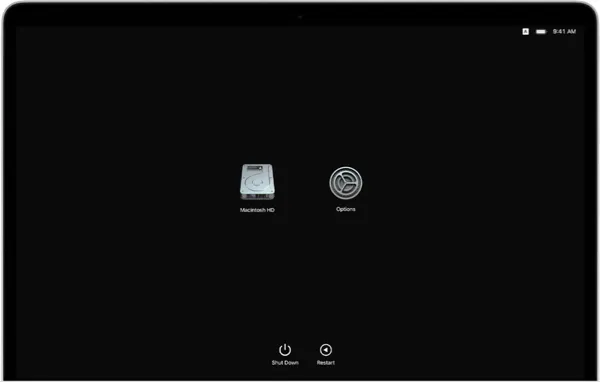
8. 上部メニューバーからユーティリティを選択し、> スタートアップセキュリティツールを選択します。
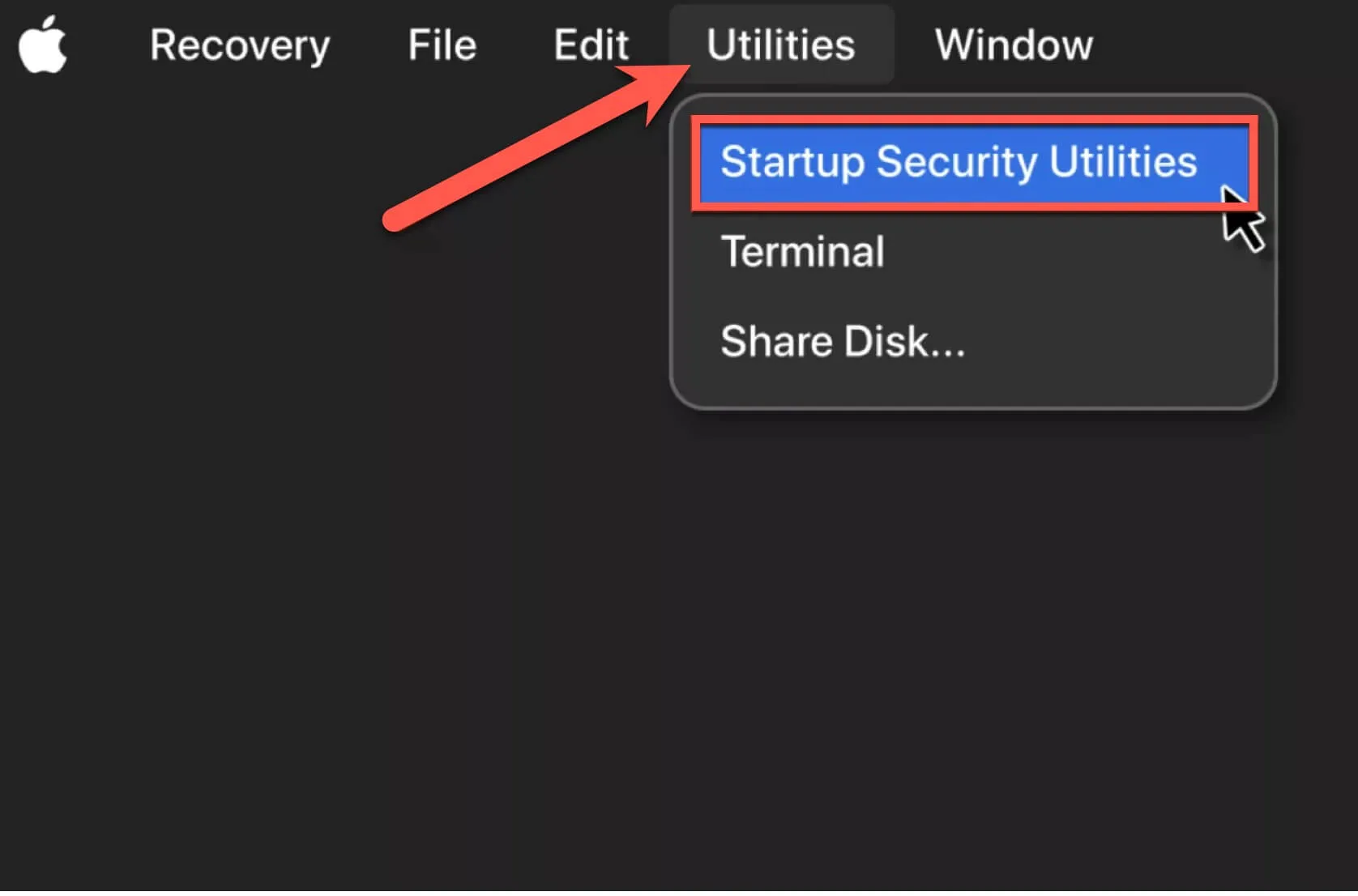
9. スタートアップディスクが表示されたら、セキュリティポリシー...をクリックします。
10. スタートアップセキュリティツールで、セキュリティを緩和を選択し、次のオプションをチェックします:特定のデベロッパーによるカーネル拡張機能のユーザー管理を許可。

質問:Macのデフォルトのセキュリティ設定を変更してシステム拡張機能を有効にすることは安全ですか?
A:インストールするソフトウェアがカーネル拡張機能をインストールするためにセキュリティを緩和する必要がある場合、安全です。それは、Appleが識別し信頼する開発者だけがシステム拡張機能を許可するように求めることができるためです。彼らのソフトウェアはシステム全体のセキュリティを危険にさらすことはありません。
11. OKをクリックし、正しい管理者パスワードを入力し、セキュリティレベルの変更が完了するまで待ちます。
12. Macを再起動します。
13. 再びプライバシー&セキュリティウィンドウに移動し、今度はセキュリティセクションで:
「Chengdu Aibo Tech Co., Ltd.」開発者のシステムソフトウェアの読み込みをブロックされました」のような言葉の下にある許可ボタンをクリックします。
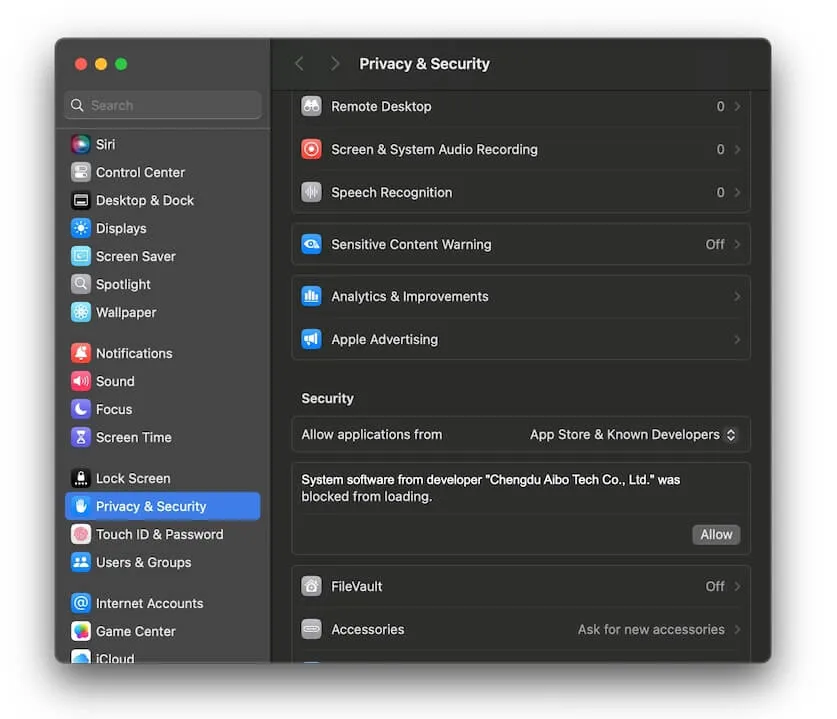
システム拡張機能を有効にする必要がある場合、詳細..ボタンが表示され、それをクリックして、許可したいシステム拡張機能をオンにし、OKをクリックします。
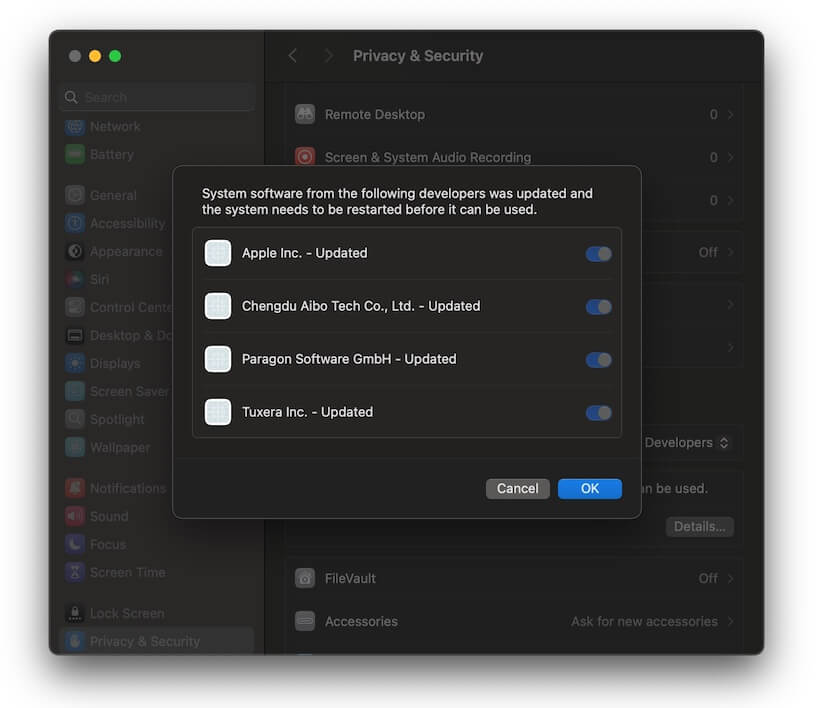
13. 管理者パスワードの入力が求められます。
14. 変更を有効にするためにMacを再起動し、必要に応じてインストールを完了します。
関連記事:
Mac M2 vs M1: M2へアップグレードすべきですか?
起動時のシステム拡張機能エラー:どのように再構築または再有効化しますか?
この投稿が役立つ場合は、友達や家族と共有してみてはいかがですか?
アップルシリコンMacでシステム拡張機能を有効にするに関するFAQ
- QAm I supposed go back to Full Security to protect the computer after software installation is complete?
-
A
No, you do not need to go back to high security after you have changed to Reduced Security for enabling system extensions. Otherwise, your newly installed software won't run properly with system extensions blocked.
- QIf I uninstall the software, do I need to switch to default again? How can I do that?
-
A
If you uninstall the software that requires system extensions on M1/M2/M3 Mac, it is suggested that you switch to the default Full Security to better protect your computer. You should boot your Mac in Recovery Mode again and then select Startup Security Utility > Security Policy > Full Security > OK. Then restart the Mac.
- QWhen I confirm reduced security, it says 'No administrator was found', how to fix?
-
A
Even though you already have an admin account, this may still happen. You just need to create a temporary new admin account to bypass the issue. Follow the steps below:
Start your Mac normally to the desktop.
Go to Apple logo > System Preferences > Users & Groups.
Unlock the yellow lock at the right bottom with your admin password.
Click + to add a new admin account and click Create User to confirm.
Shut down the Mac, boot the Mac into macOS Recovery mode and then reduce security with the newly created admin account.
Delete the new admin account after your Mac restarts.
- QThe startup Security Utility only shows 'Change Password' & 'Turn Off Firmware Password' options, what to do?
-
A
You are using an older Intel Mac instead of an Apple silicon Mac. You do not need to change the security policy in Recovery Mode to allow system extensions. Just open Apple logo from the desktop > System Preferences > Security & Privacy > Allow.
- QWhy can't I enable system extensions on M1 Mac?
-
A
Many users have trouble enabling system extensions on M1 Mac running macOS Big Sur 11.0 or macOS 11.1, so it is highly recommended that your Apple Silicon Mac should be running macOS 11.2 or later.
- QWhen I go to the Startup Security Utility and I get a pop-up saying security settings cannot be changed, what to do?
-
A
You enter the Fallback Recovery OS on an M1/M2 Mac instead of regular macOS Recovery because you press the Touch ID button twice quickly before pressing it down.
To enter the regular Mac Recovery Mode to change the security settings, you need to shut down the Mac, turn it on by pressing and hold the power switch until startup options show up.
- QI didn't see Allow/Details button in Security & Privacy menu after doing these things, how to fix?
-
A
One reason could be the software is not compatible with the M1/M2/M3 Mac yet, and you should wait until the software updates.
The other most possible reason could be you have installed too many drivers like printer drivers on your computer. As a result, the about-to-install extensions can't be installed successfully. To remove unnecessary drivers:
Click Go at the menu bar on the desktop > Go to folder.
Type in /Library/Extensions/ and press Return.
If you see 15+ files with .kext file extension, you have too many drivers on your computer. Right-click those you don't need and move them to the Trash.
Change the security level and see if the Allow or Details button appears.