If you want to run macOS Ventura on a virtual machine, a macOS Ventura VMDK file would prove very useful. It's pre-configured with the necessary drivers, software, and settings of macOS Ventura, helping you quickly get started with the operating system in a virtual environment.
Let's take a quick look at the definition of a macOS Ventura VMDK file and then download it for VMware or VirtualBox.
Tips: If you want a customizable virtual machine that works properly, it's recommended to create it manually with the macOS Ventura ISO file. Here's how to download a bootable Ventura ISO image:
Step 1: Get iBoysoft DiskGeeker and open it.
Step 2: Open Download and create boot disk > Download macOS system image.
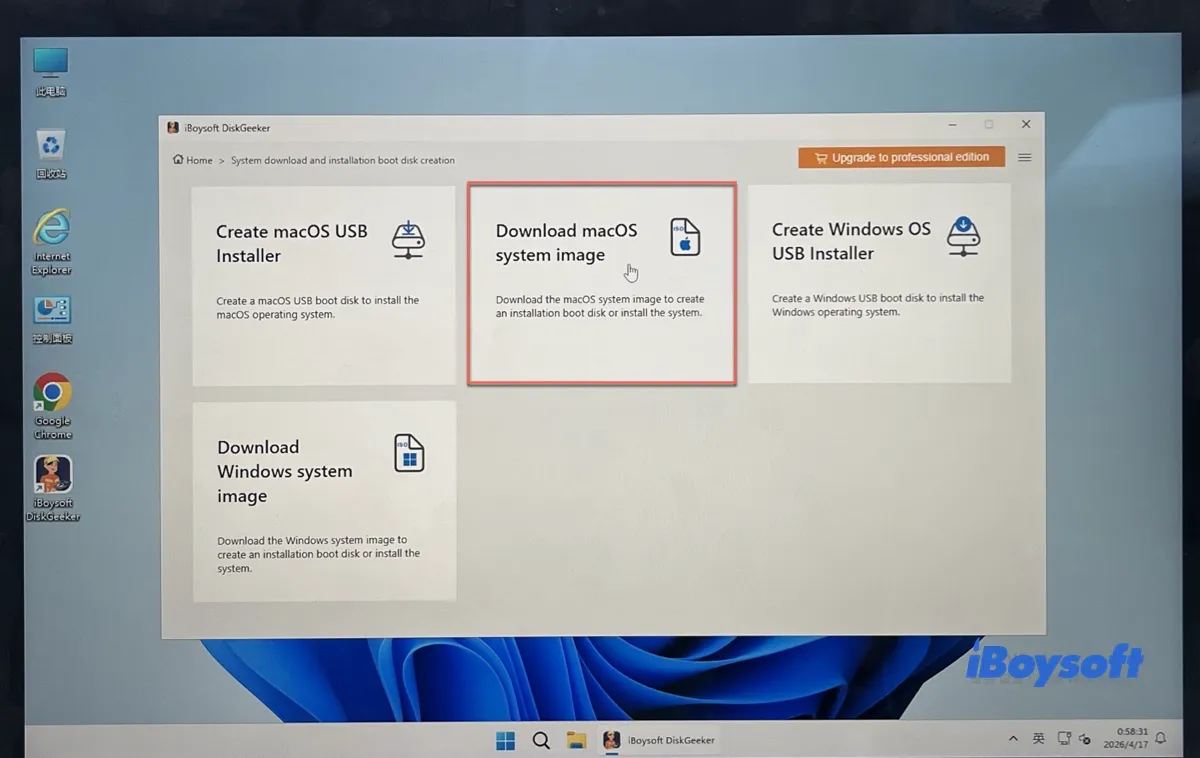
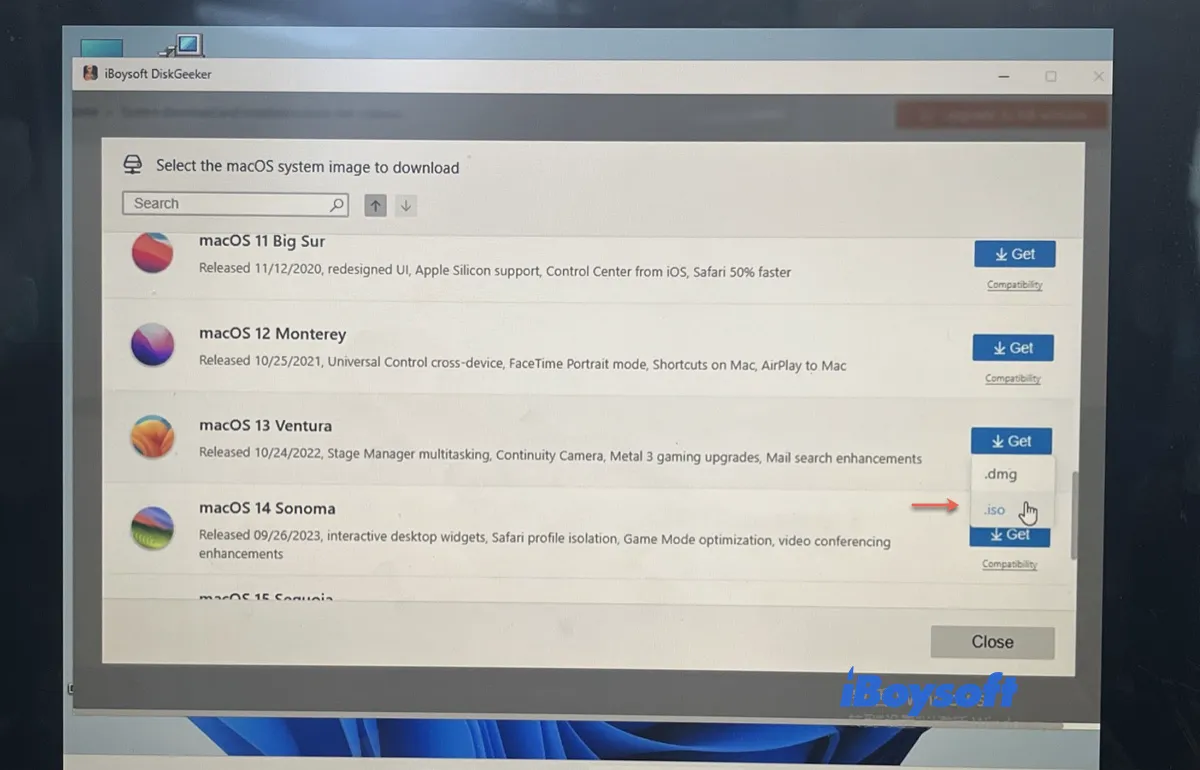
Step 3: Choose macOS Ventura, click Get, and select .iso.
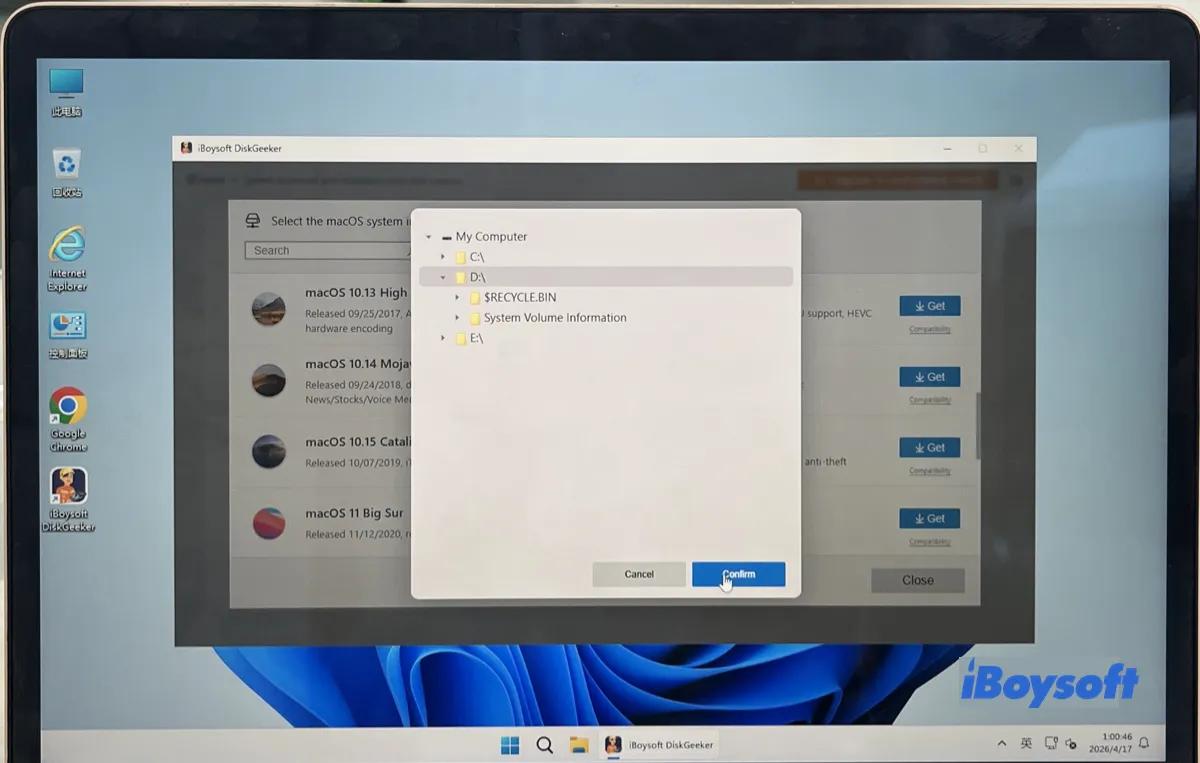
Step 4: Save the macOS Ventura ISO file on your computer.
What is a macOS Ventura VMDK file?
A macOS Ventura VMDK file is a virtual machine disk image that lets you run macOS Ventura as a guest operating system in a virtualization program such as VMware, VirtualBox, or Parallels Desktop. This lets you test or use macOS Ventura without a physical Mac computer.
It can be easily shared and deployed across multiple computers using the same virtual machine, making it convenient for developers, IT administrators, or users who need to work with macOS Ventura but don't have a compatible Mac.
If you're interested in making a macOS Ventura virtual machine manually, you can get the ISO or DMG file from the links below.
Download macOS Ventura ISO file
How to download macOS Ventura VMDK file for VMWare or VirtualBox?
If you need to test macOS Ventura on your computer, installing it on either VMware or VirtualBox is a great choice, as the former is free for personal use and the latter is completely free and open-source.
After installing the virtual machine of your choice, you can download the appropriate macOS Ventura VMDK file for VMware or VirtualBox from the following links:
Download macOS Ventura VMDK for VMware (From Google Drive)
Download macOS Ventura VMDK for VirtualBox (From Google Drive)
Credits: techrechard.com
After acquiring the VMDK file, you can install macOS Ventura on VMWare or VirtualBox whenever you like.
Share these links for the macOS Ventura VMDK file!
FAQs
- QCan I run a macOS Ventura VMDK on an AMD Ryzen CPU?
-
A
Yes. However, macOS does not natively support AMD architecture. You must manually add specific CPU masking codes (CPUID strings) to your virtual machine's configuration file (.vmx or VirtualBox commands) to trick macOS into thinking it is running on a supported Intel processor.
- QWhat hardware resources should I allocate to a Ventura VM?
-
A
CPU Cores: Minimum 4 cores (allocate no more than half of your host CPU's total physical cores).
RAM: Minimum 4 GB (8 GB is highly recommended for a smooth interface).
Graphics Memory: Maximum allowed by your hypervisor (usually 128 MB or 256 MB) with 3D acceleration enabled.
Storage: A minimum of 40 GB–60 GB of free space on an SSD (running macOS VMs on a mechanical HDD causes extreme lag).
- QHow do I install a macOS Ventura VMDK on Oracle VirtualBox?
-
A
1. Create the VM: Open VirtualBox, create a new machine, choose Mac OS X (64-bit), and attach your VMDK as the primary hard disk.
2. Close VirtualBox: Completely exit the application and all background processes.
3. Run Command Prompt: Open CMD as an Administrator and execute VirtualBox code injection commands to change the VM's hardware profile (SMC, DMI, and CPU settings).
4. Boot: Open VirtualBox and power on your VM.