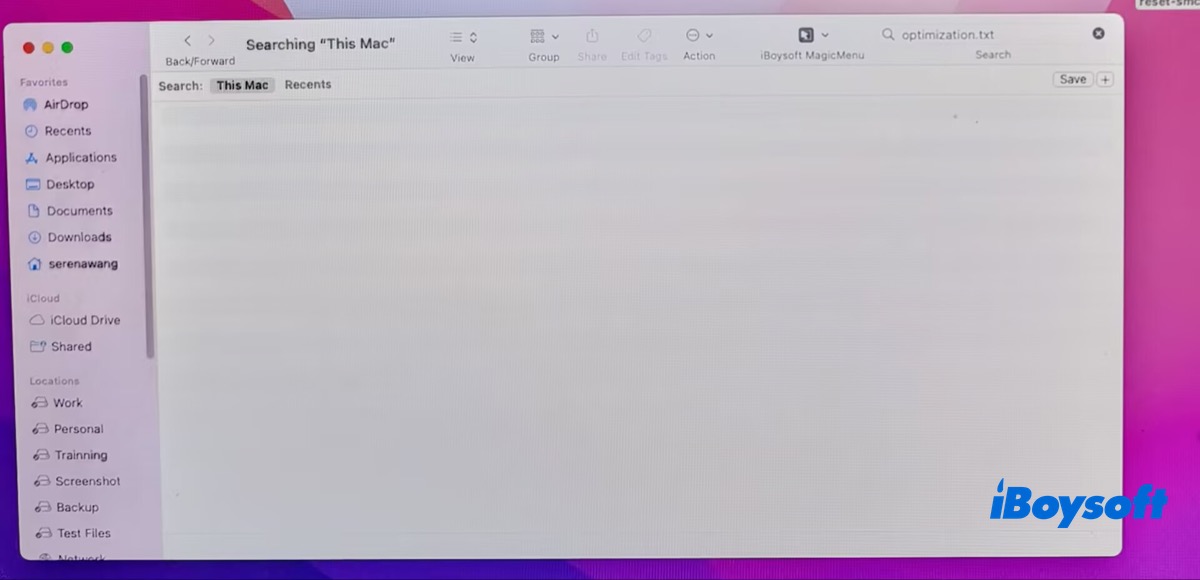
Sometimes, when you open your Mac or use it as usual, you may suddenly notice that a file is missing from your Desktop or a folder. It was there before, but now you can't find it.
In many cases, the file is still on the disk but hidden, moved, or not indexed properly. Check if the file is actually missing first, and then try the methods below to locate it on your Mac.
Check if the file is actually missing
Before assuming the file is deleted, confirm whether macOS can still locate it. Most files that seem 'missing' are simply stored in another folder or not indexed correctly.
Step 1. Search the entire Mac with Finder
Finder can search across all folders on your Mac. You can follow the steps below:
- Open Finder and Press Command + F
- Change the search scope to This Mac
- Type the file name or part of it
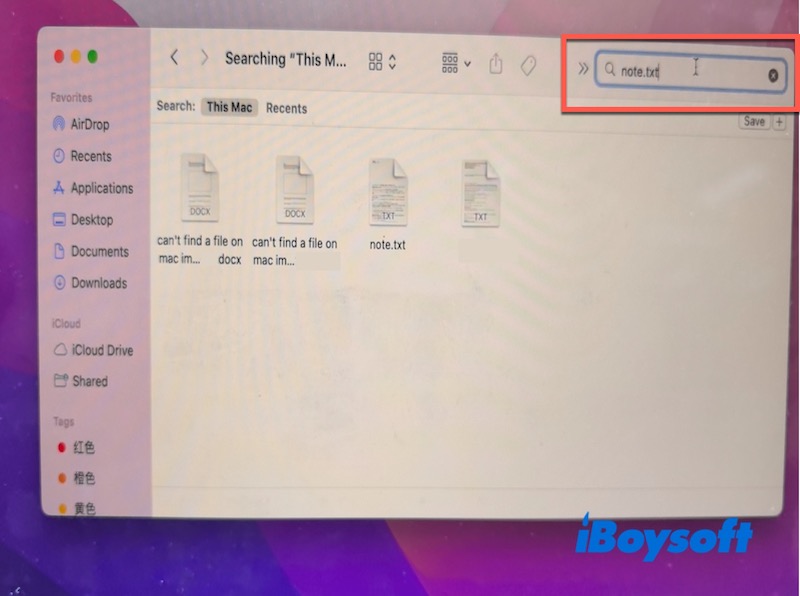
If the file exists anywhere on the disk, Finder should list it in the results.
Step 2. Search with Spotlight
If Mac Finder search is not showing files, you can try Spotlight. Spotlight is the fastest way to locate files by name or content.
- Press Command + Space
- Type the file name
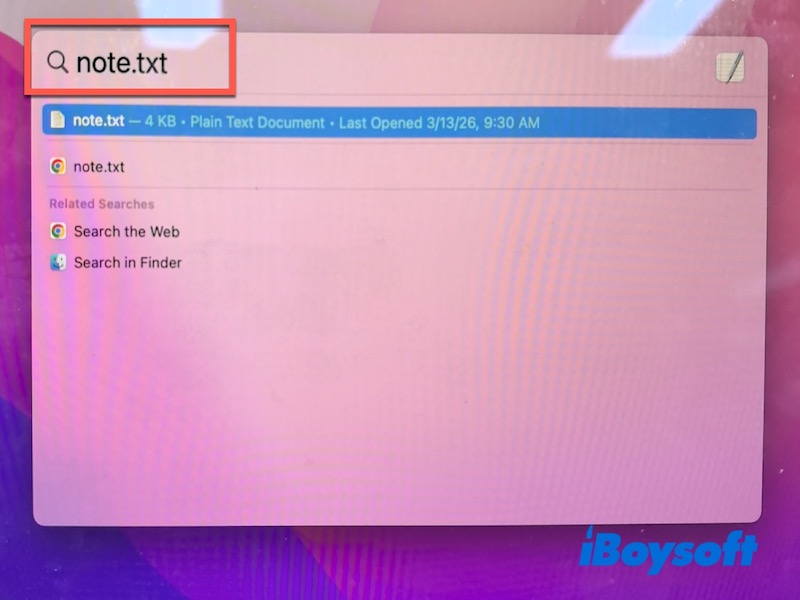
- Look under the Documents or Folders section
If Spotlight finds the file, press Return to open it directly. However, if Spotlight indexing is incomplete or corrupted, files may not appear in the results.
Try These Fixes If Finder Can't Locate the File
Fix 1. Show hidden files in Finder
If both Finder and Spotlight cannot locate the file, the issue may be related to hidden files. macOS allows files and folders to be hidden from normal view.
If a file was hidden manually or by an application, Finder won't display it by default. Follow the steps below to show hidden files in Finder.
- Open Finder
- Navigate to the folder where the file should be
- Press Command + Shift + > (Command + Shift + Period)
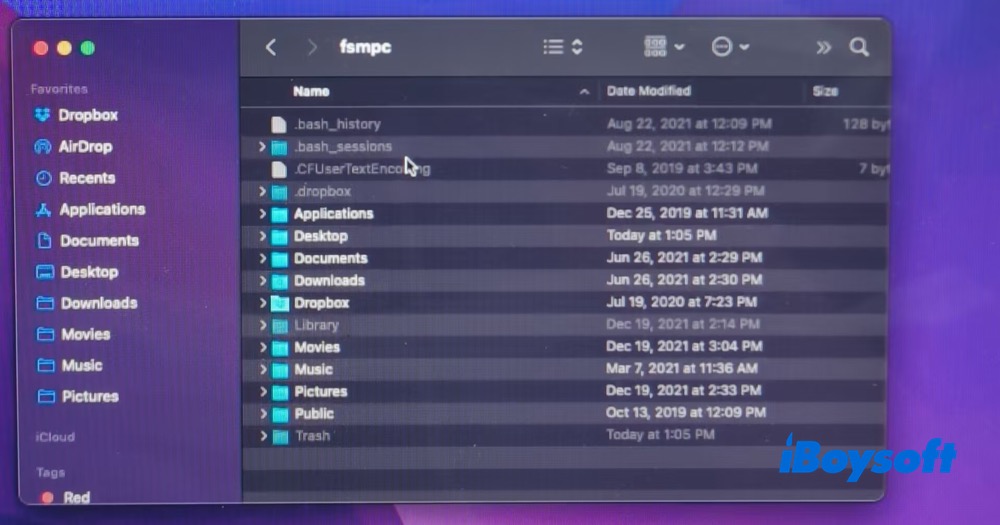
Note: Hidden files will appear as grayed-out items. If you want to hide them, please press the same shortcut again.
Fix 2. Check if the File Was Moved to Another Folder
Go to Finder and open your commonly used folder to have a check, including Downloads, Documents, iCloud Drive, your created APFS volumes, or external hard drives.
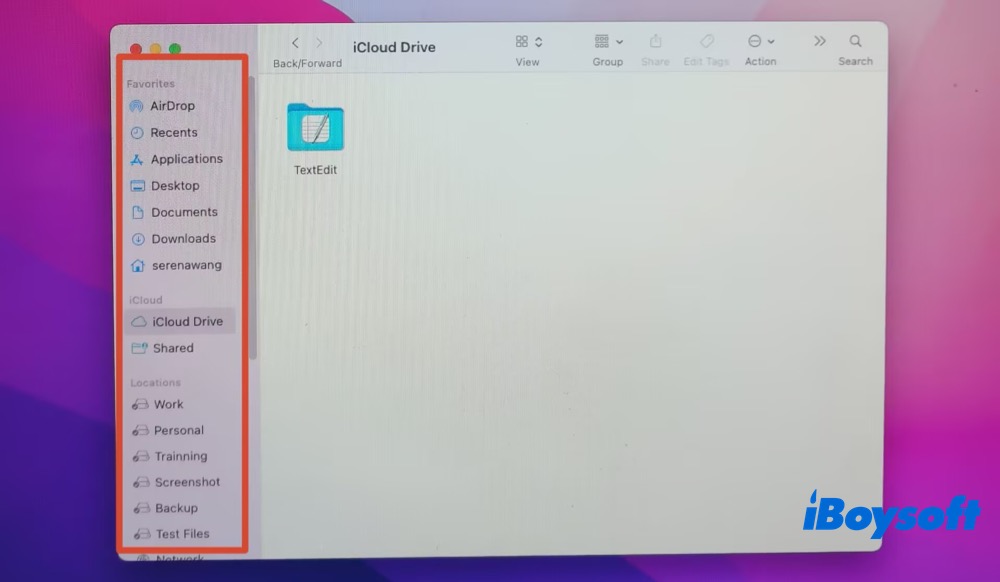
Fix 3. Rebuild the Spotlight index
Spotlight relies on an index database to locate files. If the index becomes corrupted, files may exist on the disk but not appear in search results. Rebuilding the index forces macOS to scan the disk again.
- Open Apple menu > System Preferences (or System Settings in earlier macOS versions).
- Go to Siri & Spotlight.
- Scroll down and open Spotlight Privacy.
- Add your disk, usually it is Macintosh HD - Data, where your data is stored in the list.
- Remove it from the list again.
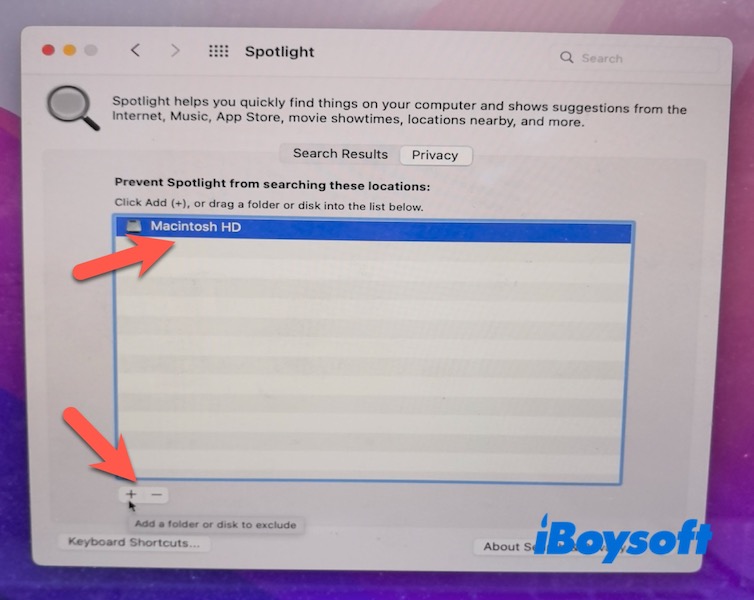
Spotlight will start reindexing the disk automatically. The process may take several minutes, depending on the number of files.
Fix 4. Use Terminal to locate the file
If Finder and Spotlight fail, you can search for files using Terminal. The mdfind command searches the Spotlight metadata database directly.
You can type:
mdfind file name.file extension For example: mdfind note.txt 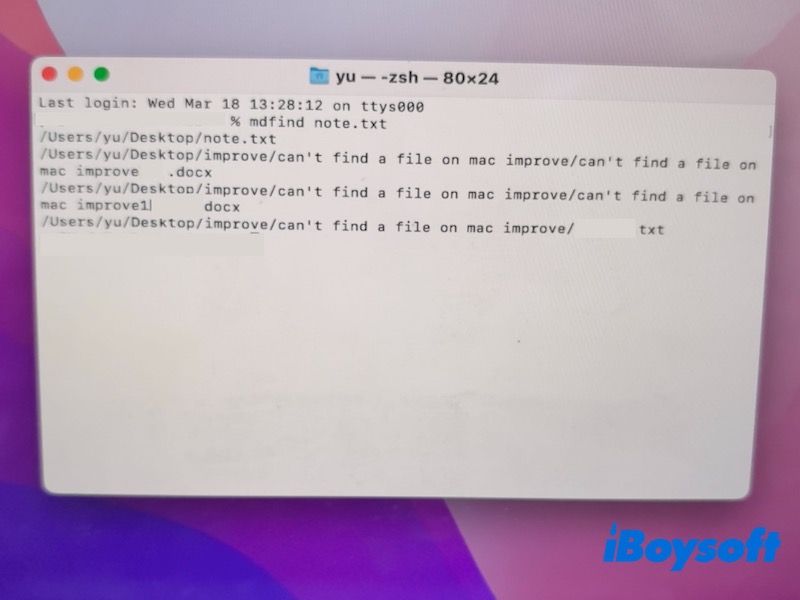
If the file exists and is indexed, Terminal will return the file path.
Fix 5. Check the Trash
If the file was accidentally deleted, it may still be in the Trash.
- Open Trash from the Mac Dock.
- Search for the file name.
- Right-click the file and choose Put Back.
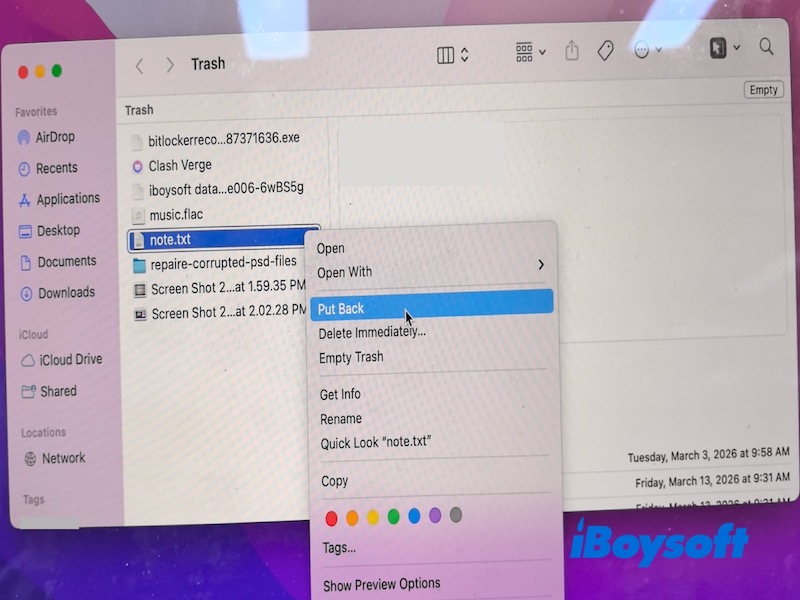
If the File was Deleted, Recover it
If the file was deleted recently, it may still exist on the disk but not be visible in Finder. In this case, the file is no longer accessible through normal macOS search or browsing, but it may still be recoverable through the methods below.
Restore the file from Time Machine
If Time Machine was never set up, this method will not work. And trying this method requires:
- Time Machine was enabled before the file was deleted
- The backup disk is available
- The file existed in a previous backup version
Follow the steps:
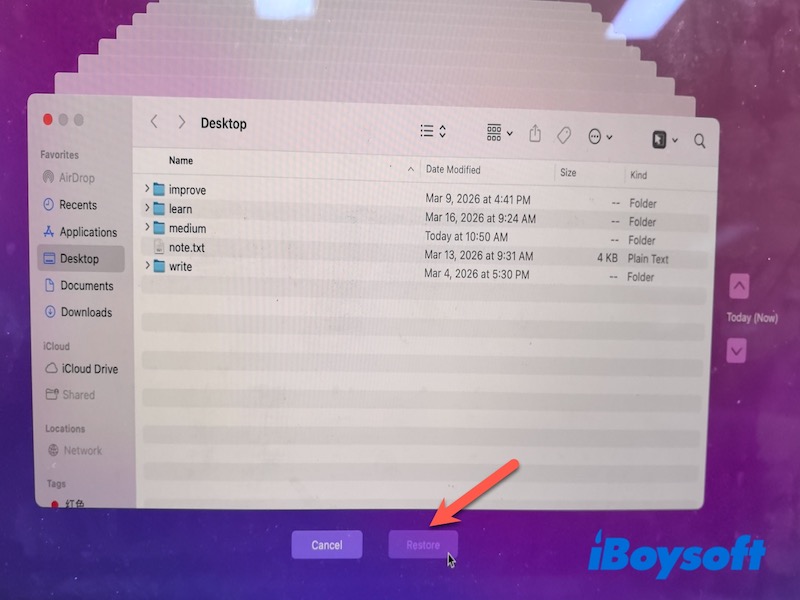
- Connect your Time Machine backup disk.
- Open the folder where the file was originally stored.
- Click the Time Machine icon → Enter Time Machine.
- Use the timeline to go back to a date before deletion.
- Select the file and click Restore
Recover the file from iCloud
iCloud only keeps files in Recently Deleted for about 30 days. And if the file was never synced to iCloud, this method will not help.
- Go to iCloud.com and sign in.
- Open Recently Deleted
- Select the file and click Recover
Recover the file using data recovery software
If you don't have a Time Machine backup and the file is not in iCloud, try professional data recovery software.
Tools like iBoysoft Data Recovery for Mac support scanning internal and external storage devices and can recover most common file types, such as documents, photos, videos, Emails, archives, audio, etc. It has quick scan, deep scan, and raw scan modes. If you forget the file name, the raw scan is the best to scan and find out your file based on file types.
Note: If new files have already overwritten the deleted data, the original content is permanently lost. Besides, on SSD-based Macs, the TRIM feature may erase deleted data quickly, leaving no recoverable traces.
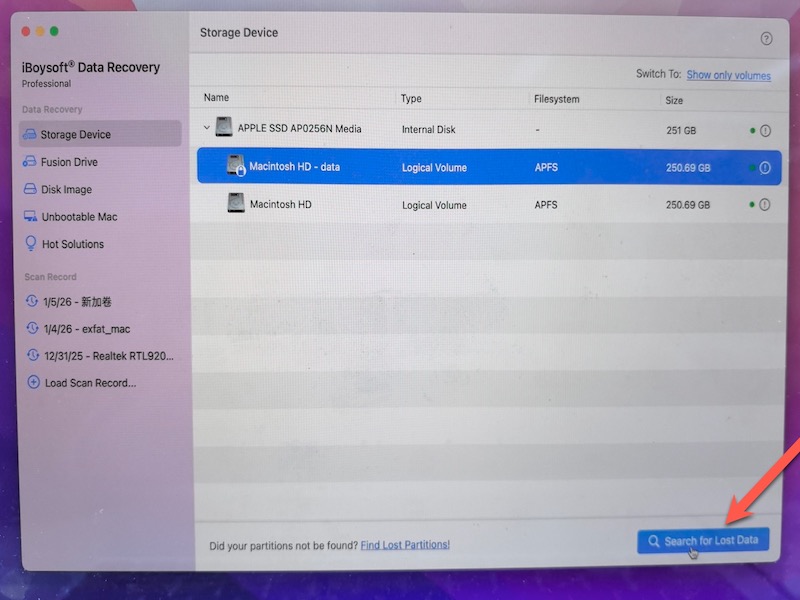
- Download, install, and open iBoysoft Data Recovery for Mac.
- Select the disk where the file was stored (usually Macintosh HD - Data).
- Click Scan for lost data.
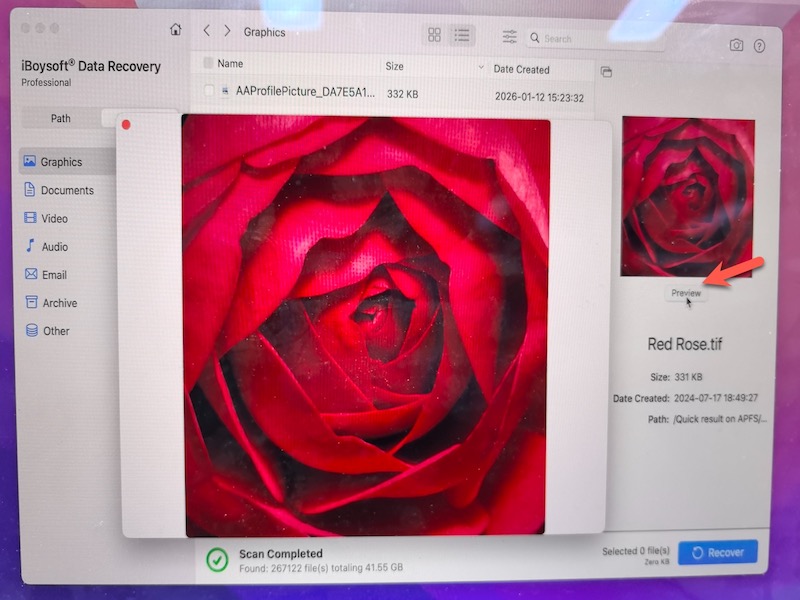
- Preview the results after scanning.
- Tap the Recover button at the lower right corner to begin recovering the file to another drive.
Why do Files Sometimes Disappear on Mac
Files may appear missing on Mac for several reasons:
- Spotlight indexing issue
- Hidden files
- File moved
- iCloud optimization
- Accidental deletion
How to Prevent Losing Files on Mac
- Enable Time Machine: Time Machine automatically backs up your Mac and allows you to restore previous versions of files.
- Keep files organized: Store important files in structured folders instead of only on the Desktop.
- Check iCloud settings: If you use iCloud Drive, make sure important files are downloaded locally when needed.
Conclusion
If you can't find a file on your Mac, it doesn't necessarily mean the file is gone.
Start by searching the entire Mac with Finder or Spotlight. Then check hidden files and rebuild the Spotlight index if necessary. Only after confirming the file is missing should you try data recovery software like iBoysoft Data Recovery for Mac.
FAQs
- Q1.Why can't Spotlight find my files?
-
A
Spotlight may not find your files if they are not indexed, hidden, or stored in locations excluded from search. In some cases, the Spotlight index may be corrupted and needs to be rebuilt.
- Q2.Why did my files disappear from Desktop?
-
A
Files may disappear from the Desktop if they were moved, deleted, or synced with iCloud. When iCloud Desktop & Documents is enabled, files may be stored in iCloud and not fully available on your Mac.
- Q3. Can deleted files be recovered on Mac?
-
A
Yes, deleted files can be recovered on a Mac depending on whether they are still in the Trash, stored in app-specific archives, saved via backups, or permanently erased from a solid-state drive.