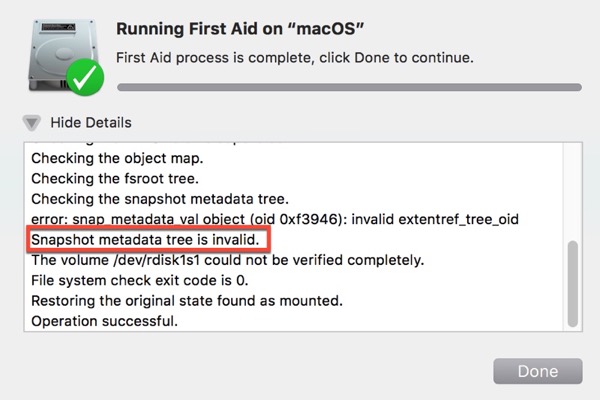
After running First Aid on an internal partition, you may notice an error in the repair details saying, "Snapshot metadata tree is invalid," even though the repair may report success, as shown in the screenshot below.
This article shows you how to repair the invalid APFS snapshot and recover lost data.
What Does "APFS snapshot metadata tree is invalid" Mean?
An APFS snapshot is essentially a restore point of your file system. When you see this error, it usually means the snapshot's metadata is damaged, so macOS can no longer use it.
As a result, the system may fail to access parts of the disk—or even refuse to mount it altogether. In short, the data may still exist, but the system can't reliably reference it.
Real Symptoms You'll See
When this error occurs, the drive typically becomes partially or completely unusable:
- The drive fills up quickly, and deleting files doesn't reclaim space.
- The disk won't mount in Disk Utility
- First Aid reports errors and cannot complete repairs
- Files appear inaccessible or missing in Finder
Since I converted my internal hard drive to the APFS file system, it worked perfectly. But when I tried to store some files in the drive today, I failed to mount it. Then I checked the drive in Disk Utility, and I got an error message saying: "APFS snapshot is invalid." I have no idea what happened. Can anyone help me to fix/repair the invalid APFS snapshot error?
Why do you see 'APFS snapshot metadata tree is invalid'?
This issue is usually triggered by disruptions to the file system, such as:
- Interrupted writes (e.g., sudden unplugging or power loss)
- Occasional macOS bugs or system crashes
- Gradual file system corruption over time
In most cases, it's not a single event but accumulated instability.
Step 1: Try Fix Without Data Loss
Before attempting data recovery or formatting, you can try fixing the issue without deleting your files. This step focuses on resolving snapshot-related corruption, which is sometimes recoverable.
Method 1: Delete Local Snapshots (Recommended First)
APFS snapshots are often created by Time Machine. If a snapshot becomes invalid, removing it may restore normal disk behavior.
- Open Terminal.
- Run the command below to list snapshots: tmutil listlocalsnapshots /
- Check the local snapshots stored on your system.
- Delete suspicious snapshots. (e.g., com.apple.TimeMachine.2026-03-30-120102)
tmutil deletelocalsnapshots
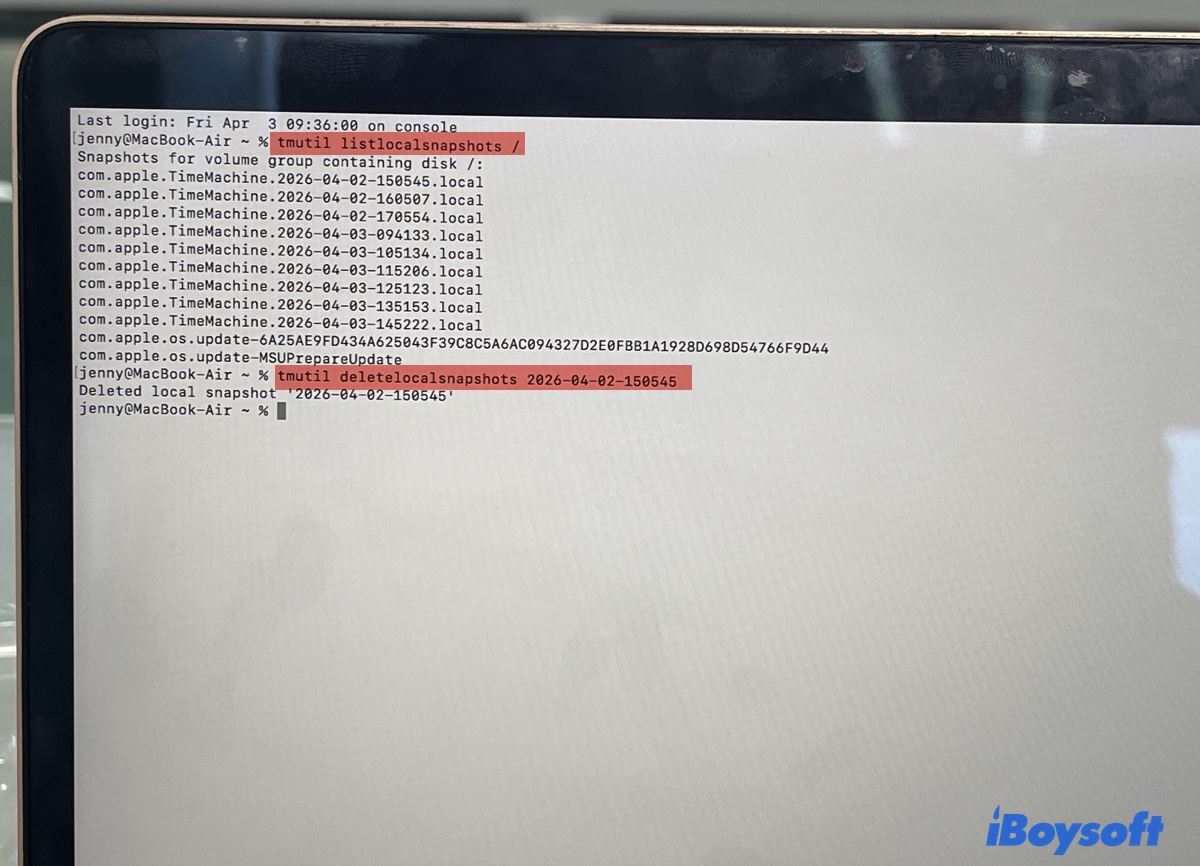
If the deletion is successful, you'll see the message, "Deleted local snapshot '2026-03-31-091455."
However, if the deletion failed, you'll see an error like "Error: Snapshot deletion failed." This may indicate deeper metadata issues.
💡 When to use this method
- The error specifically mentions snapshot issues
- The disk is still partially accessible
- You want the lowest-risk fix first
Method 2: Repair Using fsck_apfs
If deleting snapshots doesn't work, try a deeper file system repair called fsck_apfs. This command-line tool is available on macOS 10.13 (High Sierra) and later. For best results, run it in Recovery Mode to avoid permission and mounting issues.
- Boot into macOS Recovery Mode.
- Go to Utilities > Terminal.
- Run the command below to list all disks.diskutil list
- Note down the disk identifier. (e.g., disk2s8)
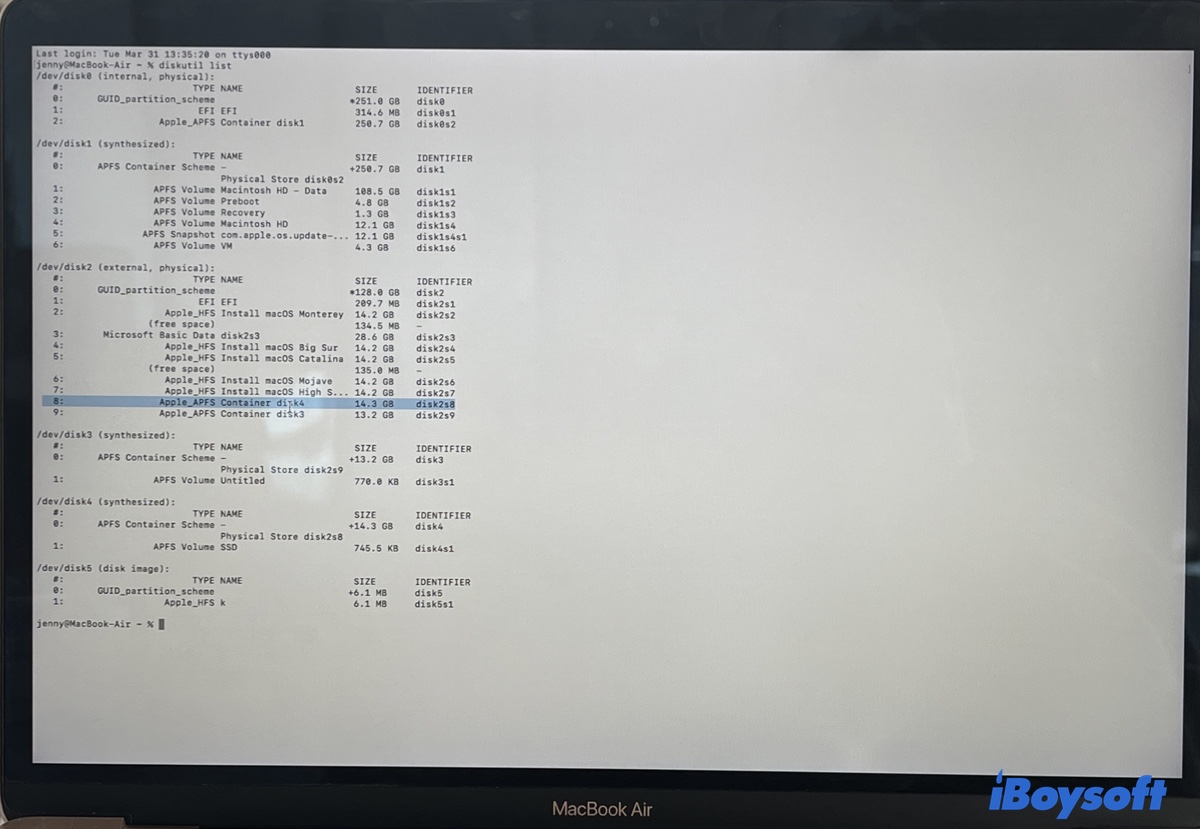
- Replace diskXsX with your disk's identifier and run the command to repair the disk.sudo fsck_apfs -y /dev/diskXsX
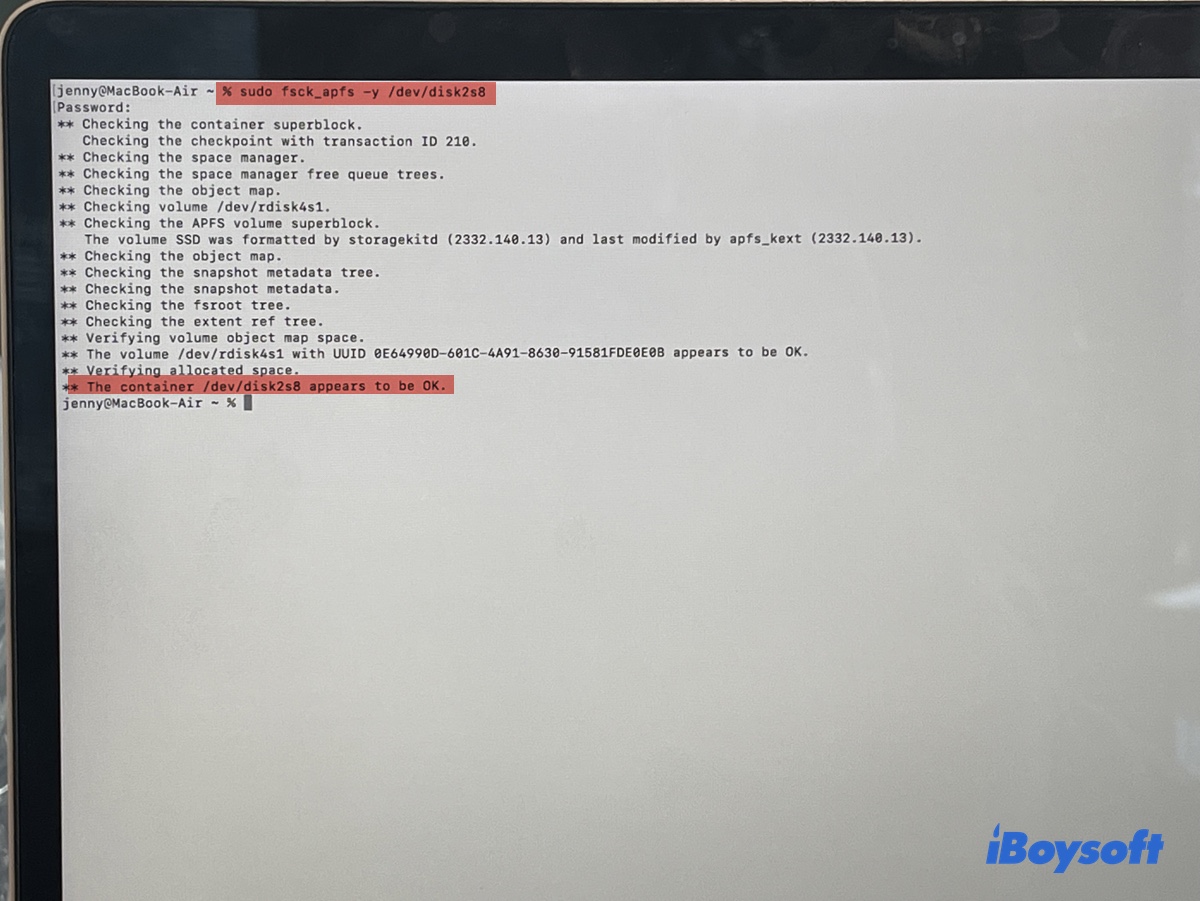
If it's a successful repair, the output will show that the volume was repaired. Nevertheless, if it failed, Terminal will return an error like "Snapshot is invalid" or "Unable to repair this volume," which indicates the file system structure cannot be fixed.
- 💡 If both snapshot deletion and fsck_apfs fail, the snapshot metadata is likely beyond repair. At this point, further repair attempts may reduce your chances of recovery. The next step is to focus on data recovery before formatting.
Step 2: Recover Data Before Reformatting
If repair attempts fail, your priority should shift immediately from fixing the drive to recovering your data.
❗ Why recovery must come first
Reformatting is the final resort to fix the invalid APFS snapshot. It will rebuild the file system, but it also removes the structure needed to locate your files. If you format the drive first, you may permanently lose access to recoverable data.
⚠️ Some situations may cause data loss:
- Corrupted snapshots can hide or disconnect files from the system
- Failed repairs may worsen the file system structure
- Repeated operations can overwrite recoverable data
To maximize recovery success, you should use a reliable data recovery tool. Here, we'll use iBoysoft Data Recovery for Mac as an example to help you recover lost data from the drive that First Aid repair failed with the invalid APFS snapshot error.
Tutorial to recover lost data from an APFS drive that has an invalid APFS snapshot error:
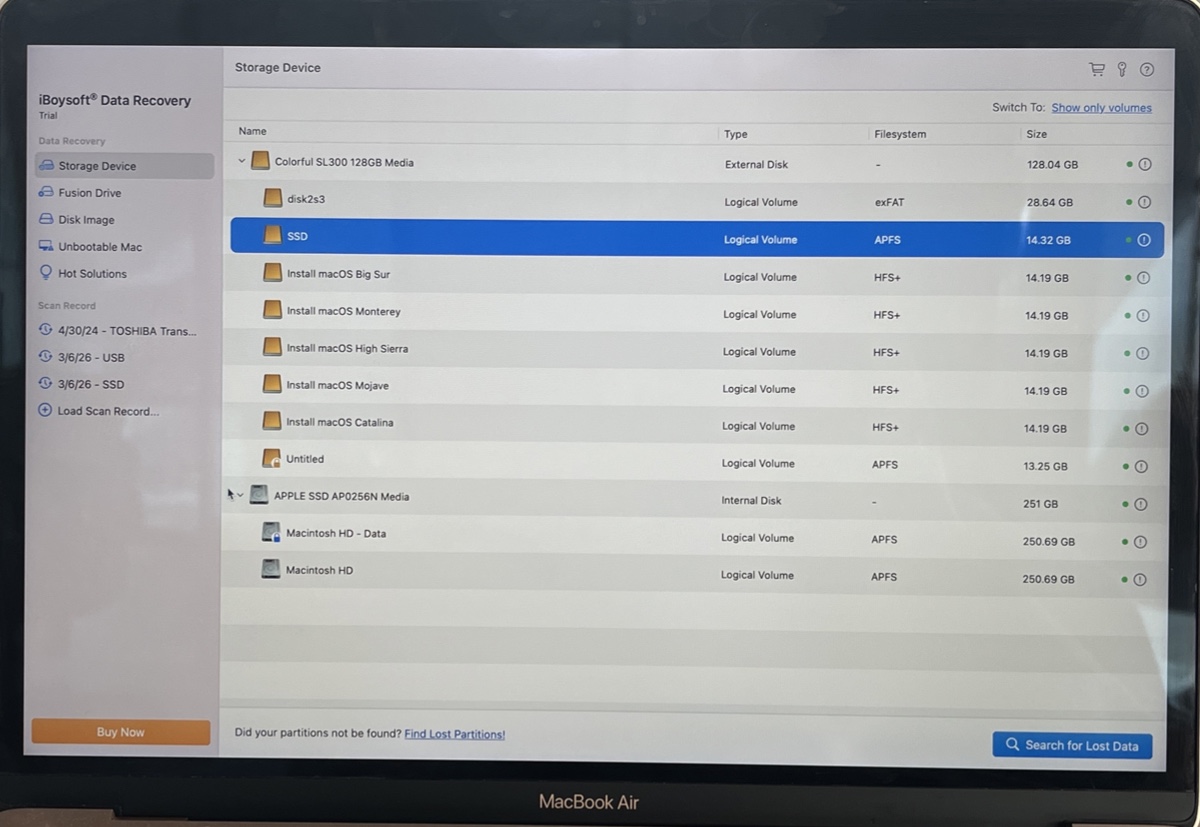
- Launch iBoysoft Data Recovery for Mac.
- Select the APFS drive on which the "APFS snapshot is invalid" error occurred and click the "Scan for Lost Data" button.
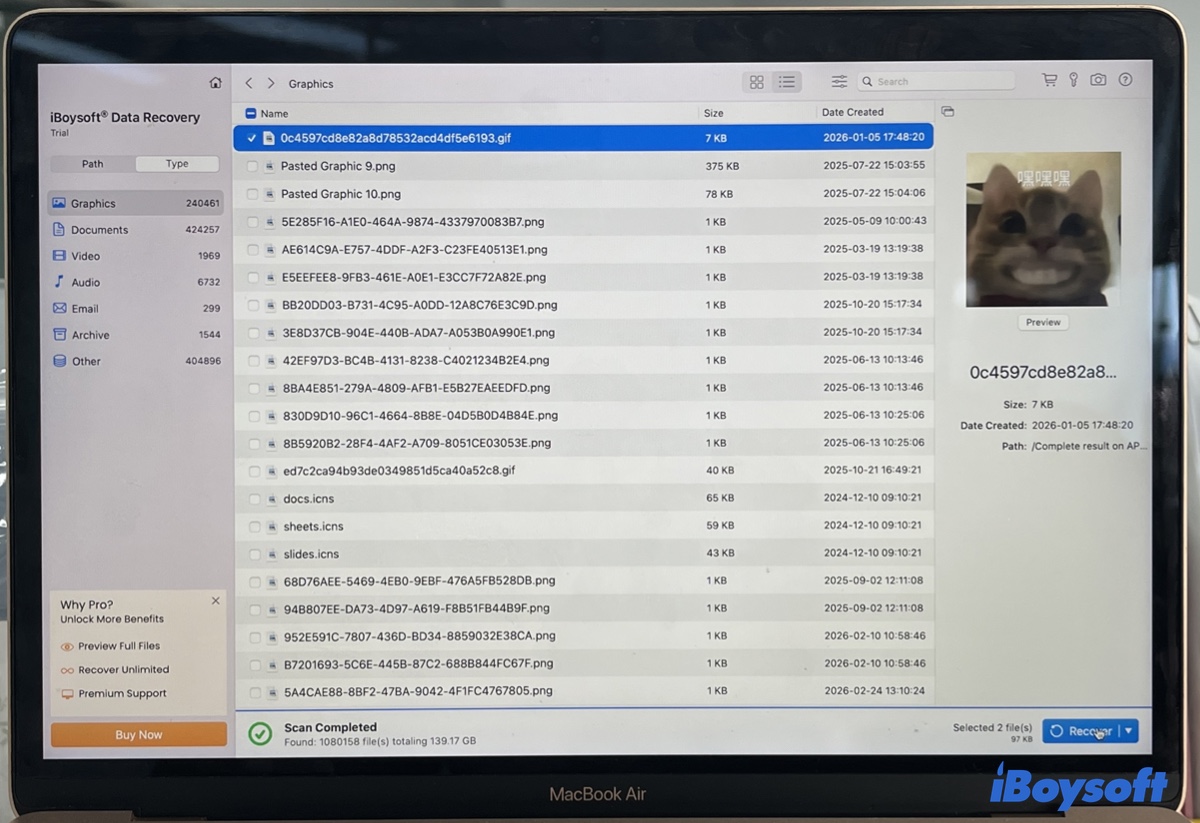
- Once the scan is complete, preview recoverable files.
- Choose the files you need, select another disk to store them, and click "Recover" to get them back.
Step 3: Erase and Recreate the APFS Volume
After your data has been safely recovered, you can reformat the drive to restore normal use.
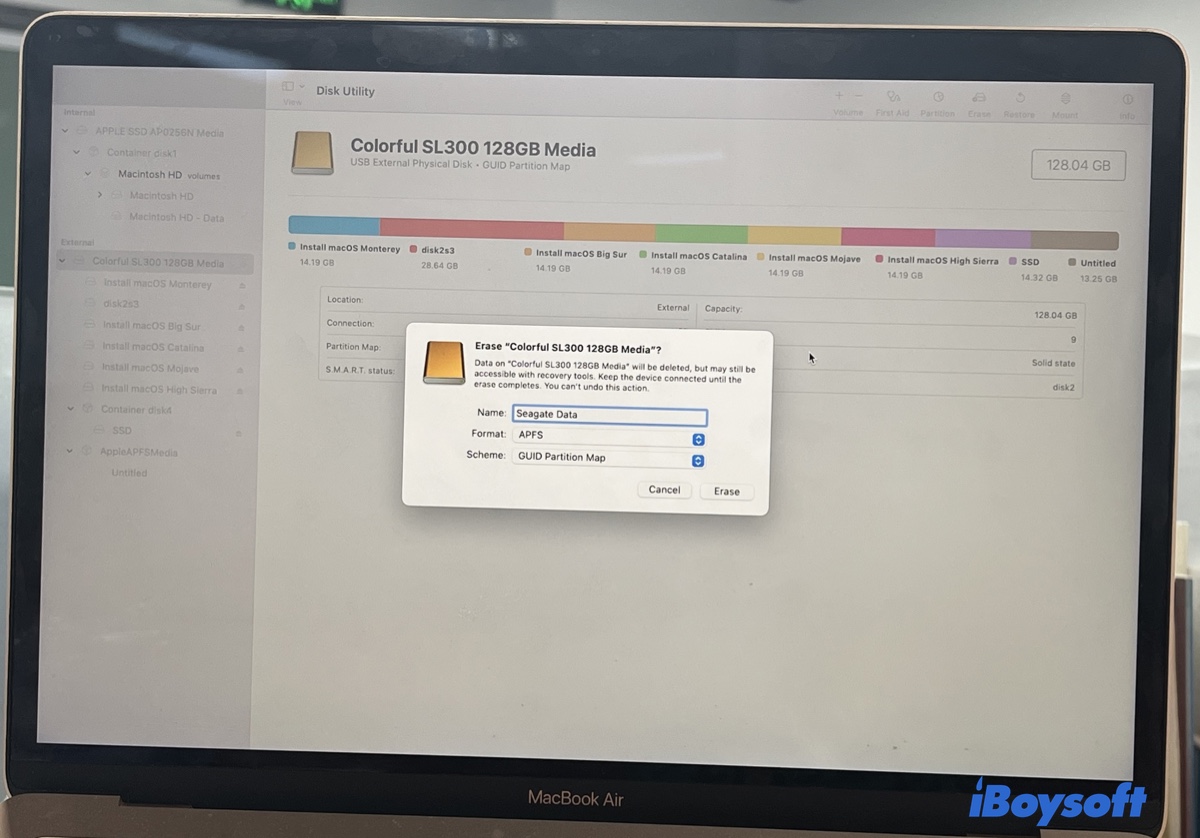
- Launch Disk Utility.
- Select the APFS drive that has the "APFS snapshot is invalid" error on the left part of the window.
- Click Erase.
- Choose a name, set Format to APFS, and then click Erase.
Tips: APFS is the default file system for macOS. It is optimized for speed and reliability, snapshot management, and modern SSD storage.
Repair vs Recovery: Which One Should You Choose?
Choosing the right approach early can significantly affect your outcome.
| Method | Success rate | Risk | Skill level |
|---|---|---|---|
| Delete snapshots | Medium | Low | Easy |
| fsck_apfs | Medium | Medium | Advanced |
| Data recovery | High | Low | Easy |
Common Mistakes to Avoid
Avoid these common actions that can reduce your chances of recovery:
- Formatting the drive before recovery ❌ → This can permanently erase recoverable data
- Ignoring snapshot-related errors ❌ → These often indicate deeper file system issues
- Running repeated repair attempts ❌ → May further damage the file system structure
Final Advice
When dealing with the "APFS snapshot is invalid" error, what matters most is not how many tools you try, but the order in which you act.
Always try to repair first: Simple fixes like deleting snapshots or running First Aid may resolve the issue without data loss.
Always recover data before erasing: Once you reformat the drive, recovering data becomes much more difficult or impossible
Keep regular backups: No repair method is 100% reliable. A consistent backup strategy is the only real protection against unexpected failures.
FAQs
- QCan I fix the 'APFS snapshot metadata tree is invlid' without losing data?
-
A
Possibly. If the issue is limited to corrupted snapshots, deleting them or running repair tools may resolve it without affecting your files. However, if repair fails, you should switch to data recovery immediately to avoid permanent loss.
- QWill deleting snapshots remove my files?
-
A
No. Deleting local snapshots only removes restore points, not your actual files. Your current data remains intact unless there are deeper file system issues.
- QIs the disk permanently damaged?
-
A
Not always. In many cases, the damage is logical (file system-related) and can be repaired or worked around. But if both repair methods fail, the structure is likely too corrupted to fix, and recovery becomes the only safe option.
- QCan Time Machine help?
-
A
Yes, if you have a backup. You can restore your files to a healthy drive after reformatting. Without a backup, you’ll need to rely on data recovery tools instead.