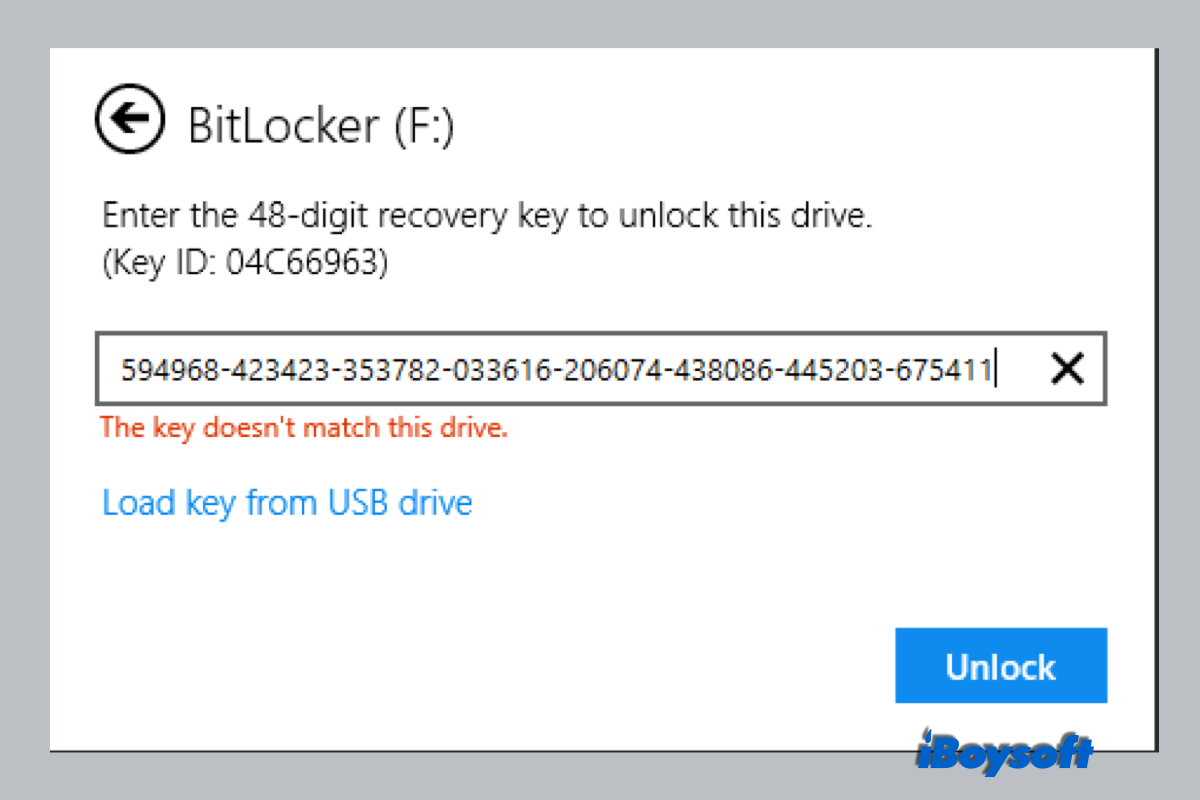
BitLocker won't accept your password or recovery key, even though you're sure the information is correct? This can happen after a motherboard replacement, Windows update, or changes to your computer's hardware or system configuration. It may also indicate a problem with the BitLocker-encrypted drive.
Before assuming your drive is corrupted, verify that you're using the correct password or matching 48-digit recovery key. Then try the troubleshooting methods below to unlock the drive or recover your data if it remains inaccessible.
Share this post to help more people who are trapped in this problem.
What Does a BitLocker Key Look Like?
A BitLocker recovery key is a 48-digit numerical code, usually displayed in eight groups of six digits separated by hyphens.
For example, a BitLocker recovery key has the following format:
123456-234567-345678-456789-567890-678901-789012-890123
Note: This is a fictional example for illustration only, not a valid recovery key.
When Windows asks you to enter a BitLocker recovery key, you should enter this 48-digit number, not your regular Windows login password or the Recovery Key ID.
BitLocker recovery key vs. Recovery Key ID vs. password:
- BitLocker recovery key: The actual 48-digit numerical code used to unlock an encrypted drive when the normal unlock method is unavailable.
- Recovery Key ID: An identifier displayed on the BitLocker recovery screen. It helps you find the matching recovery key when multiple keys are saved in your Microsoft account or organization's system. It cannot unlock the drive by itself.
- BitLocker password: A password you previously created to unlock a BitLocker-encrypted data drive. Unlike the recovery key, it does not necessarily contain 48 digits.
If you see a BitLocker recovery screen but cannot identify the correct key, check the Recovery Key ID displayed on the screen and compare it with the Key ID associated with your saved recovery keys.
You can also visit [Microsoft's BitLocker recovery key page](https://aka.ms/myrecoverykey), sign in with the Microsoft account associated with your device, and find the 48-digit recovery key with the matching ID.
Make sure you enter the corresponding 48-digit recovery key rather than the ID itself.
Method 1: Try the correct BitLocker password
If the BitLocker password is not working, BitLocker encrypted drive won't be unlocked. In this situation, you must find the correct password and try again.
If you are sure the BitLocker password is correct, it means BitLocker encrypted drive has been corrupted so that BitLocker stops accepting the correct password. In this situation, try method 5 to recover data from BitLocker encrypted drive.
Method 2: Try the correct BitLocker recovery key
The BitLocker recovery key is another way to unlock the BitLocker encrypted drive when you forgot the BitLocker password or it is not working.
If the correct BitLocker recovery key is not working, it means BitLocker encrypted drive has been corrupted so that BitLocker is not accepting the correct recovery key. In that case, try method 5 to recover data from BitLocker encrypted drive.
Method 3: Try manage-bde
Manage-bde is a command-line tool that can be used for scripting BitLocker operations, such as unlocking, turning off BitLocker, change the password.
1. Open the Command Prompt as administrator
2. Type the command: manage-bde -unlock X: -Password or manage-bde -unlock X: -RecoveryPassword (X is the drive letter of the BitLocker encrypted drive) and press Enter.
3. Enter the password or BitLocker recovery key to unlock the BitLocker encrypted drive.
If manage-bde failed to unlock BitLocker volume with the recovery key or password, try methods 4 and 5.
Method 4: Try another computer
Sometimes, BitLocker encrypted drive can be unlocked with the correct password or BitLocker recovery key on another computer. For example, if you encrypted the drive with New Encryption Mode built-in Windows 10, the BitLocker encrypted drive cannot be unlocked on Windows 7 or 8 computers even if the BitLocker password or recovery key is correct.
Problem solved? Share it right now!
Method 5: Try BitLocker data recovery software
BitLocker encrypted drive can get corrupted unexpectedly after years, how to recover data from corrupted BitLocker encrypted drive if BitLocker encrypted drive doesn't accept the correct password or BitLocker recovery key?
iBoysoft BitLocker Recovery is a professional BitLocker data recovery software that can help you recover lost data from corrupted, failed, inaccessible BitLocker encrypted drives as long as the BitLocker encrypted drive is not physically damaged.
Tutorial to recover data from corrupted BitLocker encrypted drive
Step 1: Download, install and launch iBoysoft BitLocker Recovery on your Windows computer.
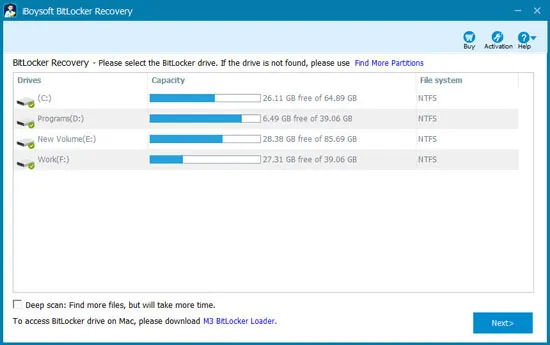
Step 2: Select the corrupted BitLocker encrypted drive and click Next to continue.
Step 3: Enter the password or 48-digit BitLocker recovery key and click Ok to decrypt data.
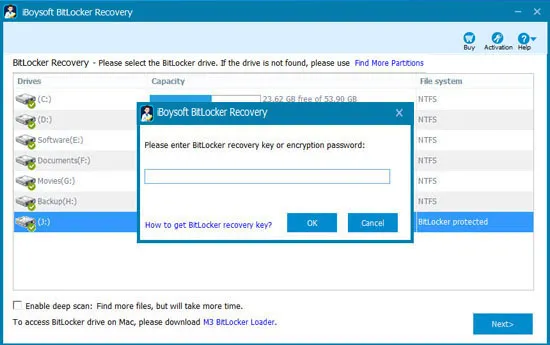
If iBoysoft BitLocker Recovery doesn't accept the correct password or BitLocker recovery key either, it means BitLocker metadata has been corrupted so that there is no way to decrypt data from BitLocker encrypted drive.
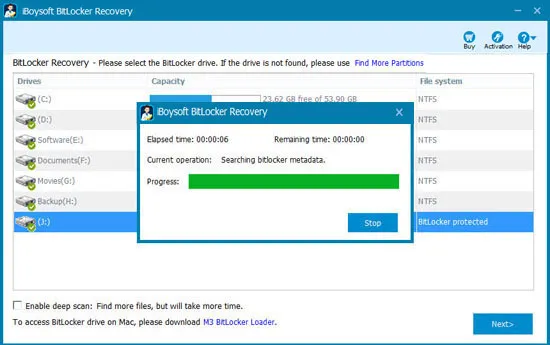
Step 4: Scan the data from the corrupted BitLocker encrypted drive.
Step 5: After all your files are found, preview the documents, and photos and play the videos, and audio to see if your lost files are recoverable.
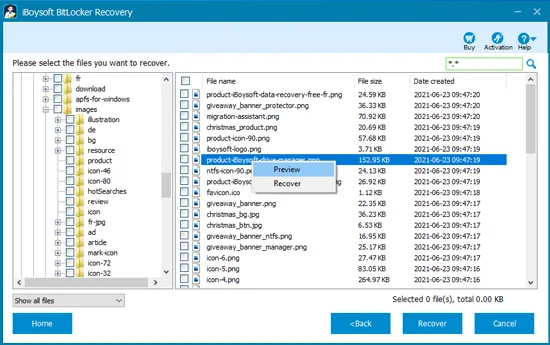
Step 6: Select the needed files and click "Recover" to start the data recovery process.
If the recovered files cannot be opened, check the "Revert decryption" option under the Help menu and recover these files again.
If this wonderful software solved your problem, share it with more people to bring the convenience.
Method 6: Reformatting
If you have recovered the data with the above methods or don't need the data stored in the BitLocker encrypted drive, reformatting can quickly solve the BitLocker password or recovery key not working issue.
Conclusion
BitLocker not accepting your password or recovery key doesn't necessarily mean your encrypted drive is corrupted. First, verify your password, check the 48-digit recovery key, and make sure its Recovery Key ID matches the one displayed on the recovery screen. If the problem persists, try the troubleshooting methods above to resolve possible keyboard, system, or drive-related issues.
If you still cannot unlock the drive, avoid formatting it or making unnecessary changes that could affect data recovery. Always keep a backup of important files and store your BitLocker recovery key somewhere safe to prevent similar problems in the future.
FAQs
- QWhy is BitLocker not accepting my correct recovery key?
-
A
BitLocker may reject a recovery key if it doesn't match the encrypted drive, even if the key itself is valid. Check the Recovery Key ID displayed on the recovery screen and make sure it matches the ID associated with your saved 48-digit recovery key. Also, check for typing errors.
- QWhat does a BitLocker recovery key look like?
-
A
A BitLocker recovery password is a 48-digit numerical code divided into eight groups of six digits, separated by hyphens. It is different from the Recovery Key ID, which identifies the corresponding recovery key but cannot unlock the drive.
- QWhere can I find my BitLocker recovery key?
-
A
Check the following locations:
- Your Microsoft account at aka.ms/myrecoverykey.
- Your work or school account at aka.ms/aadrecoverykey.
- A USB flash drive where you saved the key.
- A printed copy or saved text file.
- Your organization's IT administrator, if the device is managed.
- QWhy does BitLocker keep asking for a recovery key every time I start my PC?
-
A
Repeated BitLocker recovery prompts may result from changes to BIOS or UEFI settings, TPM configuration, Secure Boot, or boot files. Check whether any recent firmware or hardware changes triggered the problem. If necessary, use the recovery key to unlock the drive and investigate the underlying cause.
- QIs a BitLocker password the same as a recovery key?
-
A
No. A BitLocker password is an unlock method configured for an encrypted drive, while the recovery password is a 48-digit numerical code used to regain access when the normal unlocking method is unavailable. The Recovery Key ID is a separate identifier used to locate the correct recovery password.
- QCan I use the Recovery Key ID to unlock a BitLocker drive?
-
A
No. The Recovery Key ID is not an unlocking code. It helps identify which 48-digit recovery password belongs to your encrypted drive. Find the recovery password with the matching ID and enter that password instead.