Duplicate files often accumulate when you copy, download, organize, or create new files on your Mac. But when you try to delete them, you may run into errors like file is in use or permission denied.
This usually happens because macOS is protecting active files, restricting access, or encountering system-level issues. The fixes below target each scenario so you can remove duplicates safely and completely.
Fix 1: Duplicate Files That Say “File Is in Use”
This error appears when the file is being used by an app or background process, even if no window is open. This issue often happens with Preview, Photos, or cloud sync apps like Dropbox running in the background.
- Close all apps that may use the file.
- Open Activity Monitor. (Applications > Utilities)
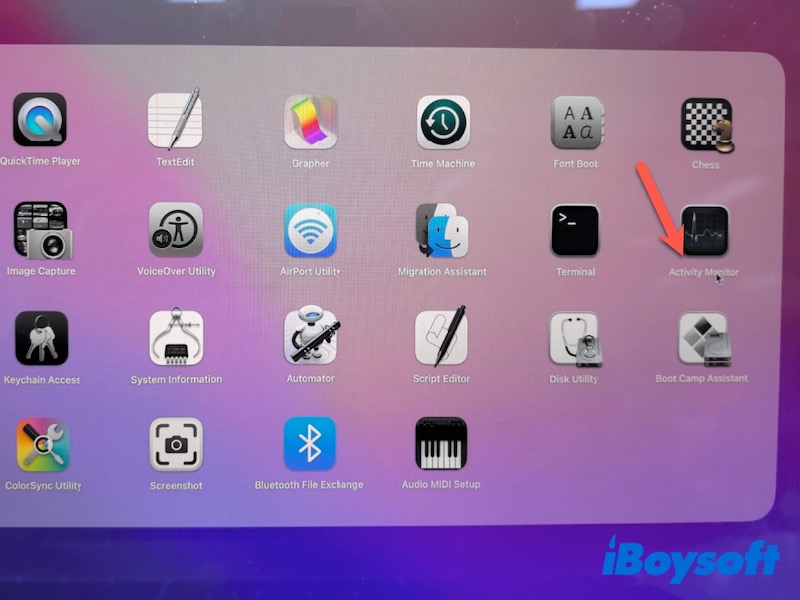
- Search for related processes. (e.g., file name or app)
- Select the process → Click X → Choose Force Quit.
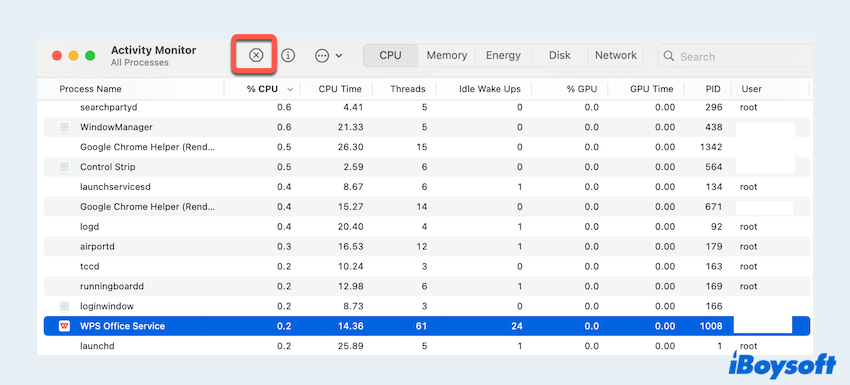
- Try deleting the file again.
If you're unsure which process is locking the file, restart your Mac and delete it before reopening apps. Avoid force-quitting system processes unless you're certain they are safe to stop.
Fix 2 “Permission Denied” When Deleting Duplicate Files
This happens when your account doesn't have sufficient privileges to modify or delete the file.
- Right-click the file → Select Get Info.
- Scroll to Sharing & Permissions.
- Click the lock icon and enter your password.
- Set your account to Read & Write.
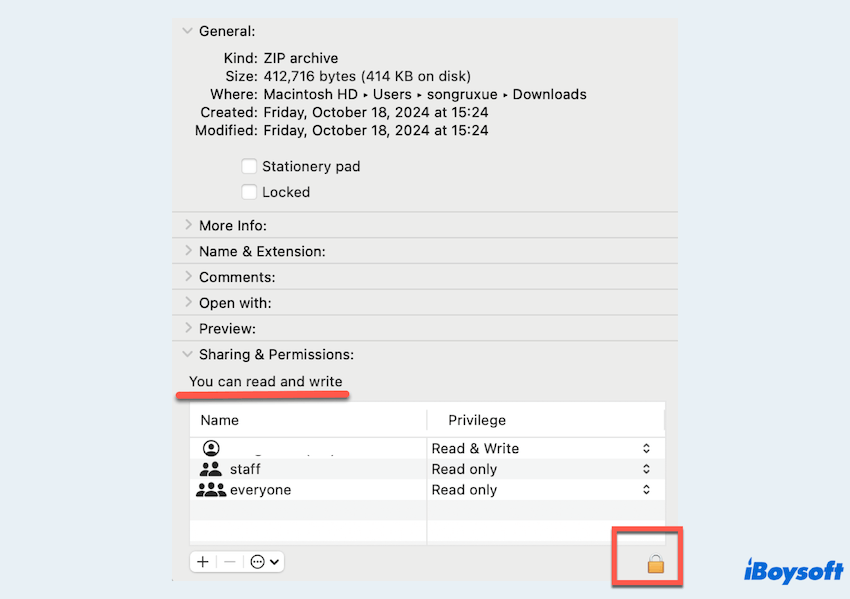
- Close the window and delete the file.
Alternative (Terminal): For the issue that Mac can't delete the duplicates, Mac Terminal can help you with the force-delete commands. However, you have to be so careful using the command lines, because even a little mistake will cause irreparable results.
- Finder > Applications > Utilities > Terminal.
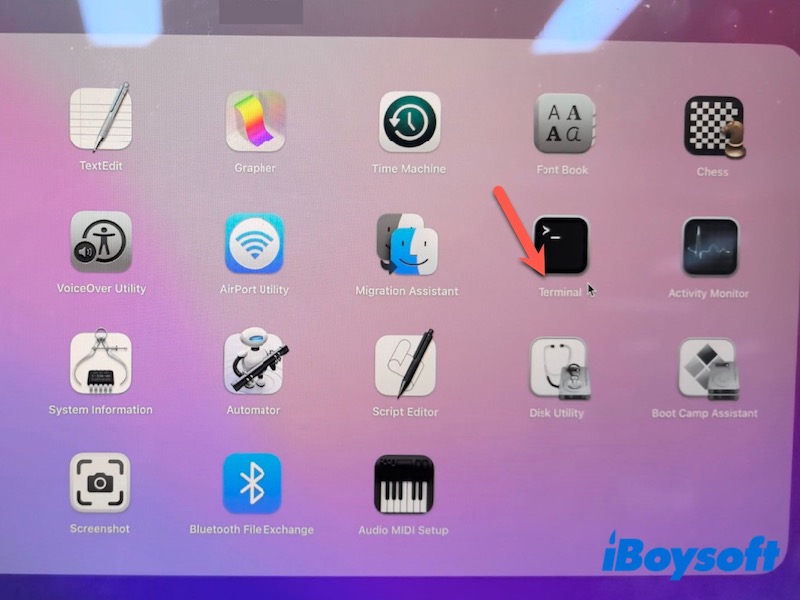
- Type the command sudo rm -rf(Remember a space after rf.)
- Drag the file into Terminal.
(Be careful to use the rm commands on Mac to delete the file directly without confirmation.)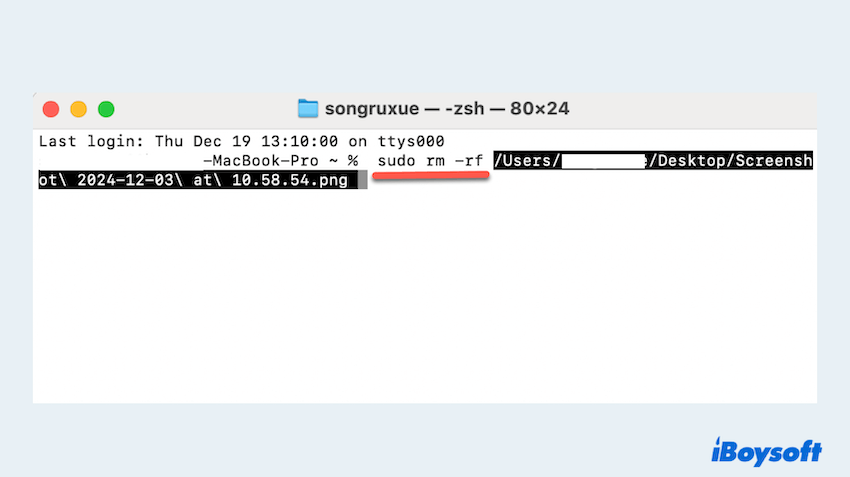
- Press Enter and input your password.
Warning: Be cautious with sudo rm—it permanently deletes files without moving them to Trash.
Fix 3 Duplicate Files That Won't Delete from Trash
Files stuck in Trash are often locked, still in use, or corrupted. Files synced from external drives or cloud services are more likely to get stuck in Trash.
- Open Trash.
- Right-click the file → Select Get Info.
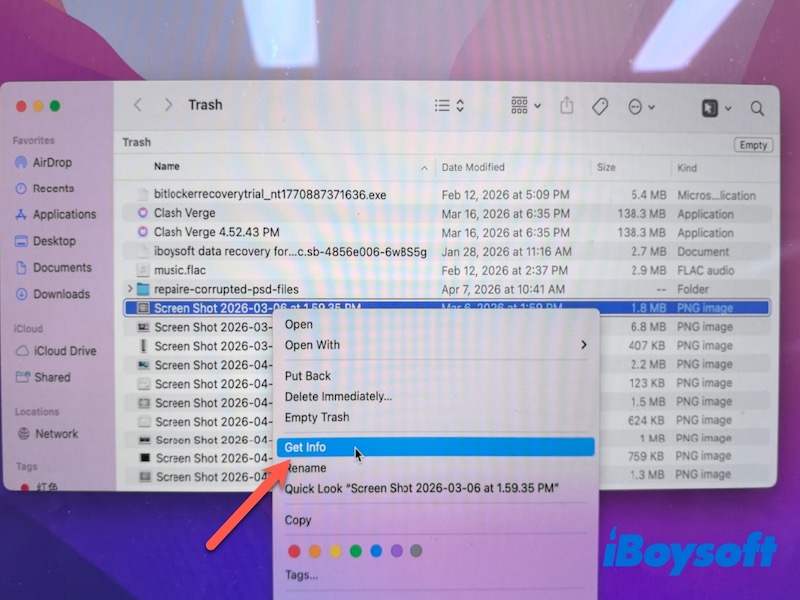
- Uncheck Locked if enabled.
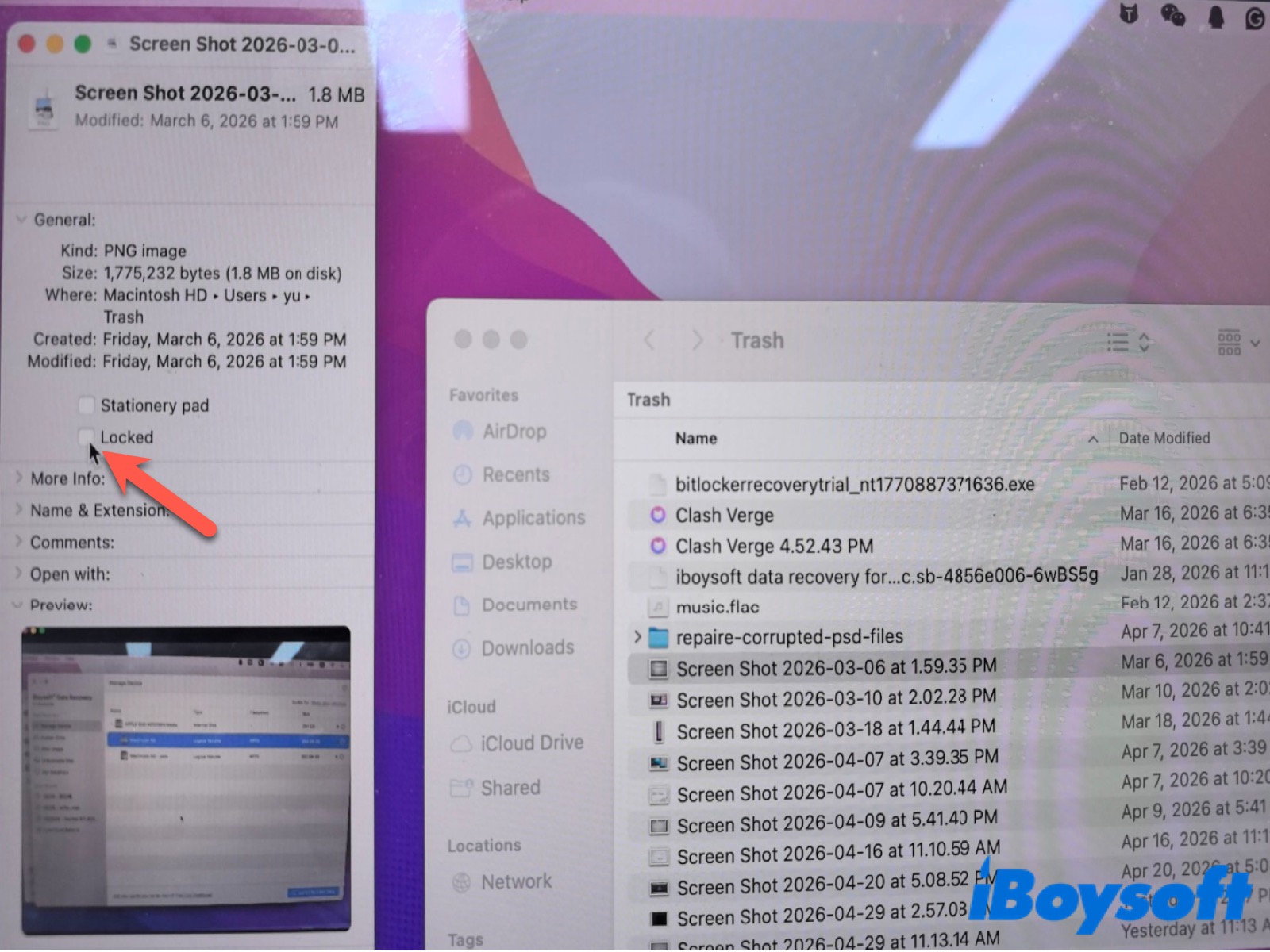
- Delete the file again.
Make sure the files are not needed before force-deleting, as this action cannot be undone.
Fix 4 Files That Still Can't Be Deleted (System-Level Issues)
If none of the above works, the file may be protected by macOS (e.g., system files, SIP protection) or blocked by disk errors.
- Check disk errors (recommended first).
- Open Disk Utility (Applications > Utilities).
- Select your startup volume (usually “Macintosh HD-data” where your data is stored).
- Click First Aid → Run.
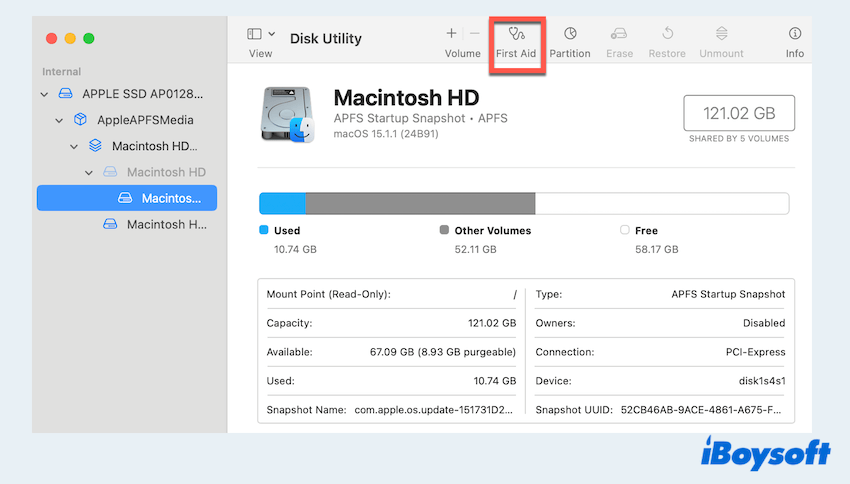
- Wait for the process to complete.
- Try deleting the file again.
If errors are found and repaired, restart your Mac before retrying to delete.
Delete duplicate files in Safe Mode
Mac Safe Mode prevents unnecessary background processes and loads only essential system components, which can release locked files.
In Intel Mac:
- Shut down your Mac.
- Turn it on and immediately hold Shift.
- Release when you see the login screen.
In Apple Silicon (M1/M2/M3/M4):
- Shut down your Mac.
- Press and hold the Power button until “Loading startup options” appears.
- Select your disk → Hold Shift → Click Continue in Safe Mode.
Then log in and try deleting the file. After that, restart normally.
When You Have Too Many Duplicate Files
If duplicate files are scattered across your Mac, manual deletion quickly becomes inefficient and increases the risk of deleting the wrong files or running into repeated permission issues. In this case, using a dedicated duplicate finder is a more reliable approach.
iBoysoft Cleaner is designed for large-scale duplicate cleanup and works well when files are spread across multiple folders or external drives. This is especially useful if duplicates are spread across multiple folders or external drives, and manual cleanup keeps failing.
- Scans duplicates across internal and external storage
- Group identical files for easier comparison
- Allows preview before deletion to avoid accidental removal
- Automatically selects duplicates to speed up cleanup
- Download, install, and launch iBoysoft Cleaner.
- Select Duplicate Finder.
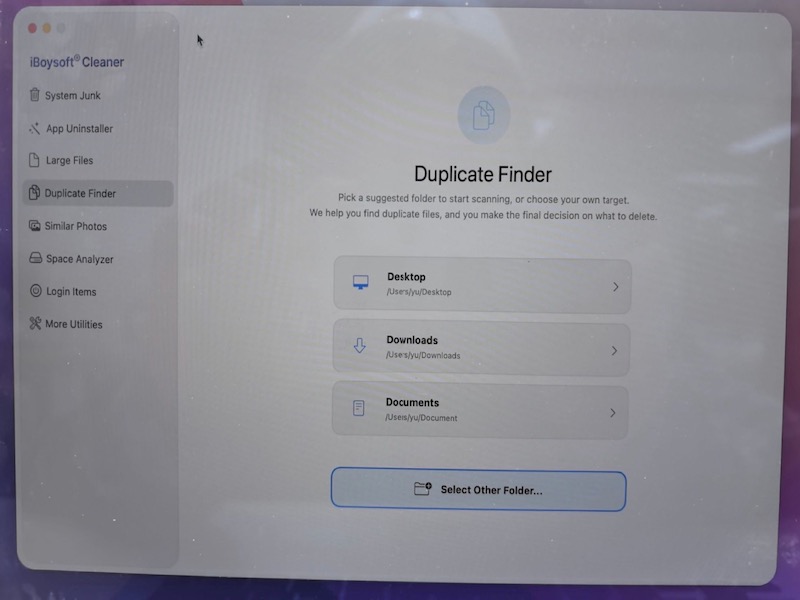
- Choose the folders you want to scan.
- Wait for the scan to complete and review grouped duplicates.
- Use Auto Select to choose unwanted copies.
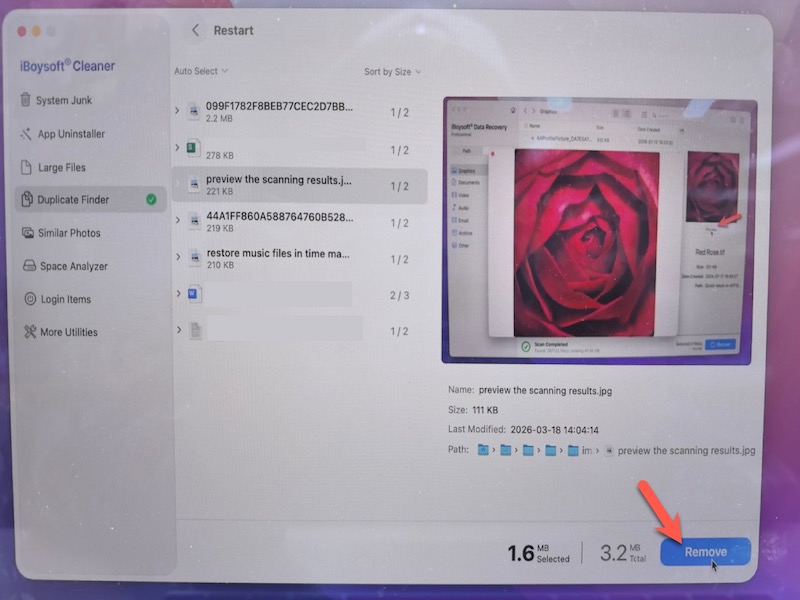
- Click Remove to delete.
Compared with manual deletion, this method reduces repeated “file in use” interruptions and avoids permission mismatches by handling duplicates in batches.
Conclusion
Duplicate files that can't be deleted usually stem from active processes, permission limits, Trash issues, or system protection. Identifying the cause helps you apply the right fix quickly. For large-scale cleanup, using a dedicated tool can save time and avoid repeated errors.
FAQs
- Q1.Why does a file show “in use” when nothing is open?
-
A
This usually means a background process is still accessing the file:
Open Activity Monitor → search related processes → Force Quit
Or restart your Mac and delete the file before reopening apps
- Q2.Why is remove duplicates not working?
-
A
It often fails due to file locks, permission issues, or system restrictions.
1. Check file permissions (Get Info → Read & Write)
2. Unlock the file or empty Trash with Option + Empty Trash
3. If duplicates are widespread, use a tool like iBoysoft Cleaner to scan and remove them in batches