When running First Aid on an APFS volume or container, you may encounter the error "APFS volume/container superblock is invalid."
This issue usually appears when the system attempts to mount a disk but fails due to underlying file system corruption. As a result, the affected volume may not be accessible, and your files can seem to disappear even though they are still physically stored on the disk.
This error is more than just a minor warning. A damaged superblock prevents macOS from correctly reading the file system structure, which means the volume cannot be mounted normally. If not handled carefully, attempts to repair the disk may lead to permanent data loss.
In this guide, the priority is clear: recover your data first, then proceed with safe and effective methods to repair the APFS volume or container. Taking the right steps in the correct order is essential to avoid making the situation worse.
Background on Superblocks
Superblocks store critical metadata about the disk, including its size, block size, empty and filled blocks and their respective counts, the disk block map, and usage information. In simple terms, the superblock acts like a blueprint that tells the operating system how the data on the disk is organized.
When the superblock becomes corrupted, macOS can no longer interpret the file system correctly. Even if your data is still intact, the system cannot locate or access it; that's why the volume fails to mount and appears unusable. This is what triggers the "superblock is invalid" error.
With APFS (Apple File System), it is also important to understand the difference between containers and volumes. An APFS container is the main storage pool, while volumes are individual logical partitions that share the container's space.
Because both the container and its volumes rely on metadata structures like the superblock, corruption at either level can lead to similar errors. This is why you may see the issue reported as either a volume problem or a container problem, even though the underlying cause is related.
Data Safety Before Repair
Before repairing your drive, it's critical to recover the important data first. When dealing with a corrupted APFS superblock, any write operation, such as running repair tools, can potentially overwrite recoverable data and lead to permanent loss. Taking a cautious approach at this stage significantly increases the chances of retrieving your files intact.
To proceed safely, you can use a reliable data recovery tool. Options like iBoysoft Data Recovery for Mac are commonly used, but the key is to follow a reproducible process rather than relying on any single product. The goal is to scan the affected disk in a read-only manner and extract important files before making any structural changes.
It is also highly recommended to document your environment before starting. Record details such as your macOS version, disk type (internal SSD, external drive, etc.), and take screenshots of any error messages shown in Disk Utility. This information can be useful for troubleshooting, verifying results, or seeking further support if needed.
Step 1: Recover Lost Data from the APFS drive
Here are the steps to recover lost data from an APFS volume whose superblock is invalid with iBoysoft Data Recovery for Mac.
1. Launch iBoysoft Data Recovery for Mac.
2. Select the APFS volume or container that has the "APFS volume superblock is invalid" error and click the "Scan for Lost Data" button to scan lost files.e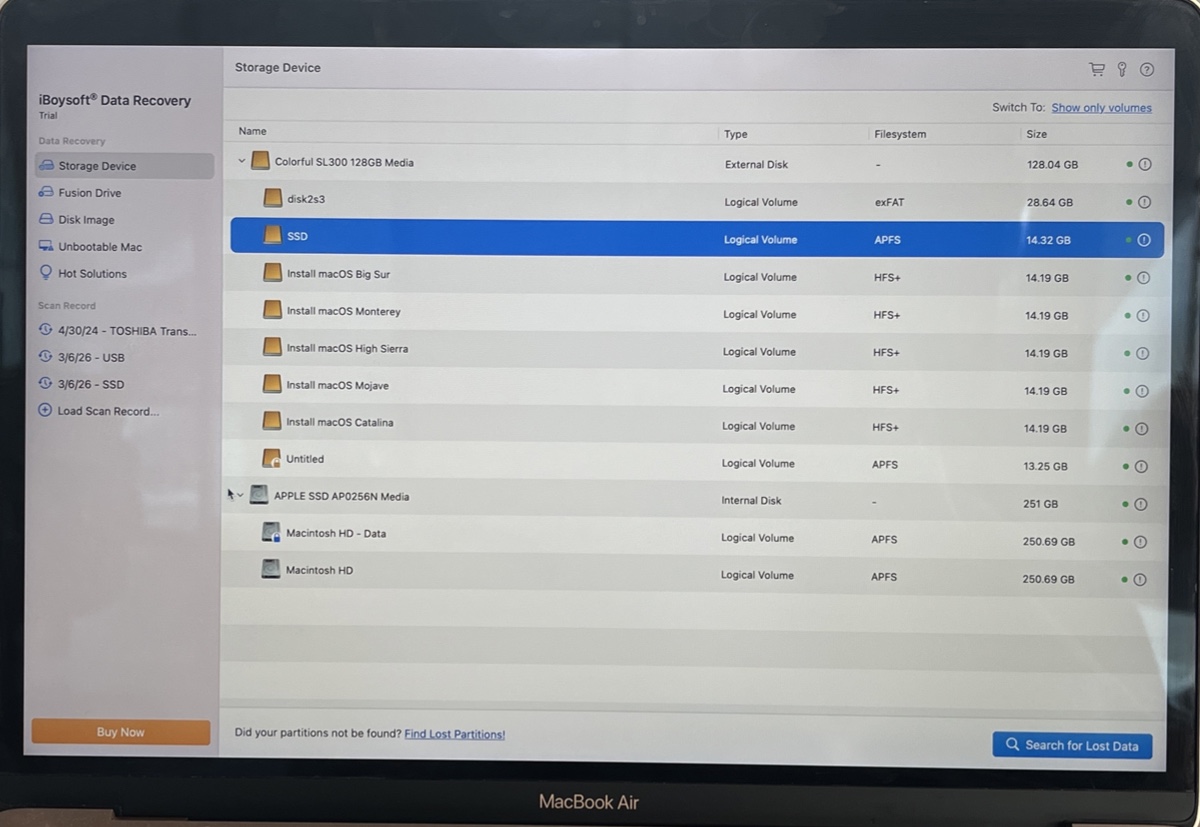
3. Wait while the tool is scanning your APFS volume.
4. Preview the search results.
5. Choose the files we need, and click "Recover" to get them back.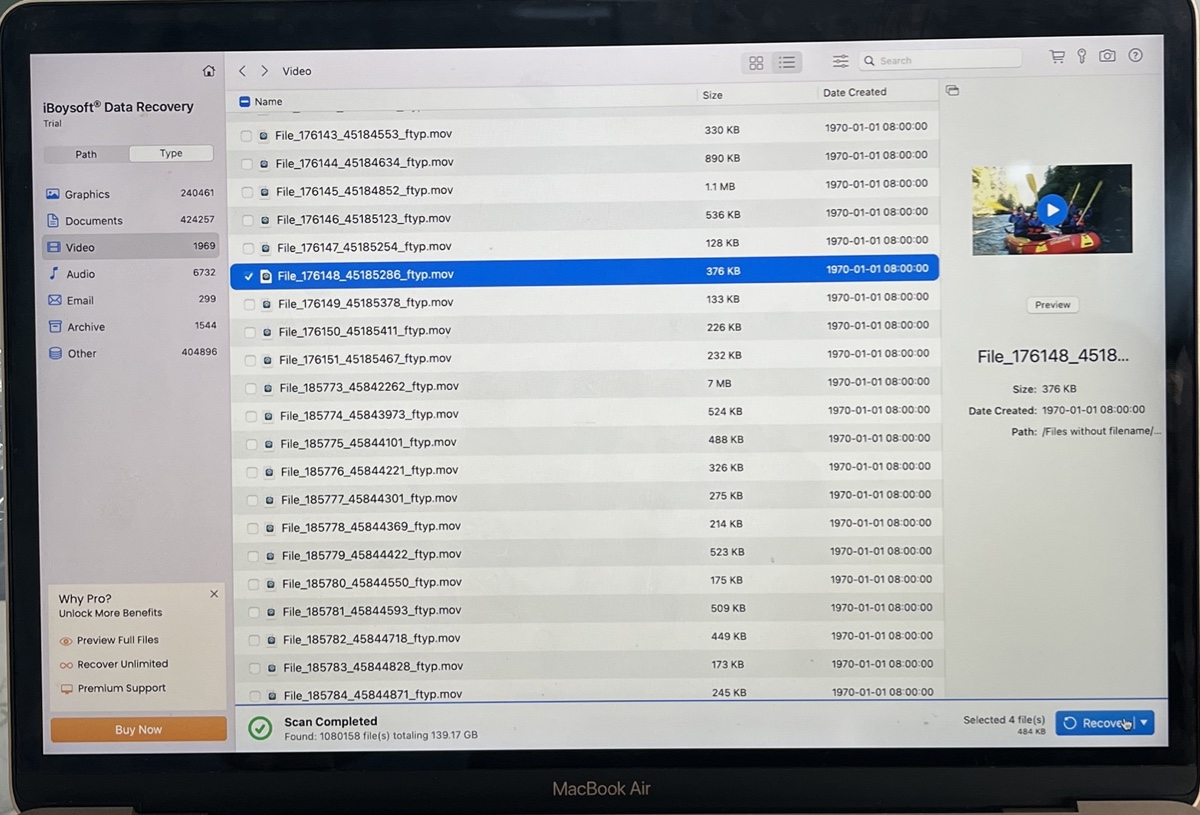
6. Check if you have all the lost data back.
Step 2: Fix the "APFS Superblock Invalid" Error
Option 1: Reformat in Disk Utility
After recovering your data, you can proceed to repair the disk. In most cases, a corrupted APFS superblock cannot be reliably rebuilt, so the practical solution is to erase the drive and recreate the file system. To do this:
1. Launch Disk Utility.
2. Select the APFS drive that failed with the "APFS volume superblock is invalid" error on the left part of the window.
3. Click Erase on the top of the Disk Utility window.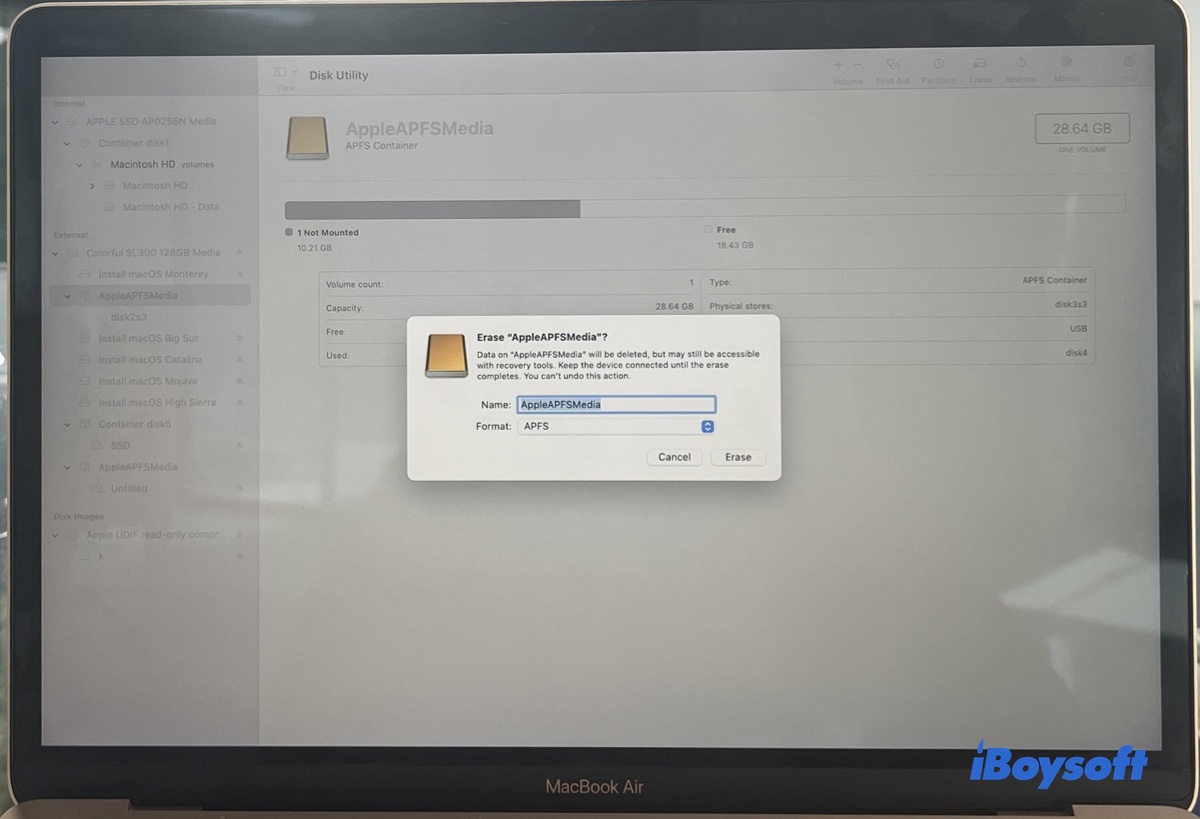
4. Complete related information (name, format, scheme), then click the Erase button.
Once the erase process is complete, the system will recreate a clean file system structure, including a new, valid superblock. After that, the volume should mount normally again, allowing you to reuse the disk.
Option 2 (Optional): Repair the drive in Terminal
For advanced users, Terminal-based tools or third-party utilities may offer alternative approaches. For example, commands like fsck_apfs can attempt to check and repair file system inconsistencies. However, when the superblock itself is invalid, such tools often have limited success.
These methods come with higher risks, especially if used incorrectly. They may also perform write operations that could overwrite recoverable data if recovery was not completed beforehand. For this reason, they are generally considered optional and should only be used with a clear understanding of the potential outcomes.
If you're interested, read this article for details on repairing APFS volumes in Terminal: Fix 'APFS object map is invalid' Error on Mac
Tips to Prevent Data Loss
Once the disk is working again, it's important to establish a reliable backup routine. Regular backups can prevent data loss in case similar issues occur in the future. Built-in solutions like Time Machine or cloud-based options such as iCloud provide convenient ways to keep your data protected with minimal effort.
In addition, consider monitoring your disk's health over time. Repeated file system errors or unusual behavior, such as slow mounting, frequent crashes, or unexpected disconnections, may indicate underlying hardware issues. Addressing these early can help prevent future superblock corruption and more serious data loss scenarios.
FAQs
- QWhat causes the 'APFS superblock is invalid' error on Mac?
-
A
This error is typically caused by file system corruption. Common triggers include sudden power loss, improper disk ejection, system crashes, or bad sectors on the storage device. In some cases, software bugs or interrupted disk operations can also damage critical metadata like the superblock.
- QCan I skip data recovery and directly format the disk?
-
A
Yes, if you don't need data on the drive.
Formatting the disk will erase the existing file system structure, making data recovery much more difficult or even impossible. If your files are important, always attempt recovery first before performing any repair or erase operation.
- QHow can I prevent APFS corruption in the future?
-
A
To reduce the risk of similar issues:
﹒Always eject external drives properly before disconnecting them
﹒Avoid forced shutdowns or sudden power interruptions
﹒Keep macOS updated to minimize software-related bugs
﹒Maintain regular backups using Time Machine or other solutions
﹒Periodically check disk health using Disk Utility